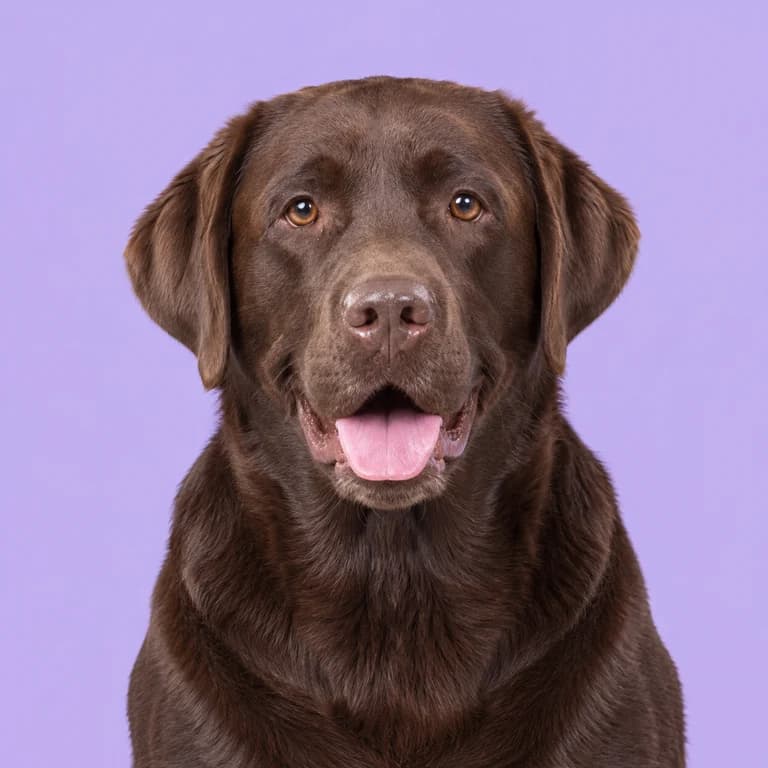
Aging does not flip a switch on a birthday. Some dogs slow down gradually and gain weight on the same portion they ate at four; others lose muscle and appetite and need coaxing. Feeding an older dog well means watching which of those paths yours is on and adjusting a little at a time.
This guide covers when a dog counts as senior, how energy needs shift, why muscle matters as much as the number on the scale, how to make food easier to eat, and how to set up a feeding spot that stiff joints can manage. It also lists the changes that should send you to the vet rather than to a new bag of food.
When does a dog become senior?
Size is the biggest factor. Giant breeds age faster than toy breeds, so a Great Dane can be a senior at six while a Chihuahua might not reach that stage until eleven or twelve. The table gives typical ranges, but your own dog's energy, mobility and health matter more than a label.
Many vets recommend moving from yearly to six-monthly checkups once a dog enters this stage. Those visits are a good moment to review diet, weight and any changes in eating or drinking.
| Adult weight | Senior from roughly | Typical examples |
|---|---|---|
| Under 10 kg (22 lb) | 10 to 12 years | Chihuahua, Yorkshire Terrier, Miniature Poodle |
| 10 to 25 kg (22 to 55 lb) | 8 to 10 years | Border Collie, Cocker Spaniel, Beagle |
| 25 to 45 kg (55 to 99 lb) | 7 to 8 years | Labrador, Golden Retriever, German Shepherd |
| Over 45 kg (99 lb) | 5 to 6 years | Great Dane, Newfoundland, Irish Wolfhound |
Energy needs usually fall, but not for every dog
A healthy older dog that walks less and sleeps more often needs 10 to 20 percent fewer calories than it did in its prime. If the portion stays the same, weight creeps up by a few hundred grams a month, and extra weight puts more strain on aging joints. Weigh your senior every month and trim by about 10 percent if the trend is upward.
Very old dogs can go the other way. From around the last quarter of their expected lifespan, many dogs struggle to keep weight and muscle on, and they may need more energy or a more appealing food rather than less. A senior food is not automatically the right choice; some are lower in energy, which suits a gaining dog but not a thinning one. Choose based on the dog in front of you.
Watch muscle, not just weight
Older dogs can lose muscle even while their weight stays steady, because fat quietly replaces it. Run your hands along the spine, over the shoulder blades and across the hips once a month. If bones feel more prominent there while the belly feels softer, your dog may be losing muscle.
Healthy seniors generally do not need their protein restricted. Good-quality protein helps maintain muscle, and gentle daily exercise such as two or three short walks helps too. If your dog has a diagnosed health condition, your vet may recommend a specific diet, and that advice takes priority over any general rule.
- Weigh monthly and write the number down
- Feel spine, shoulders and hips for new bony areas
- Photograph your dog from above every three months
- Keep up short, regular walks to support muscle
- Ask your vet about diet at every six-monthly check
Make food easier to eat
Teeth, gums and a fading sense of smell all affect appetite. If your dog drops kibble, chews on one side or takes longer to finish, soaking dry food in warm water for 10 to 15 minutes softens it without changing the diet. Warming wet food to around body temperature releases more aroma, which can help a dog whose nose is less sharp than it was.
Two or three smaller meals are often easier on an older digestion than one large one. A pattern such as 7:30, 13:00 and 18:30 also spreads energy through the day. Dental pain can reduce appetite without obvious signs, so mention any change in chewing to your vet rather than simply switching to softer food.
Set up a feeding spot for stiff joints
Eating is a physical task. A dog with sore hips or a stiff neck may stand awkwardly, splay its legs on a slippery floor, or give up before finishing. Put a non-slip mat or rug under your dog's feet as well as under the bowl, so the paws have grip while the head is lowered.
A raised bowl can make meals more comfortable for older dogs with stiff necks, shoulders or backs. Aim for a height where your dog can eat standing naturally with the head slightly lowered, rather than stretching down to the floor or reaching up. For large deep-chested breeds, ask your vet before raising bowls, because the evidence on bowl height and bloat is mixed. Keep the water bowl at the same height and in the same spot, and consider a second water bowl on another floor of the house for dogs that find stairs hard.
Water intake and why it deserves attention
Older dogs need steady access to fresh water, and keeping an eye on how much they drink is one of the simplest health checks you can do. Fill the bowl with a measured amount in the morning, note what is left the next morning, and you will know your dog's normal range. Remember that dogs on wet food drink less from the bowl.
A clear rise in drinking, such as refilling the bowl twice as often as usual for several days, or new accidents indoors, is worth reporting to your vet promptly. Many conditions that are more common in older dogs show up first as changes in thirst and urination.
Appetite changes that need a vet, not a new food
Every senior has off days, but some patterns need a professional look. Changing food repeatedly can hide an underlying problem and delay help, so check with your vet first when you notice any of the following.
- Skipping meals for more than a day, or eating noticeably less for a week
- Losing more than about 5 percent of body weight without trying
- Drinking or urinating much more than usual
- Dropping food, pawing at the mouth or bad breath that is new
- Vomiting, diarrhea or a swollen belly
Checklist
- Book six-monthly vet checks from the senior stage
- Weigh monthly and do a muscle check along spine and hips
- Adjust portions by 10 percent steps based on the trend
- Split food into two or three smaller meals
- Add non-slip flooring under paws and bowl
- Measure water intake for a few days to learn the normal range
Questions
Does my older dog need a senior dog food?
Not necessarily. Senior foods vary widely, and there is no single legal definition of what they must contain. A healthy older dog doing well on an adult food at a stable weight may not need to change. If your dog is gaining weight, losing muscle or has a diagnosed condition, discuss options with your vet and choose a food that matches that specific need.
My senior dog has become a fussy eater. What can I try?
First rule out pain or illness with your vet, since a drop in appetite is often the first sign that something is wrong. Once you have the all clear, warming food slightly, adding a spoonful of wet food to kibble, feeding smaller meals and using a quiet, non-slip spot can all help. Avoid rotating many foods quickly, which can make a dog even pickier.
Should I feed my old dog more to stop weight loss?
Unexplained weight loss in an older dog should be checked by a vet before you change the diet, because the cause matters. If your vet finds nothing concerning, you can increase the portion by about 10 percent, add a more energy-dense food, or offer an extra small meal. Weigh every two weeks to confirm the change is working.