Sources for this article
Hound group · France
Petit Basset Griffon Vendéen
Also called PBGV, Petit
A scruffy, merry French rabbit hound whose nose runs its life and whose tail rarely stops wagging.
The PBGV is a small, rough-coated scent hound from the Vendée region of France, bred to hunt rabbits through thorny brush. It is friendly, bold and endlessly cheerful, with a loud voice and an independent streak. Owners love its sunny personality and learn to live with its selective hearing.
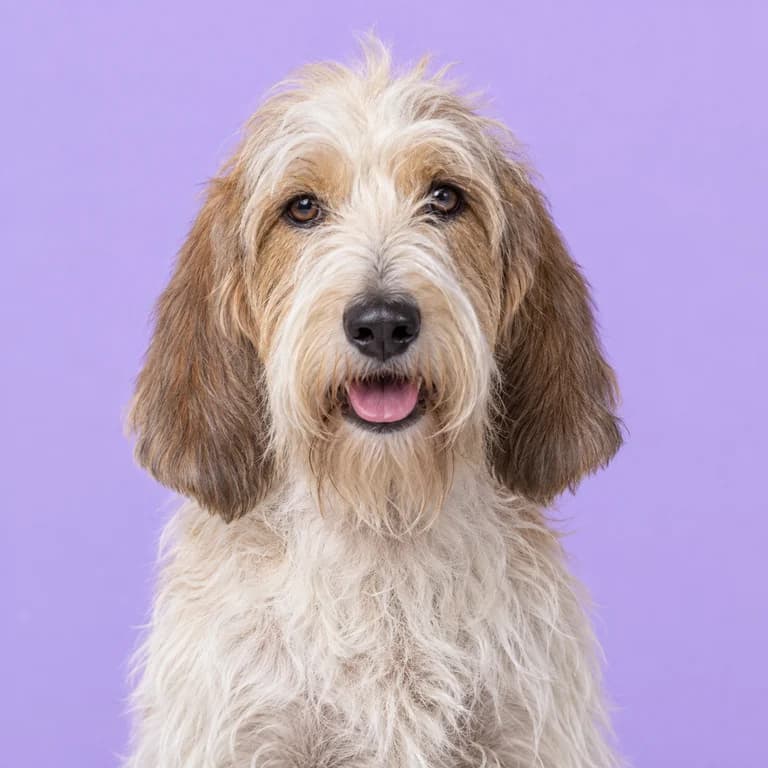
Original AI-generated breed illustration
Weight
11 to 18 kg
24 to 40 lb
Height
33 to 38 cm
at the shoulder
Life expectancy
12 to 15 yrs
Activity estimate
90 to 120 min
editorial daily planning range
Adult-size estimate
14 months
approximate model input
Life with a Petit Basset Griffon Vendéen
Happy is the word that comes up again and again with this breed. PBGVs meet the world tail first, delighted by visitors, other dogs, children and new smells. Their French hunting heritage shows in their stamina, confidence and willingness to follow a scent trail wherever it leads, which is not always where you intended to walk.
The breed was developed in the Vendée, on France's Atlantic coast, where rocky ground and thick hedges demanded a small, sturdy hound with a protective jacket. For many years, small and large Basset Griffons were born in the same litters and sorted by leg length, until breeders separated the Petit into a distinct breed and stopped crossing the two.
Living with a PBGV means sharing your home with a curious, chatty and sometimes mischievous companion. They love company and usually do well with other dogs, reflecting generations of hunting in packs. They can be stubborn, but it is mostly the stubbornness of a dog absorbed by an interesting smell rather than open defiance.
What stands out
Training
PBGVs are intelligent but independent, bred to make decisions on the trail without a handler at their side. They respond best to positive, reward-based training with high-value treats and short, playful sessions. Patience and humor help, because a PBGV often seems to weigh whether a cue is worth its while.
Read the full training guideEasy to train
Open with strangers
Good with other dogs
A great match for
- families with children
- homes with other dogs
- owners with a securely fenced garden
- people who enjoy long, sniffy walks
Think twice if
- unreliable recall due to strong scent drive
- loud baying and barking
- digs and escapes
- independent and easily distracted in training
Personality and needs at a glance
Living together
Good with children
Good with other dogs
Open with strangers
Apartment friendly
Copes with alone time
Energy and character
Energy level
Playfulness
Easy to train
Barking
5 means very vocal
Care and climate
Grooming needs
Shedding
Drooling
Handles cold
Handles heat
How much a Petit Basset Griffon Vendéen eats
Illustrative calculations for neutered adults at midpoint breed weights, with food at 370 kcal per 100 g and 100 g per cup. These are not measured breed requirements. Use actual weight, the food label and veterinary body-condition advice.
| Dog | Weight | Calories | Dry food |
|---|---|---|---|
| Female, relaxed lifestyle | 14 kg | 690 kcal | 185 g (1.8 cups) |
| Female, typical pet | 14 kg | 790 kcal | 215 g (2.3 cups) |
| Male, typical pet | 16 kg | 870 kcal | 235 g (2.3 cups) |
| Male, very active | 16 kg | 1090 kcal | 295 g (3 cups) |
Care guides for the Petit Basset Griffon Vendéen
Things owners are often surprised by
- 1The name spells out the breed: petit (small), basset (low), griffon (rough-coated), Vendéen (from the Vendée).
- 2It stands about 34 to 38 cm (13.5 to 15 in), shorter than its cousin the Grand Basset Griffon Vendéen.
- 3Its harsh coat protected it from brambles and thorns when chasing rabbits through dense hedgerows.
- 4A PBGV named Buddy Holly won Best in Show at Westminster in 2023.
- 5Breed clubs recommend DNA testing for an inherited form of glaucoma.
Petit Basset Griffon Vendéen questions
Are PBGVs good with other dogs?
Yes, they are typically very sociable with other dogs, reflecting their pack hunting background. Many enjoy living with a second dog and may be happier with a companion. Introductions should still be gradual, and individual personalities vary. Their easygoing nature makes them strong candidates for multi-dog homes.
Do PBGVs bark a lot?
They are vocal, using barks, bays and howls to communicate. This was useful when hunters needed to follow the pack by ear, but it can be a problem in close living spaces. Training, exercise and mental work reduce the noise, yet a PBGV is unlikely to be a quiet dog. Think about your neighbors before choosing one.
How is a PBGV different from a Basset Hound?
The PBGV is lighter, more agile and has a rough, shaggy coat, while the Basset Hound is heavier, lower to the ground and smooth-coated with much longer ears. PBGVs are generally more energetic and bouncy, with an almost terrier-like enthusiasm. Both are scent hounds with powerful noses and independent minds.
Can a PBGV ever be trusted off lead?
Some can, in fenced areas or after months of recall training, but many owners never fully trust a PBGV in open countryside. Once the nose locks onto a rabbit trail, cues often fade into the background. A long line gives freedom to explore with a safety net, and a secure garden is close to essential.
Can a PBGV be left alone during the day?
PBGVs are social and may bay, dig or chew if left alone for long stretches. Most can learn to cope with three or four hours alone, especially after a good walk and with a stuffed food toy. For full workdays, consider a midday dog walker, daycare, or a second dog for company.
Popular answers for owners
- Grooming and coatWhat do dog clipper blade numbers mean?
- Bowls and feeding gearAre collapsible silicone bowls durable enough for daily use?
- Bowls and feeding gearDo flat faced dogs need slanted bowls?
- Bowls and feeding gearWhat happens if an automatic feeder jams during a scheduled meal?
- How much to feedHow do I adjust my dog's portion if my vet does not give an exact gram amount?
- Bowls and feeding gearWhat type of puzzle feeder is best for a smart dog?
Breeds you might compare
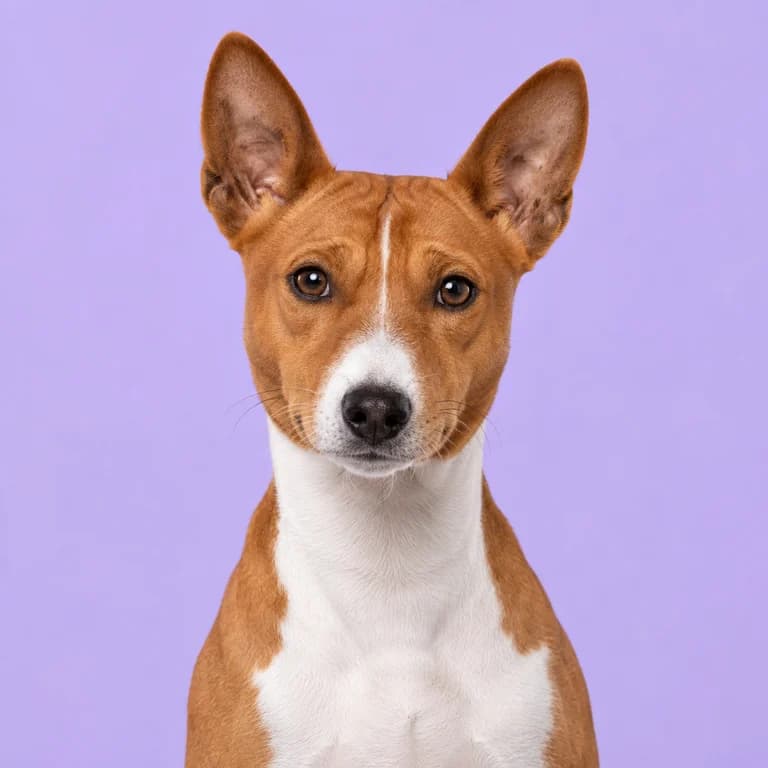
Hound group
Basenji
9 to 12 kg · 12 to 16 years
A Congo hunting dog of ancient lineage that yodels rather than barks and keeps itself clean like a cat.
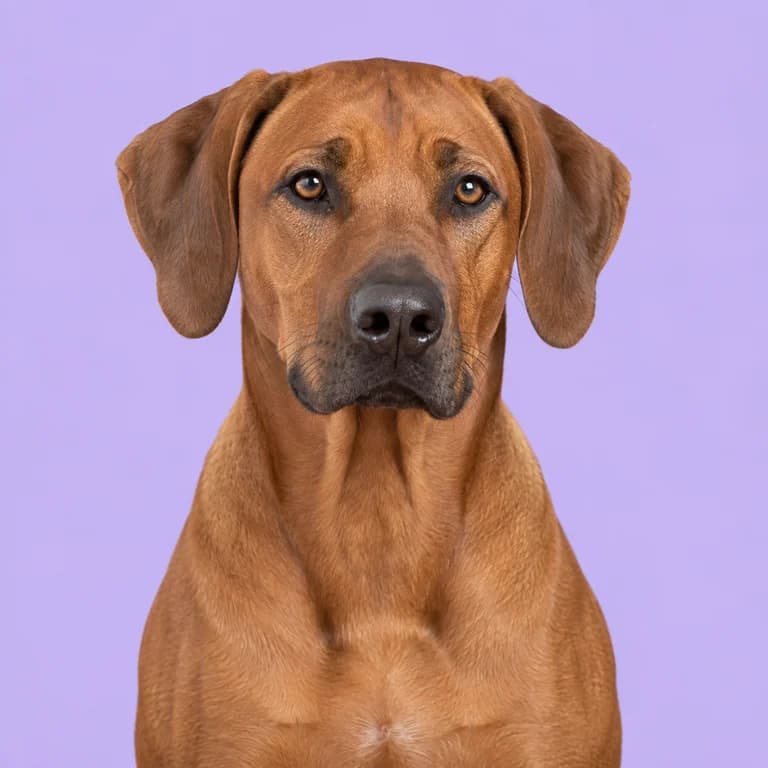
Hound group
Rhodesian Ridgeback
29 to 41 kg · 10 to 12 years
A sleek African hunting hound built to hold lions at bay, marked by a ridge of hair that grows the wrong way.
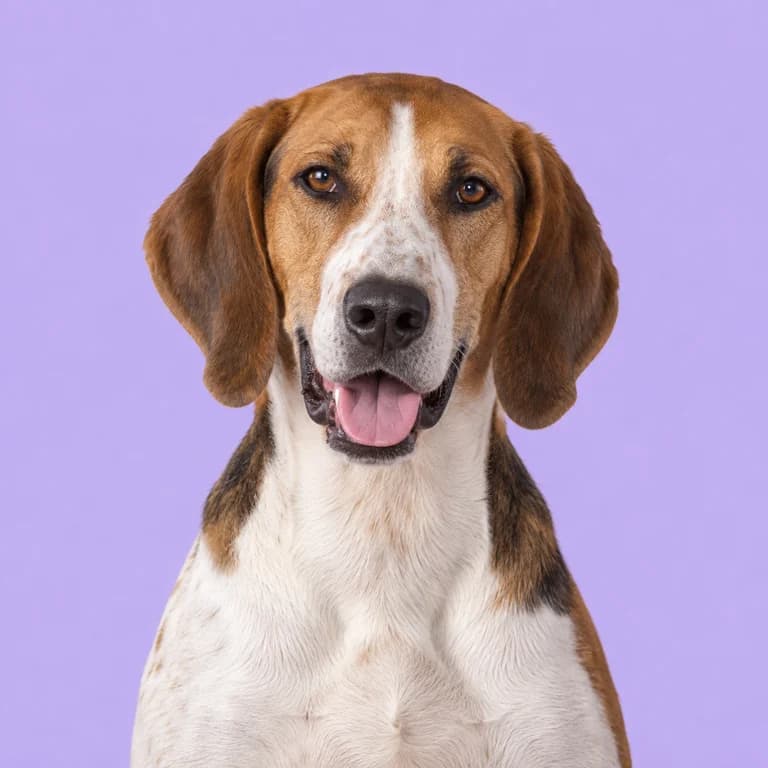
Hound group
English Foxhound
25 to 34 kg · 10 to 13 years
A pack hound built to run all day across open country, rarely kept as a pet and demanding when it is.
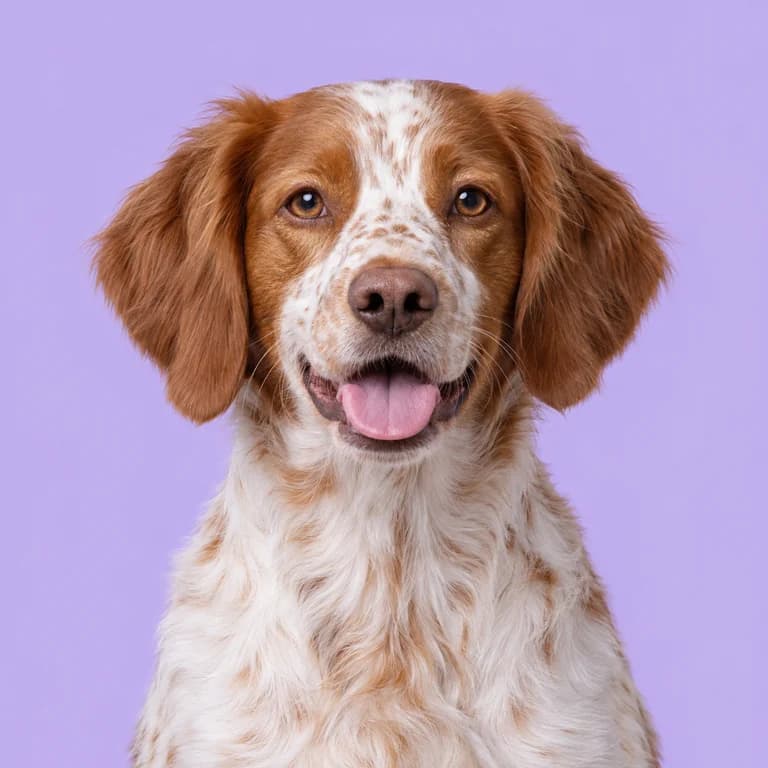
Sporting group
Brittany
13 to 18 kg · 12 to 14 years
A compact French bird dog built to cover open ground at speed, then freeze on point.
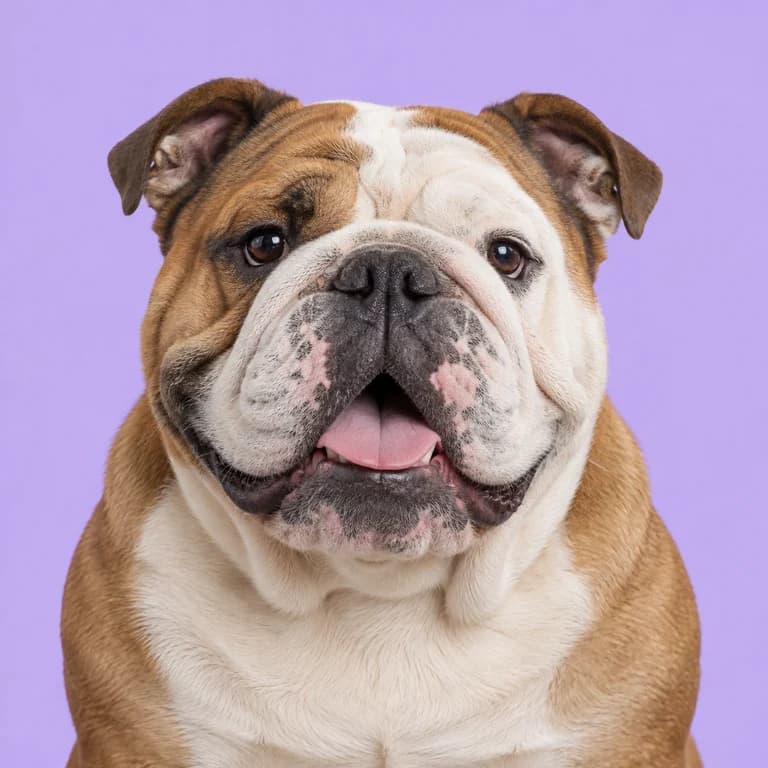
Non-sporting group
English Bulldog
18 to 25 kg · 8 to 10 years
A low-slung, sociable couch companion whose flat face shapes nearly every decision you make about its care.
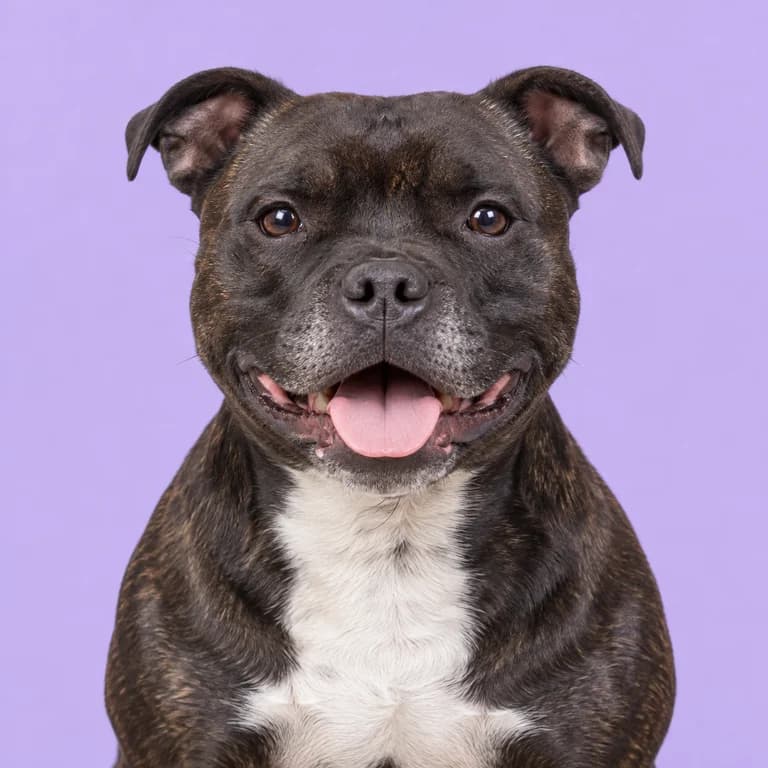
Terrier group
Staffordshire Bull Terrier
11 to 17 kg · 12 to 14 years
A muscular, grinning people-lover packed into 40 cm (16 in), often gentler with humans than with other dogs.