Sources for this article
Sporting group · England
Curly-Coated Retriever
Also called Curly, CCR
The tallest and perhaps most independent retriever, wrapped in a waterproof coat of tight curls you should never brush.
The Curly-Coated Retriever is one of the oldest retriever breeds, developed in England to fetch waterfowl and gamebirds. Its coat looks high maintenance but is surprisingly easy once you know the rules. Curlies are loyal and athletic, slower to mature than Labradors or Goldens, and more reserved with strangers.
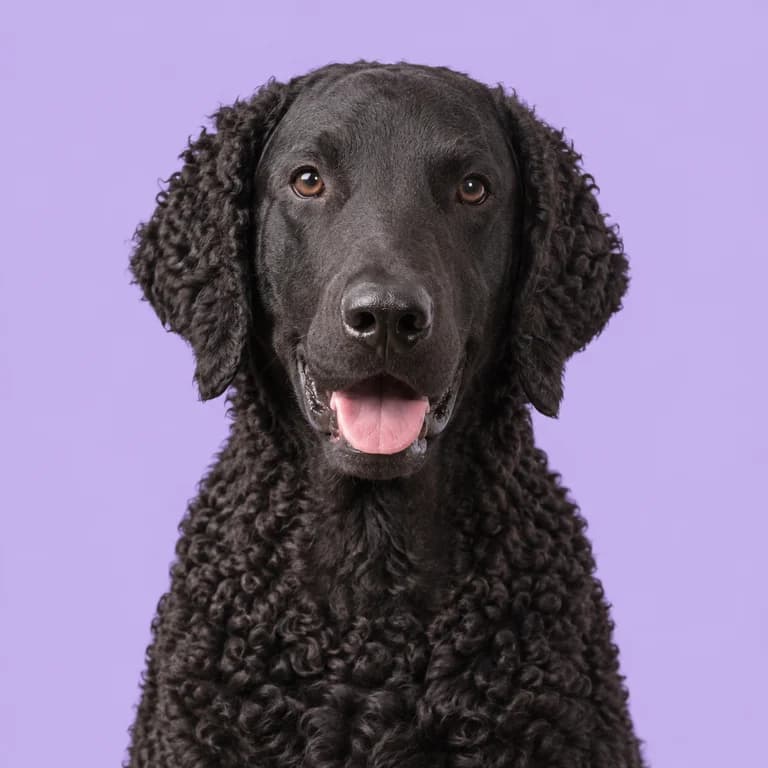
Original AI-generated breed illustration
Weight
27 to 36 kg
59 to 79 lb
Height
58 to 69 cm
at the shoulder
Life expectancy
10 to 12 yrs
Activity estimate
90 to 120 min
editorial daily planning range
Adult-size estimate
30 months
approximate model input
Life with a Curly-Coated Retriever
Most people who meet a Curly ask whether it is a Poodle cross. It isn't. The breed was an established retriever in England well before the Labrador or the Golden, prized by gamekeepers for fetching ducks from cold water and pheasants from thick cover. Its ancestors are often said to include the old English Water Spaniel and the retrieving setter, with Poodle and St John's water dog blood possibly added during the 1800s.
The coat is the breed's signature and its most misunderstood feature. Thousands of tight, small curls cover the body, trapping air and shedding water so the skin stays dry after a swim. The face, forehead and front of the legs are smooth. Unlike a Poodle, the Curly needs no clipping, and unlike a Golden it should not be brushed: a brush breaks the curls into a frizzy mass that loses its waterproofing.
In temperament, Curlies sit between the classic eager retriever and a more independent hunting dog. They are affectionate, calm indoors when exercised and good with children who respect them, but often reserved with strangers. In the field they think for themselves and work well at a distance. They mature slowly, and many owners say the breed only truly settles at around three years old.
What stands out
Grooming
Here is the counterintuitive part: do not brush a Curly's body coat. After a muddy walk, rinse with clean water, towel lightly and let the curls re-form as the coat dries naturally. During the seasonal shed, which usually comes once or twice a year, dampen the coat and work loose hair out with your fingers or a wide-toothed comb used sparingly.
Read the full grooming guideIllustrative grooming schedule based on our editorial coat-care score. Adjust it to the individual coat and professional advice.
Brushing
Once a week
Bathing
Every 2 to 3 months, or when dirty
Shedding
Light
Nail trim
Every 3 to 4 weeks
A great match for
- active owners who swim, hike or do gundog work
- families with school-age children
- people who want a retriever that isn't everyone's best friend
- owners who prefer a coat that needs no clipping
Think twice if
- slow to mature, often puppyish until three
- can be aloof or wary with strangers
- some develop patchy thinning of the coat
- rare breed, so waiting lists can be long
- brushing ruins the curls
Personality and needs at a glance
Living together
Good with children
Good with other dogs
Open with strangers
Apartment friendly
Copes with alone time
Energy and character
Energy level
Playfulness
Easy to train
Barking
5 means very vocal
Care and climate
Grooming needs
Shedding
Drooling
Handles cold
Handles heat
How much a Curly-Coated Retriever eats
Illustrative calculations for neutered adults at midpoint breed weights, with food at 370 kcal per 100 g and 100 g per cup. These are not measured breed requirements. Use actual weight, the food label and veterinary body-condition advice.
| Dog | Weight | Calories | Dry food |
|---|---|---|---|
| Female, relaxed lifestyle | 30 kg | 1240 kcal | 335 g (3.3 cups) |
| Female, typical pet | 30 kg | 1420 kcal | 385 g (3.8 cups) |
| Male, typical pet | 34 kg | 1580 kcal | 425 g (4.3 cups) |
| Male, very active | 34 kg | 1970 kcal | 535 g (5.3 cups) |
Care guides for the Curly-Coated Retriever
Things owners are often surprised by
- 1Among the breeds shown at one of England's first dog shows, in Birmingham in 1860
- 2Tallest of the retrievers, with males up to about 69 cm (27 in) at the shoulder
- 3The curls trap air and shed water, keeping the skin dry after a winter swim
- 4Only black or liver are accepted colors
- 5Known among gundog people for working independently at a distance
Curly-Coated Retriever questions
Is the Curly-Coated Retriever hypoallergenic?
No. Curlies shed less than many retrievers, and loose hair tends to stay caught in the curls rather than covering the floor, but they still produce dander and saliva like any dog. Some mildly allergic people tolerate them better than a Labrador. Spending time with adult Curlies before committing is the only reliable way to find out how you react.
Why shouldn't you brush a Curly-Coated Retriever?
Brushing pulls the tight curls apart into fluffy strands. The coat then loses its structure and water resistance and can look frizzy for weeks. Owners instead dampen the coat so the curls re-form, and remove dead hair by hand or with a wide-toothed comb only during a shed. Leaving the coat natural is exactly what makes this breed fairly easy to keep.
Are Curly-Coated Retrievers good family dogs?
Yes, for active families who understand the breed. They are affectionate and gentle with their own children and usually get on with other dogs. They need plenty of exercise and can be boisterous and mouthy through a long adolescence. Unlike some retrievers they are often reserved with visitors, which some families appreciate and others find surprising.
Why are Curly-Coated Retrievers so rare?
In the early 20th century the breed was overtaken in popularity by the Flat-Coated Retriever and then by the Labrador and Golden, which were easier to find and quicker to train. Two world wars reduced numbers further. Litters remain few and far between in most countries, so expect to join a waiting list and to travel to meet breeders.
Do Curly-Coated Retrievers shed?
They shed lightly for most of the year and more heavily once or twice a year. Because the curls hold loose hair, you notice less on the floor than with many breeds, although tufts can gather in corners during a coat change. Dampening the coat and working it through with your fingers during a shed removes dead hair without breaking the curls.
Popular answers for owners
- How much to feedHow do I check body condition on a stocky breed like a bulldog?
- Puppy feeding and growthHow do I measure my puppy's food portions accurately?
- Puppy feeding and growthHow much food does a puppy need once it reaches adult size?
- Grooming and coatHow often should a doodle be brushed?
- How much to feedHow much should I feed a medium sized dog?
- Exercise and playWhat is scent work enrichment?
Breeds you might compare
Sporting group
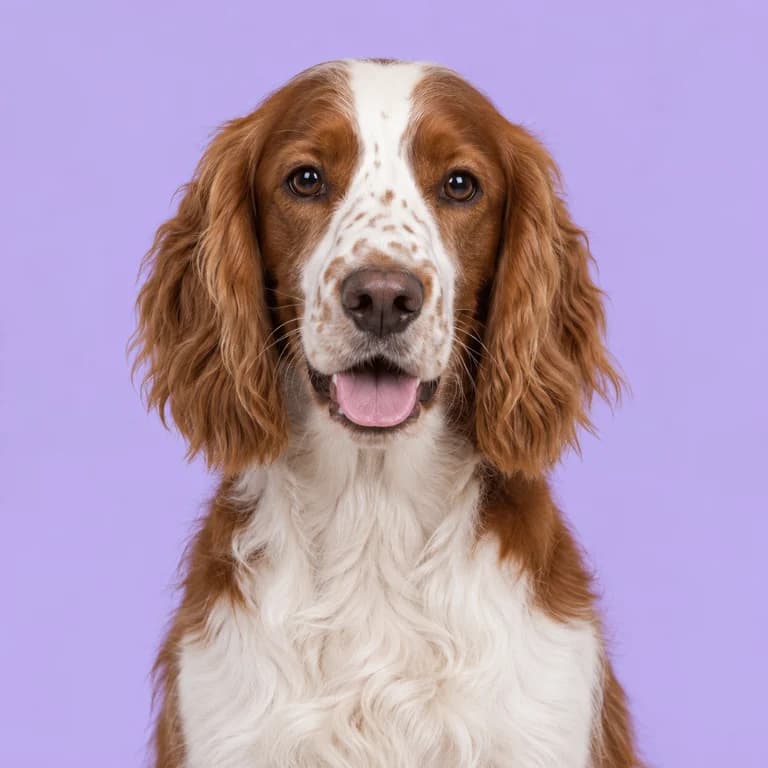
Welsh Springer Spaniel
16 to 25 kg · 12 to 15 years
A red-and-white Welsh gundog that learns best through partnership, patience and plenty of miles.
Sporting group
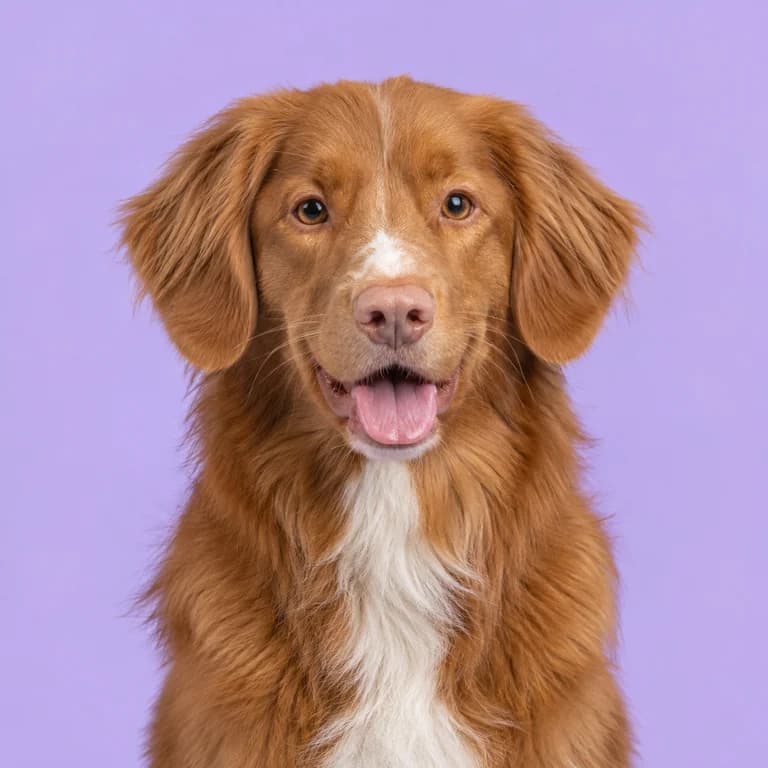
Nova Scotia Duck Tolling Retriever
17 to 23 kg · 12 to 14 years
The smallest retriever, bred to play along the shoreline until curious ducks swam close enough to shoot.
Sporting group
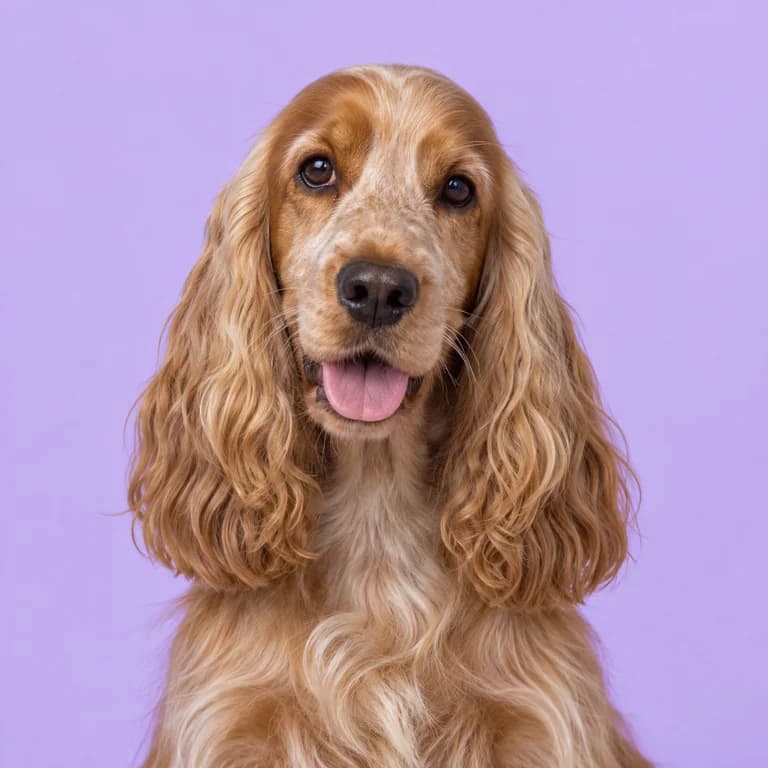
English Cocker Spaniel
12 to 15 kg · 12 to 14 years
A merry, tail-going gundog that wants to be busy with you, whether that means flushing pheasants or carrying slippers.
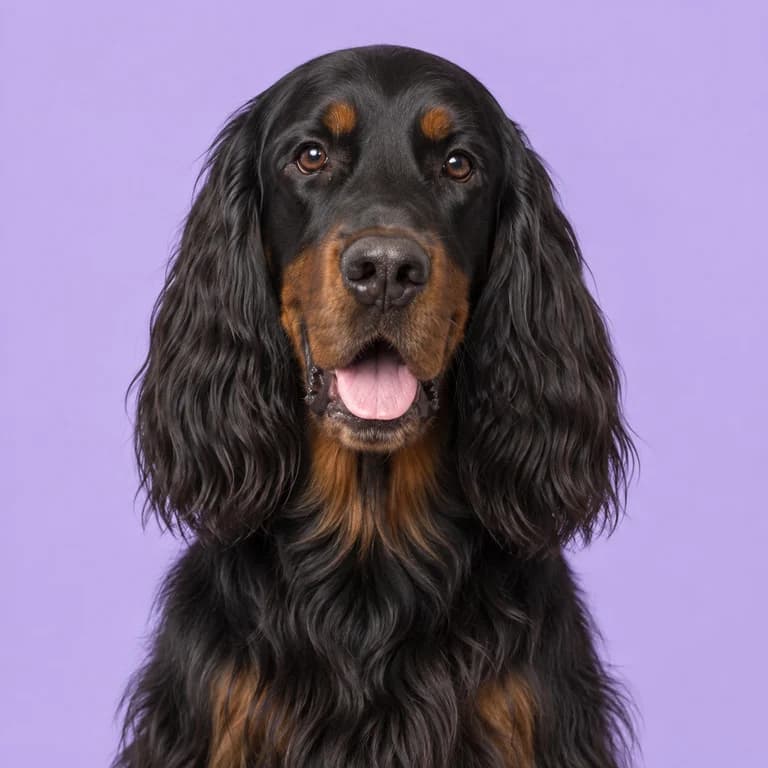
Sporting group
Gordon Setter
20 to 36 kg · 10 to 12 years
The heaviest and most thoughtful of the setters, shaped by a Scottish duke for long days on grouse moors.
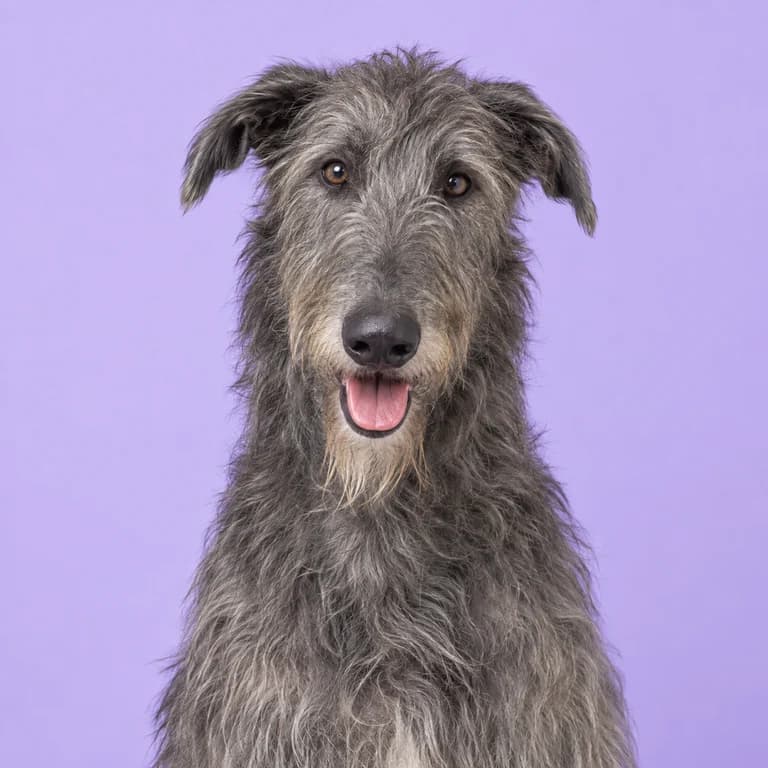
Hound group
Scottish Deerhound
34 to 50 kg · 8 to 11 years
Tall enough to rest its chin on your dining table, yet gentle, quiet and happiest stretched out on the sofa.
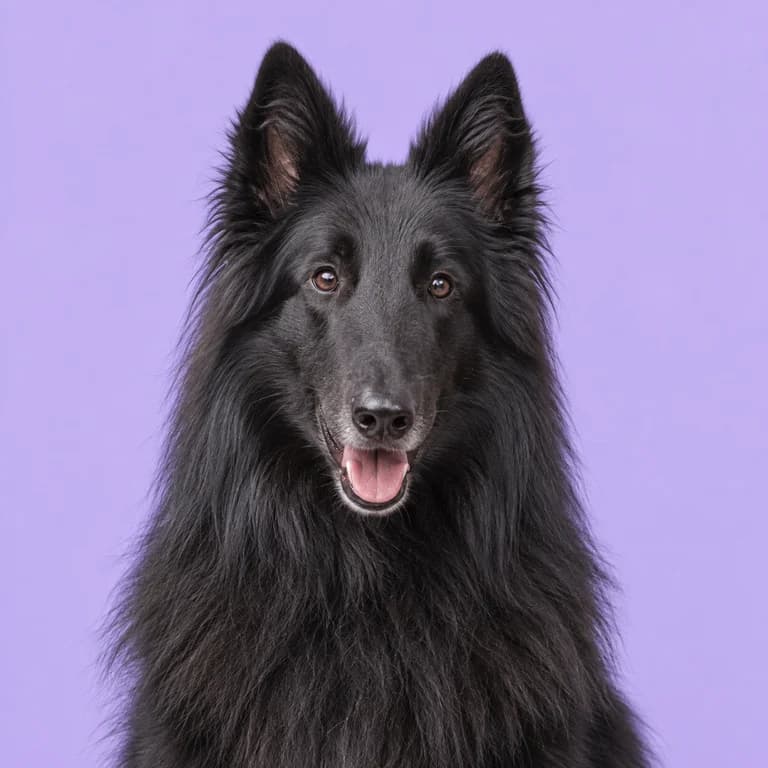
Herding group
Belgian Groenendael
20 to 30 kg · 12 to 14 years
The long-coated black Belgian Shepherd: quick, sensitive and happiest with a job and a handler to share it.