Sources for this article
Working group · Switzerland
Greater Swiss Mountain Dog
Also called Swissy, Grosser Schweizer Sennenhund
The largest Swiss mountain breed, once a farm's cart puller and still a gentle, heavyweight family worker.
Big, tricolored and steady, the Greater Swiss Mountain Dog comes from Swiss farms where it pulled carts, drove cattle and guarded the yard. It is devoted and generally calm, making a warm family companion for owners who can manage its size, its slow maturity and its strong need to be with people.
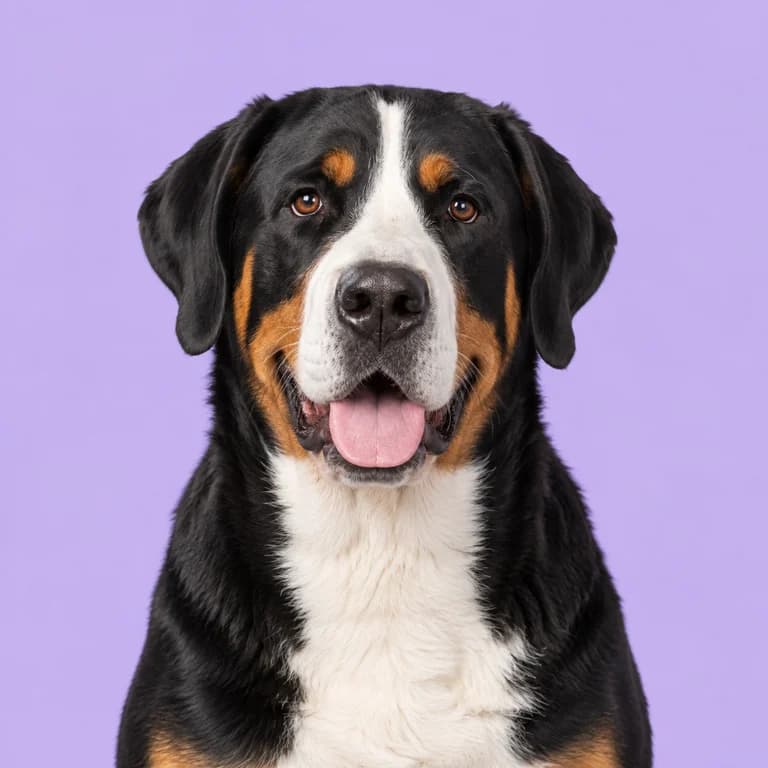
Original AI-generated breed illustration
Weight
39 to 64 kg
86 to 141 lb
Height
60 to 72 cm
at the shoulder
Life expectancy
8 to 11 yrs
Activity estimate
60 to 90 min
editorial daily planning range
Adult-size estimate
30 months
approximate model input
Life with a Greater Swiss Mountain Dog
A mature male Swissy can stand 72 cm (28 in) at the shoulder and weigh over 60 kg (132 lb), and he will still try to climb onto your lap. Size shapes nearly everything about living with this breed: the car you drive, the room you need indoors, the cost of food and veterinary care, and how you train a puppy that will outweigh many teenagers within a year.
The breed comes from the farms of central Switzerland, where large tricolored dogs guarded property, moved cattle to market and pulled carts loaded with milk churns. As motor vehicles took over that work, numbers fell sharply. In 1908, at a dog show in Langenthal, the geologist and dog enthusiast Albert Heim saw two short-coated males entered as Bernese and is credited with recognizing them as a separate, older type, which set off the breed's revival.
Temperament is usually calm, confident and sociable. Swissies love their people and do not like being shut away from family life. They are alert and will bark at anything unusual, which makes them decent watchdogs, but true aggression is uncommon. Puppies and adolescents, on the other hand, are boisterous and mouthy, and a 40 kg teenager jumping up at guests is no joke.
This is a breed for people who want a big dog in the house rather than in a kennel, and who are ready for plenty of hair, a little drool and a loyal companion that takes its time to grow up.
What stands out
Puppy growth
Growth is both fast and long. 5 to 3 years.
Read the full puppy growth guideIllustrative model, not observed breed data or a healthy-weight standard. Use actual measurements and veterinary advice to assess growth.
A great match for
- families wanting a big, affectionate house dog
- owners who enjoy hiking or carting
- cooler climates
- homes with space and a secure garden
Think twice if
- bloat and splenic torsion risk
- heavy seasonal shedding
- slow maturity and a boisterous adolescence
- high food and vet costs due to size
Personality and needs at a glance
Living together
Good with children
Good with other dogs
Open with strangers
Apartment friendly
Copes with alone time
Energy and character
Energy level
Playfulness
Easy to train
Barking
5 means very vocal
Care and climate
Grooming needs
Shedding
Drooling
Handles cold
Handles heat
How much a Greater Swiss Mountain Dog eats
Illustrative calculations for neutered adults at midpoint breed weights, with food at 370 kcal per 100 g and 100 g per cup. These are not measured breed requirements. Use actual weight, the food label and veterinary body-condition advice.
| Dog | Weight | Calories | Dry food |
|---|---|---|---|
| Female, relaxed lifestyle | 45 kg | 1690 kcal | 455 g (4.5 cups) |
| Female, typical pet | 45 kg | 1930 kcal | 520 g (5.3 cups) |
| Male, typical pet | 59 kg | 2380 kcal | 645 g (6.5 cups) |
| Male, very active | 59 kg | 2980 kcal | 805 g (8 cups) |
Care guides for the Greater Swiss Mountain Dog
Things owners are often surprised by
- 1Largest of the four Swiss Sennenhund breeds, alongside the Bernese, Appenzeller and Entlebucher
- 2Nicknamed the poor man's horse for pulling milk and cheese carts
- 3Revived in the early 1900s after the geologist Albert Heim championed it
- 4Has a short coat, unlike the long-haired Bernese Mountain Dog
- 5Can take up to 3 years to mature fully in body and mind
Greater Swiss Mountain Dog questions
What is the difference between a Greater Swiss Mountain Dog and a Bernese Mountain Dog?
Both are tricolored Swiss farm dogs, but the Greater Swiss is larger and has a short double coat, while the Bernese has a long, silky one. Swissies are often described as slightly more energetic and vocal, and Bernese as a little softer in temperament. Grooming is lighter with the Swissy, though both shed heavily.
Do Greater Swiss Mountain Dogs drool?
Most drool a little, especially after drinking or in warm weather, but far less than loose-lipped giants such as the Saint Bernard. Individuals with looser lips drool more. A towel beside the water bowl and a quick wipe of the chin after drinks handles it for most households.
How big does a Greater Swiss Mountain Dog get?
Males typically stand 65 to 72 cm (26 to 28 in) and weigh around 54 to 64 kg (119 to 141 lb). Females are smaller at 60 to 68 cm (24 to 27 in) and roughly 39 to 50 kg (86 to 110 lb). Growth slows after the first year but continues until about 3 years of age.
Can a Greater Swiss Mountain Dog pull a cart?
Yes, drafting is part of the breed's history, and many owners enjoy carting clubs and working tests. Wait until the dog is fully grown, usually past 18 to 24 months, and has had its joints checked by a vet. Use a properly fitted harness, start with an empty cart and build weight and distance gradually.
Are Swissies good with children?
Generally yes. They tend to be patient, loving and protective of the family's children. Size is the main risk, since adolescents can knock over small kids by accident. Teach the dog calm manners, supervise play, and make sure children know not to climb on or ride the dog, however sturdy it looks.
Popular answers for owners
- Puppy feeding and growthWhen should I cut my puppy from 4 meals to 3?
- How much to feedMy dog's weight loss has stalled, what should I change?
- Bowls and feeding gearDo flat faced dogs need slanted bowls?
- Puppy feeding and growthWhat size kibble is right for a small breed puppy?
- How much to feedHow do I check body condition on a deep chested breed like a greyhound?
- Grooming and coatWhy does my dog growl when I brush him?
Breeds you might compare
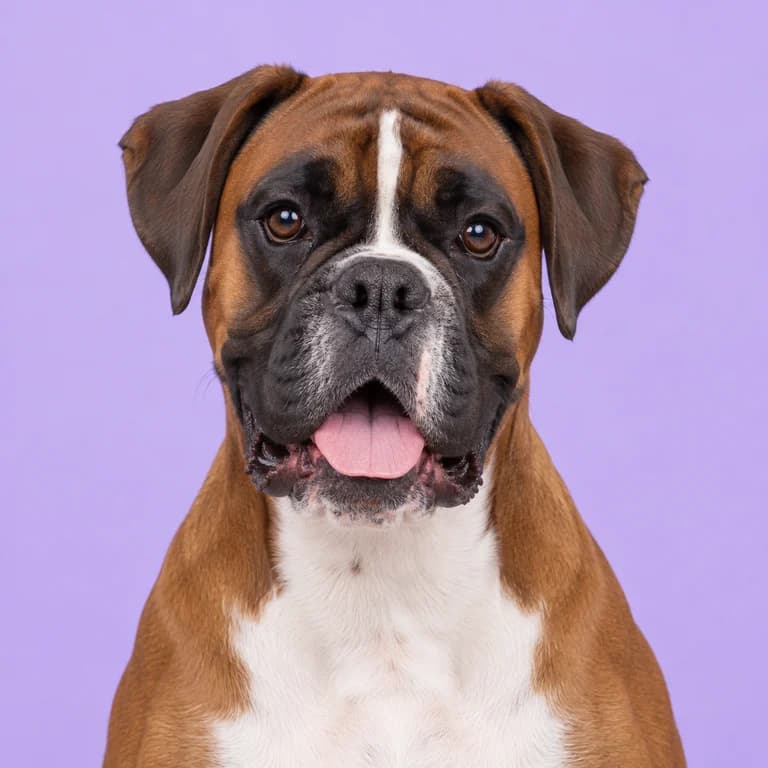
Working group
Boxer
25 to 36 kg · 10 to 12 years
A square, springy German guard dog that treats every morning like the start of a party.
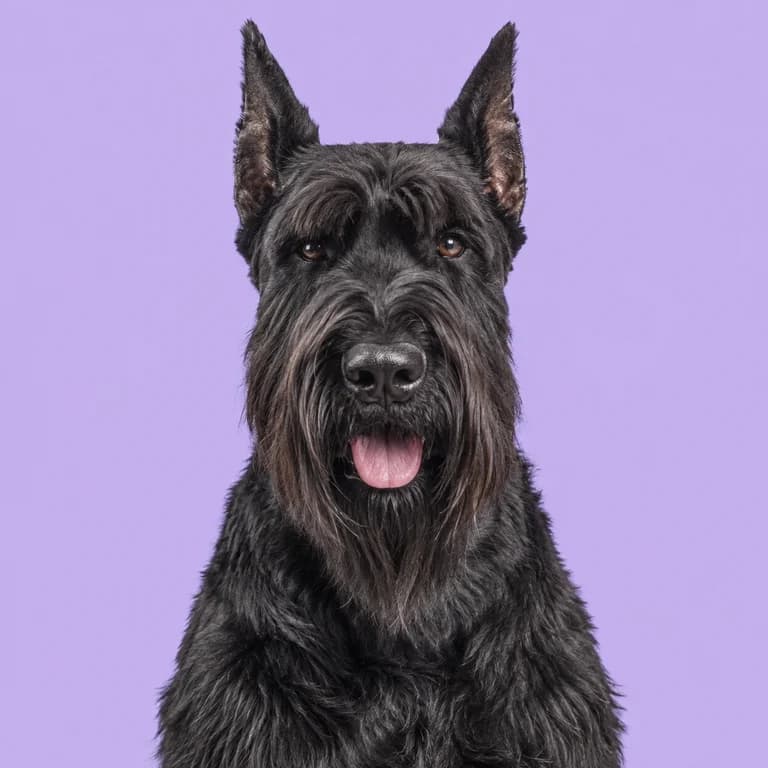
Working group
Giant Schnauzer
25 to 45 kg · 10 to 12 years
A powerful, clever working dog that thrives on structure and a job, and makes up its own without them.
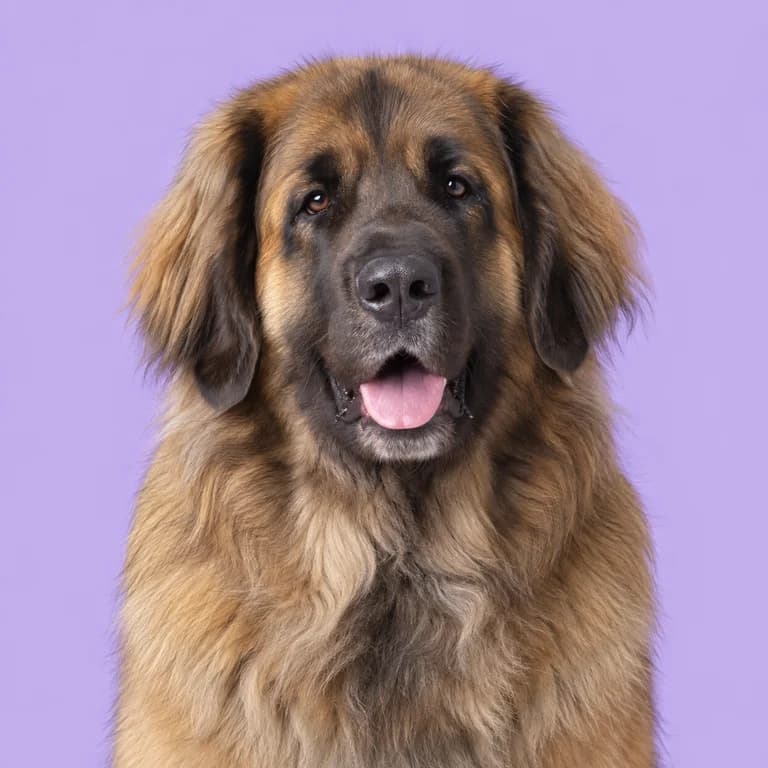
Working group
Leonberger
41 to 77 kg · 7 to 9 years
Named for a lion and built like a bear, the Leonberger fills any room, then settles quietly into it.
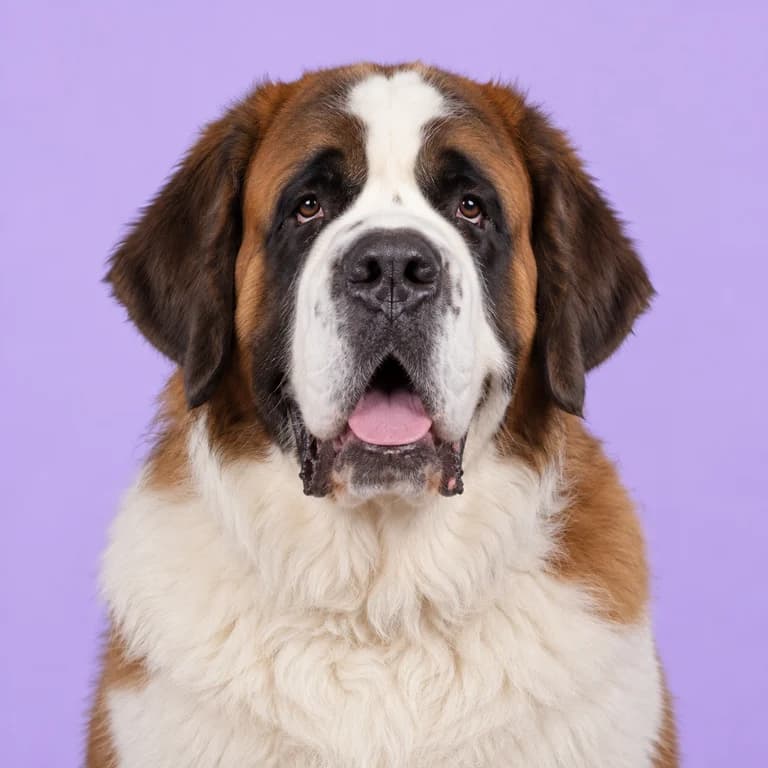
Working group
Saint Bernard
54 to 82 kg · 8 to 10 years
A gentle mountain giant whose size, drool and cold-weather coat shape every part of daily life.
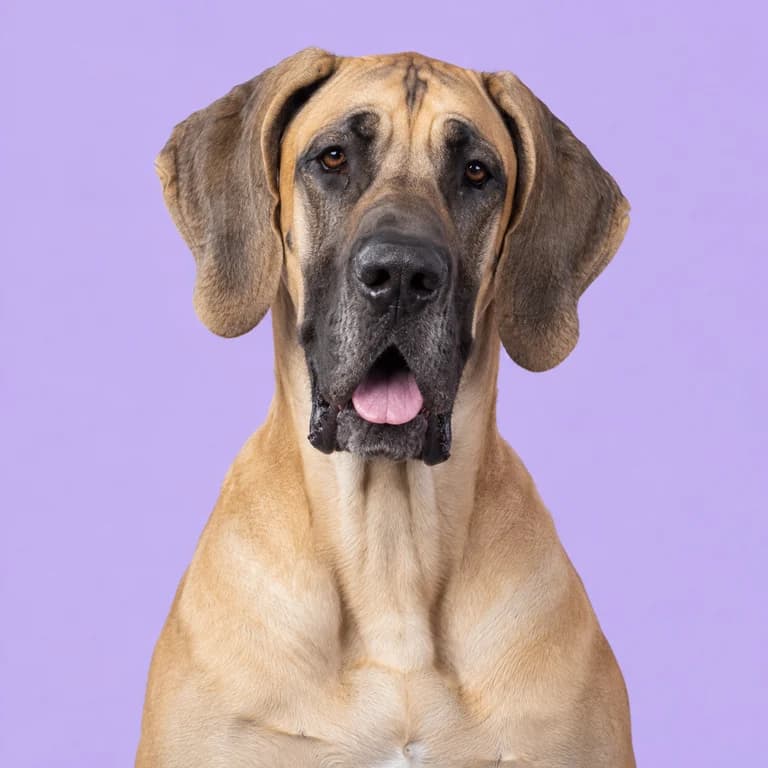
Working group
Great Dane
50 to 79 kg · 7 to 10 years
A dog the height of a small pony that would rather lean on you than guard anything.
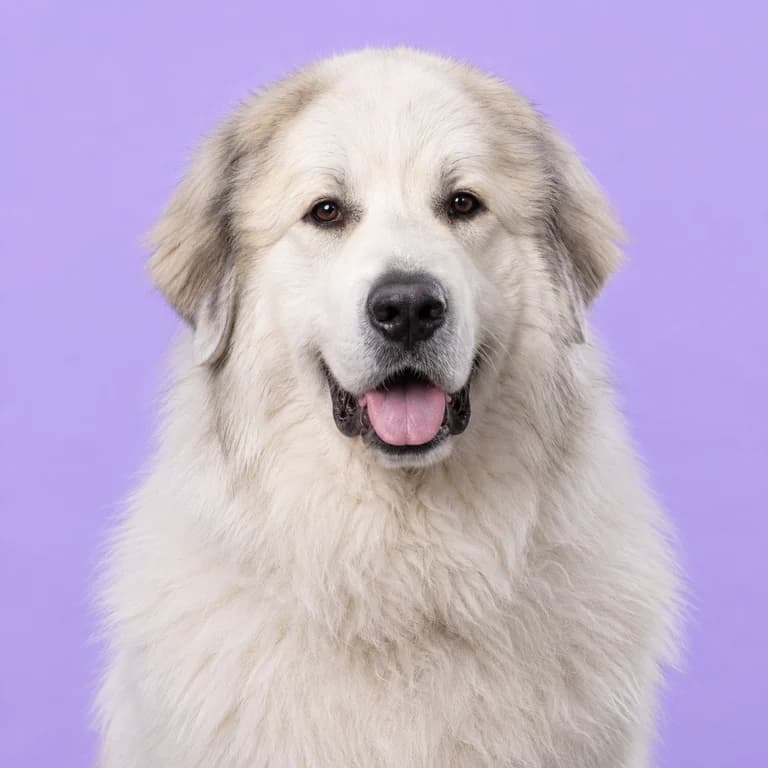
Working group
Great Pyrenees
38 to 60 kg · 10 to 12 years
A calm white giant that sleeps through the afternoon and patrols through the night, exactly as it was bred to.