Sources for this article
Working group · United States (Alaska)
Alaskan Malamute
Also called Malamute, Mal
A freight-hauling Arctic dog built for strength and stamina, with a talkative streak and a mind of its own.
The Alaskan Malamute was developed to pull heavy loads across Arctic ice, and its body and brain still expect real work. It is friendly with almost everyone, strangers included, but it is independent, strong and notorious for digging, escaping and shedding. It thrives with active owners in cool climates who enjoy structured exercise every day.
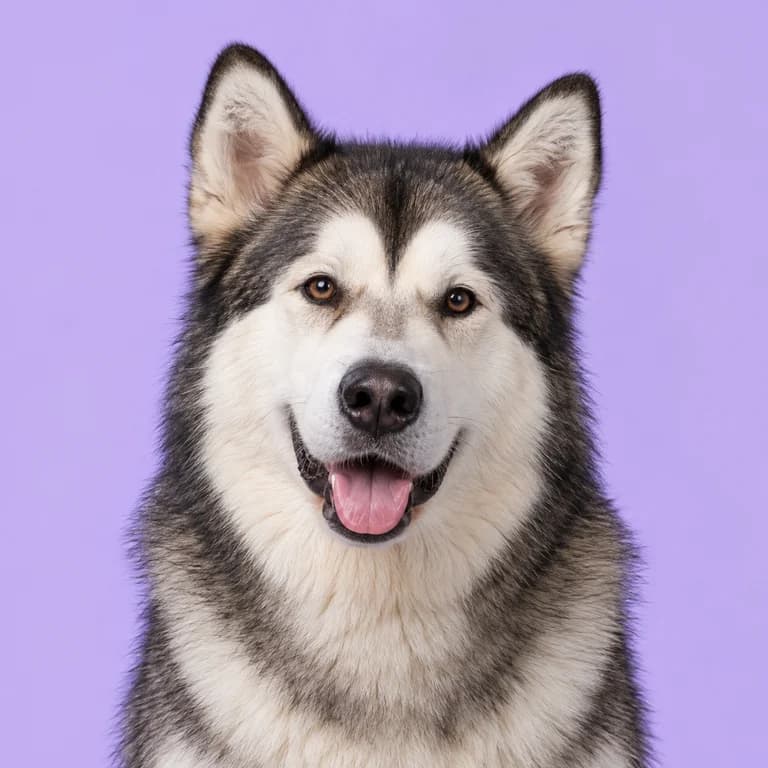
Original AI-generated breed illustration
Weight
32 to 43 kg
70 to 95 lb
Height
56 to 66 cm
at the shoulder
Life expectancy
10 to 14 yrs
Activity estimate
120 to 150 min
editorial daily planning range
Adult-size estimate
24 months
approximate model input
Life with a Alaskan Malamute
Energy is the first thing to understand about a Malamute, but it is a particular kind of energy. This is not a dog that bounces off the walls. It is a strong, steady engine designed to pull a loaded sled for hours in temperatures well below freezing, and it wants to run that engine every day. Take the work away and it finds its own projects, such as excavating the lawn or testing the fence.
The breed takes its name from the Mahlemut people of northwestern Alaska, who relied on these dogs for hauling, hunting and travel. During the Klondike gold rush of the late 1890s, freight dogs were in huge demand and many local lines were crossed with outside breeds. Dedicated breeders in the 1920s and 1930s worked to restore the original type, and the American Kennel Club recognized the breed in 1935.
At home a well-exercised Malamute is relaxed, affectionate and surprisingly gentle. It greets visitors like long-lost relatives, which makes it a poor guard dog, and it communicates with a whole vocabulary of groans, howls and woo-woo noises. It also has a firm independent streak. Malamutes were expected to make their own decisions on the trail, and they still consider whether your request is worth their while.
What stands out
Exercise
Most adults need at least 90 minutes of activity a day, and many are happier with two hours. Pulling work suits them best: canicross, bikejoring, scootering, carting and recreational sledding all use the muscles and drive the breed was built for. Long hikes carrying a dog backpack (up to about 10 percent of body weight once fully grown) are another good outlet.
Read the full exercise guideActivity planning estimate
120 to 150 min
editorial estimate, not a prescription
Energy
5 / 5
Playfulness 4 / 5
A great match for
- active people who hike, bikejor or run sled dogs
- cold or temperate climates
- owners with a high, dig-proof fence
- households that want a sociable rather than guarding dog
Think twice if
- blows its undercoat heavily twice a year
- strong prey drive toward cats and small animals
- can be intolerant of dogs of the same sex
- digs and escapes when bored
- struggles in hot weather
Personality and needs at a glance
Living together
Good with children
Good with other dogs
Open with strangers
Apartment friendly
Copes with alone time
Energy and character
Energy level
Playfulness
Easy to train
Barking
5 means very vocal
Care and climate
Grooming needs
Shedding
Drooling
Handles cold
Handles heat
How much an Alaskan Malamute eats
Illustrative calculations for neutered adults at midpoint breed weights, with food at 370 kcal per 100 g and 100 g per cup. These are not measured breed requirements. Use actual weight, the food label and veterinary body-condition advice.
| Dog | Weight | Calories | Dry food |
|---|---|---|---|
| Female, relaxed lifestyle | 35 kg | 1410 kcal | 380 g (3.8 cups) |
| Female, typical pet | 35 kg | 1610 kcal | 435 g (4.3 cups) |
| Male, typical pet | 40 kg | 1760 kcal | 475 g (4.8 cups) |
| Male, very active | 40 kg | 2210 kcal | 595 g (6 cups) |
Care guides for the Alaskan Malamute
Things owners are often surprised by
- 1Named after the Mahlemut, an Inupiat people of the Norton Sound region of Alaska
- 2Bred to haul freight rather than to race: power and endurance, not speed
- 3Rarely barks, but howls and 'talks' with a range of woo-woo sounds
- 4The standard's ideal is about 64 cm (25 in) and 38 kg (85 lb) for males, 58 cm (23 in) and 34 kg (75 lb) for females
- 5Recognized by the American Kennel Club in 1935 and used as freight and rescue dogs during World War II
Alaskan Malamute questions
What is the difference between an Alaskan Malamute and a Siberian Husky?
The Malamute is bigger and heavier, usually 34 to 38 kg against roughly 16 to 27 kg for a Husky, with a broader head and a plumed tail carried over the back. Malamutes were built to haul freight, Huskies to pull lighter loads at speed. Malamute eyes are always brown, while Huskies can have blue or odd-colored eyes. Both shed heavily and both need secure fencing.
Can an Alaskan Malamute live in a hot climate?
It can survive with careful management, but it will not thrive. The dense double coat makes overheating a serious risk above about 25°C (77°F). Owners in warm regions keep their dogs in cooled rooms during the day, exercise only at dawn and after dark, and provide shade, cooling mats and shallow water to lie in. If summers are regularly hot where you live, a short-coated breed is a kinder choice.
Why does my Malamute howl instead of barking?
Howling and woo-woo talking are normal for the breed. Malamutes use their voice to express excitement, boredom and greetings, and many join in with sirens or singing. They bark far less than most breeds. Constant howling when left alone, however, often signals boredom or separation stress, and more exercise before you leave plus a long-lasting chew usually helps.
Are Alaskan Malamutes good with cats?
Some live peacefully with a cat they grew up with, but many never become trustworthy with small animals, and even a dog that ignores its own cat may chase the neighbor's. Prey drive in this breed is strong and was once useful for hunting. If you have cats, look for an adult Malamute with a known history of living with them, or plan for permanent management.
How much weight can an Alaskan Malamute pull?
Fit adults in weight-pull competitions move carts or sleds many times their own body weight over short distances, and freighting teams once hauled heavy supplies across long routes. For everyday fun, a healthy adult comfortably pulls a person on a scooter or a light cart. Build up gradually with a proper pulling harness, and wait until the dog is about 18 months old before serious work.
Popular answers for owners
- Bowls and feeding gearWhere should I put my dog's food bowl?
- How much to feedHow much should I feed a very active or athletic dog?
- Puppy feeding and growthWhy does diet matter for a puppy's growth plates?
- Grooming and coatWhy does my dog scratch constantly but have no fleas?
- How much to feedHow much should I feed a 20kg dog?
- Puppy feeding and growthWhy is my large breed puppy growing so fast?
Breeds you might compare
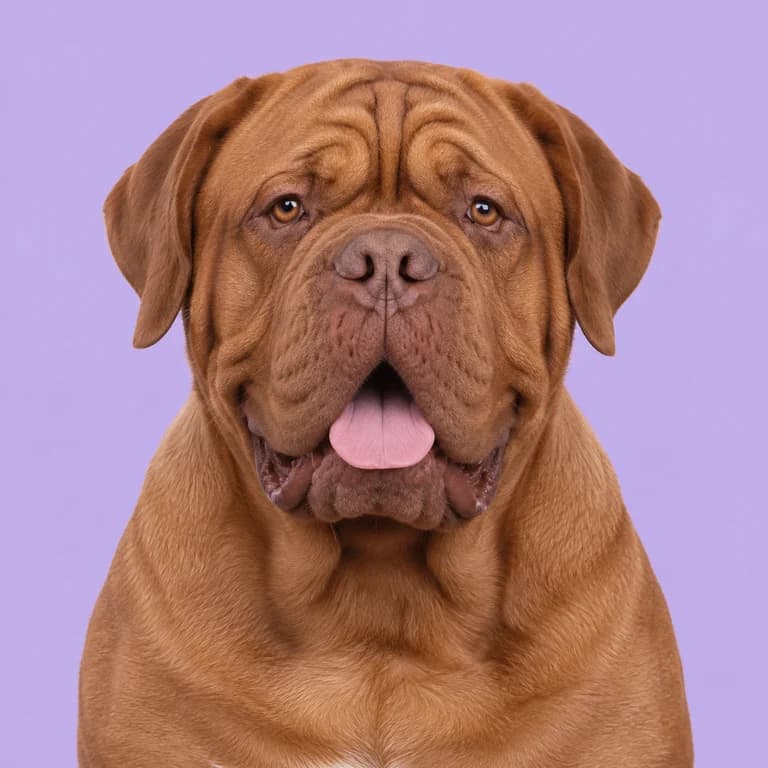
Working group
Dogue de Bordeaux
45 to 66 kg · 5 to 8 years
A massive, loving French mastiff whose short life expectancy shapes every choice an owner makes.
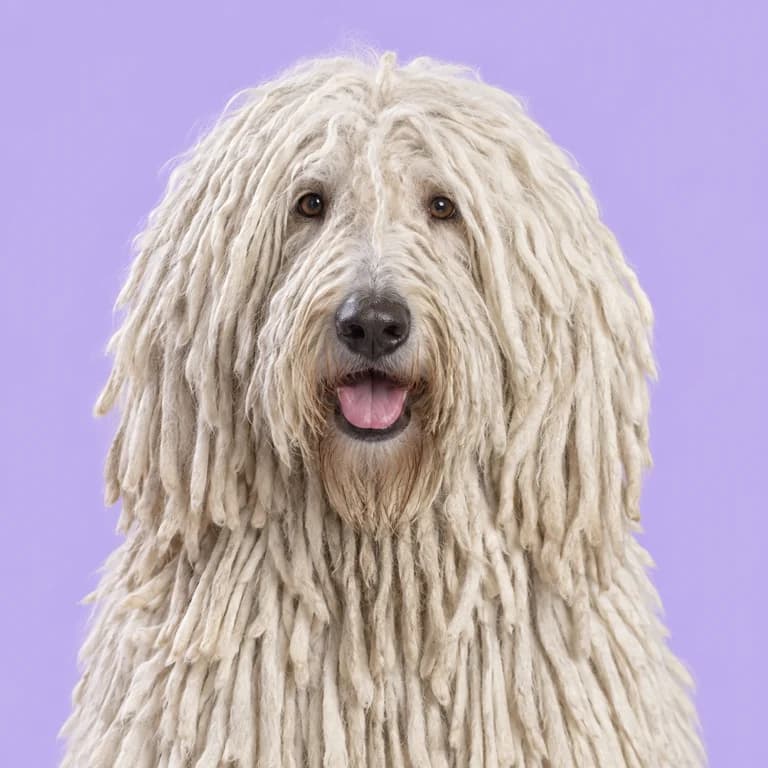
Working group
Komondor
40 to 60 kg · 10 to 12 years
A Hungarian flock guardian wrapped in heavy white cords, serious about its job and slow to trust outsiders.
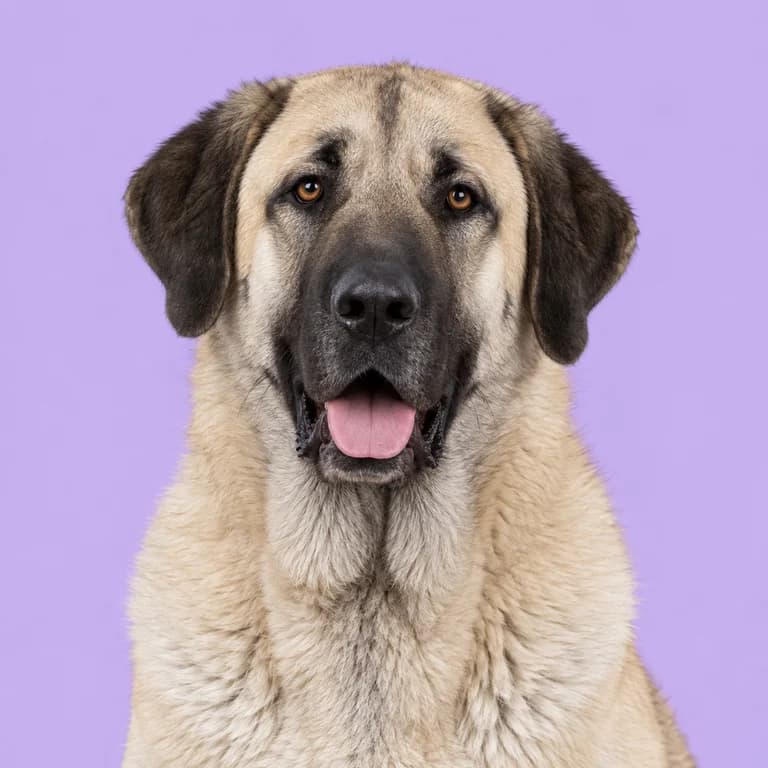
Working group
Anatolian Shepherd
40 to 65 kg · 11 to 13 years
An ancient Turkish flock guardian built for heat, distance and decisions, and quite happy to make them without you.
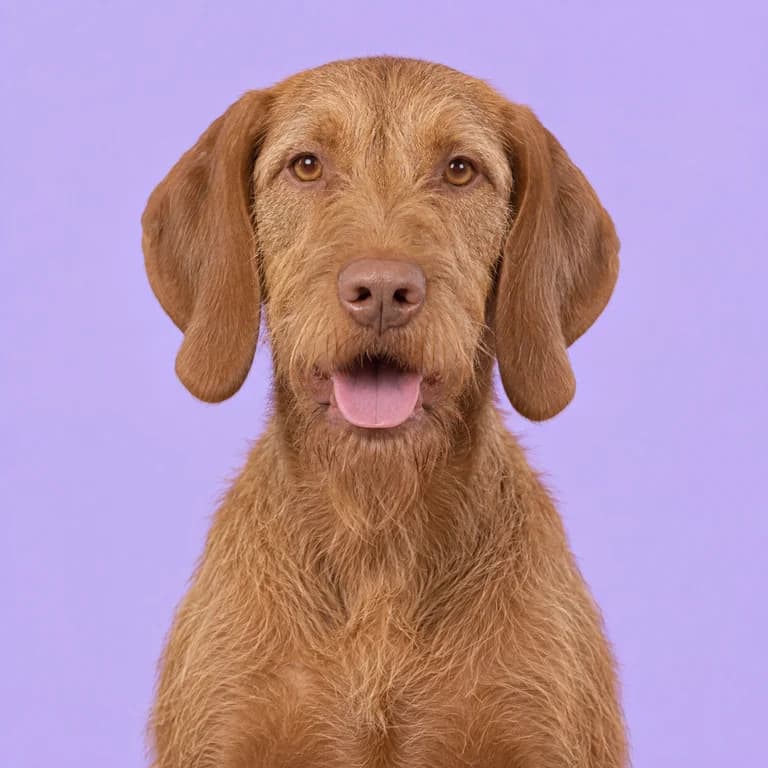
Sporting group
Wirehaired Vizsla
20 to 30 kg · 12 to 14 years
A Hungarian gun dog with a weatherproof beard, built to hunt all day in cold water and thick cover.
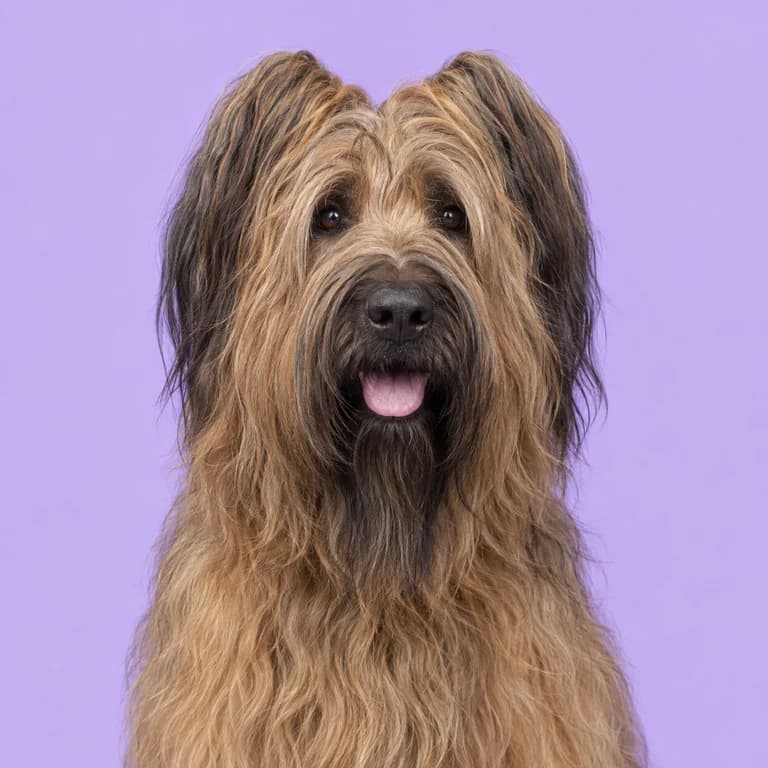
Herding group
Briard
25 to 45 kg · 10 to 12 years
A shaggy French sheepdog that guarded the flock by night and now guards its family instead.
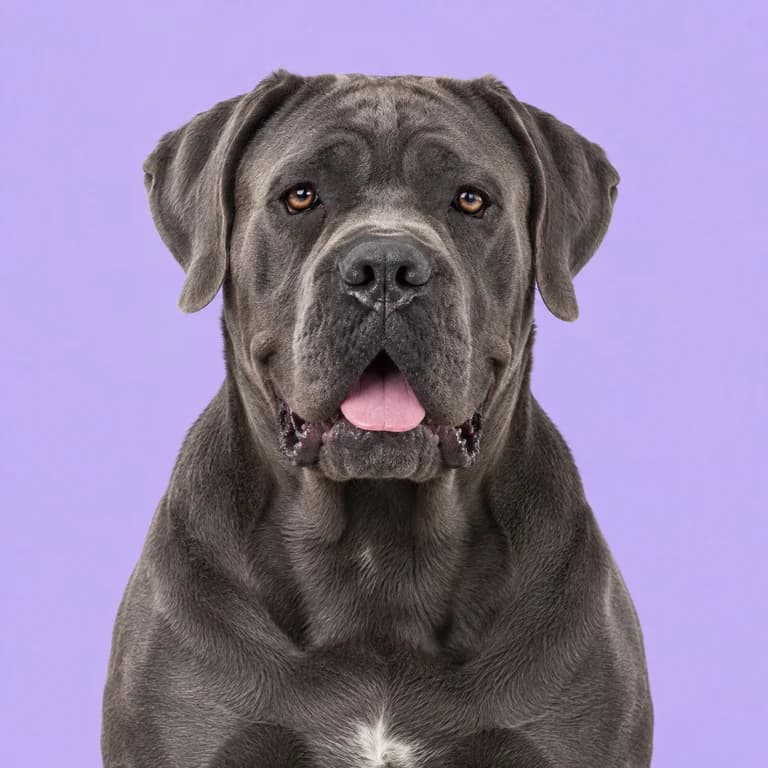
Working group
Cane Corso
40 to 50 kg · 9 to 12 years
A quiet, watchful Italian guardian that bonds deeply with its own people and needs a calm, consistent handler.