Sources for this article
Working group · Hungary
Komondor
Also called Hungarian Sheepdog, Mop Dog
A Hungarian flock guardian wrapped in heavy white cords, serious about its job and slow to trust outsiders.
Few dogs look as unusual as the Komondor, a giant livestock guardian from Hungary whose white coat hangs in thick cords that can reach the ground. Under the mop sits a calm, independent and fiercely protective animal. It suits experienced owners with space, strong fencing and the patience for a coat that takes hours of hand work every month.
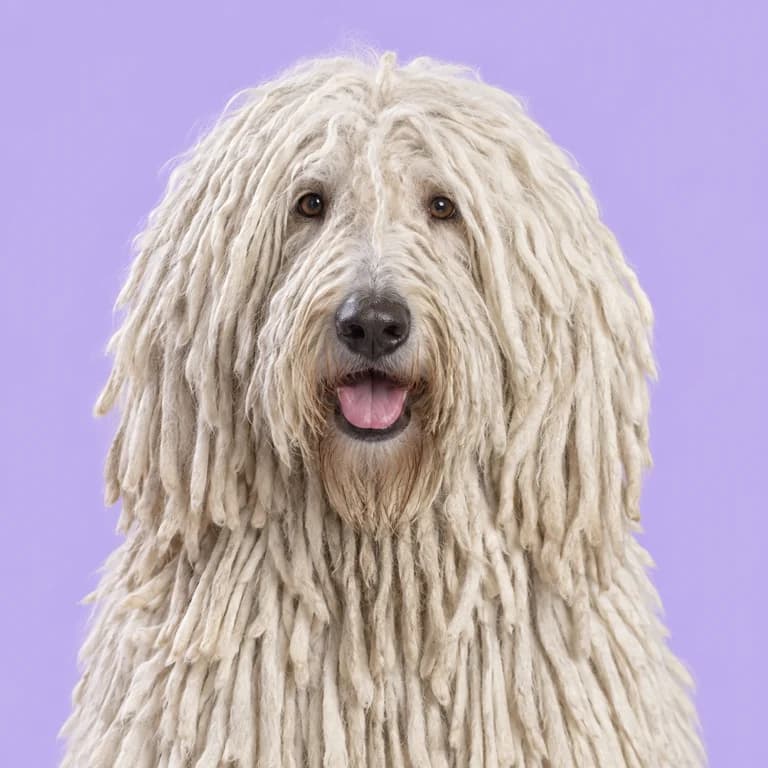
Original AI-generated breed illustration
Weight
40 to 60 kg
88 to 132 lb
Height
65 to 80 cm
at the shoulder
Life expectancy
10 to 12 yrs
Activity estimate
60 to 90 min
editorial daily planning range
Adult-size estimate
30 months
approximate model input
Life with a Komondor
For centuries the Komondor lived out on the Hungarian plains with sheep and cattle, guarding them against wolves, bears and thieves. Shepherds valued its judgment far more than its obedience. The dog lay among the flock, its pale cords blending with the fleece, and rose to confront an intruder with a speed that startles anyone expecting a slow, shaggy giant.
Its ancestry is often credited to the Cumans, a nomadic people who moved into Hungary in the twelfth and thirteenth centuries, and the name is sometimes said to come from a phrase meaning Cuman dog. The breed is said to have been badly reduced during the Second World War, when many dogs died defending farms, and it recovered slowly with help from breeders in Hungary and the United States.
Today's Komondor is still a guardian first. With its own family it is calm, gentle and loyal, happy to lie quietly for hours. With strangers it is watchful and reserved, and it will act on its own judgment if it senses a threat. Busy streets, casual visitors and first-time owners are all poor matches, but in the right home it is a devoted and dignified companion.
What stands out
Grooming
The corded coat is never brushed, but it needs regular hand work. As cords form, you split each clump by hand into cords roughly the width of a finger, working from the tip down to the skin, every week or two. Skip this and the coat merges into a single felted mat.
Read the full grooming guideIllustrative grooming schedule based on our editorial coat-care score. Adjust it to the individual coat and professional advice.
Brushing
Daily
Bathing
Every 3 to 6 weeks
Shedding
Minimal
Nail trim
Every 3 to 4 weeks
A great match for
- experienced owners of guardian breeds
- rural homes with livestock or large fenced land
- owners who want a watchful, protective dog
- people prepared for extensive coat care
Think twice if
- coat care is time-consuming and specialist work
- strongly protective and suspicious of strangers
- may not tolerate unfamiliar dogs
- needs tall, solid fencing
- bloat risk as a deep-chested giant breed
Personality and needs at a glance
Living together
Good with children
Good with other dogs
Open with strangers
Apartment friendly
Copes with alone time
Energy and character
Energy level
Playfulness
Easy to train
Barking
5 means very vocal
Care and climate
Grooming needs
Shedding
Drooling
Handles cold
Handles heat
How much a Komondor eats
Illustrative calculations for neutered adults at midpoint breed weights, with food at 370 kcal per 100 g and 100 g per cup. These are not measured breed requirements. Use actual weight, the food label and veterinary body-condition advice.
| Dog | Weight | Calories | Dry food |
|---|---|---|---|
| Female, relaxed lifestyle | 45 kg | 1700 kcal | 460 g (4.5 cups) |
| Female, typical pet | 45 kg | 1950 kcal | 525 g (5.3 cups) |
| Male, typical pet | 55 kg | 2260 kcal | 610 g (6 cups) |
| Male, very active | 55 kg | 2830 kcal | 765 g (7.8 cups) |
Care guides for the Komondor
Things owners are often surprised by
- 1A fully corded adult can take 24 to 48 hours to dry after a bath
- 2The coat is always white, while the skin underneath is gray
- 3Often credited to the Cumans, nomadic people said to have brought its ancestors to Hungary in the Middle Ages
- 4Males stand at least 70 cm (27.5 in) at the shoulder, and many are taller
- 5Bred to live with the flock and deter wolves and bears with little human direction
- 6The Hungarian plural is Komondorok
Komondor questions
Does a Komondor coat form cords on its own?
It starts to, but it needs help. Somewhere between 9 months and 2 years, the soft puppy coat begins to clump as undercoat and outer coat tangle together. You then split these clumps by hand into separate cords, right down to the skin, repeating every week or two. Left alone, the coat becomes a solid felted mat that traps moisture and dirt and can be very uncomfortable.
Can a Komondor be clipped short?
Yes, and some owners of working or older dogs do exactly that for practical reasons. Cords take a long time to regrow, often years to reach full length again. A clipped Komondor still has enough coat for winter, though it loses some protection from sun and from bites during a confrontation. Dogs being shown must stay fully corded.
Is a Komondor good with children?
With its own family's children, a well-socialized Komondor is usually gentle and protective. Trouble tends to come with visiting children, whose running, shouting and play fighting can look like an attack to a guardian dog. Always supervise when friends come over, and give the dog a separate space during busy gatherings. A dog this size is also a poor match for toddlers.
What is the difference between a Komondor and a Puli?
Both are Hungarian and both are corded, but the Puli is a small to medium herding dog of roughly 10 to 15 kg, most often black, bred to move sheep quickly. The Komondor is a giant white guardian bred to protect the flock rather than move it. Temperament differs as much as size: the Puli is quick and busy, the Komondor calm and watchful.
Is a Komondor a good choice for a first-time owner?
Rarely. Giant size, a strong protective instinct, independent thinking and a demanding coat add up to a lot to learn at once. People with experience of livestock guardians or similar breeds, plus the time and land to manage one, usually cope best. If the look appeals, spend time with established breeders and owners before deciding.
Popular answers for owners
- Puppy feeding and growthIs there a formula to estimate a puppy's adult size?
- Bowls and feeding gearShould dogs in the same household share a water bowl?
- Bowls and feeding gearHow do I sanitize a dog bowl without harsh chemicals?
- How much to feedThe bag says a certain number of cups, how do I convert that to grams?
- Puppy feeding and growthHow do I soften kibble for a very young puppy?
- Bowls and feeding gearHow many ml should a dog water bowl hold?
Breeds you might compare
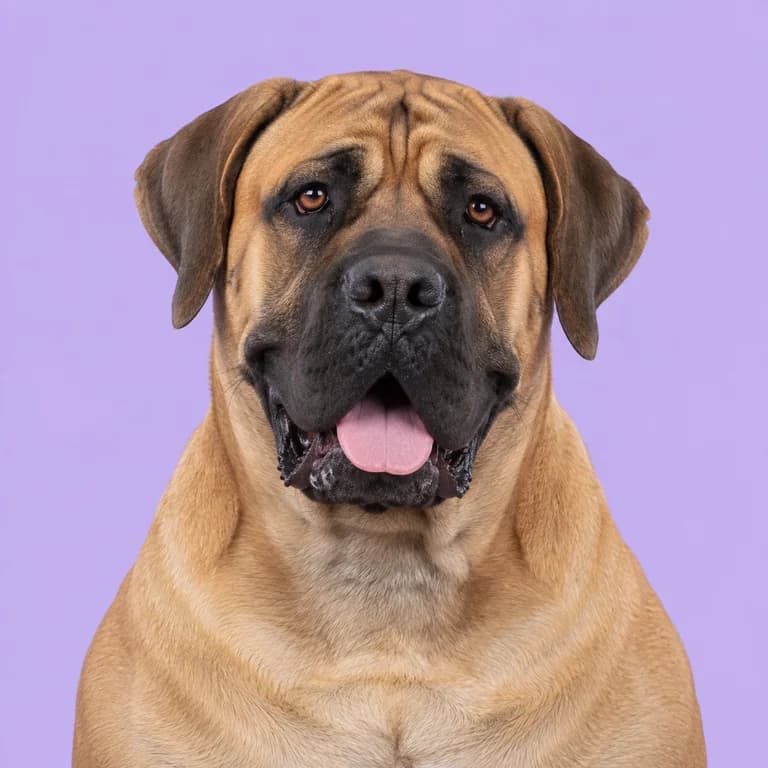
Working group
Boerboel
55 to 90 kg · 9 to 11 years
A South African farm guardian built to face down leopards, calm at home but serious about its territory.
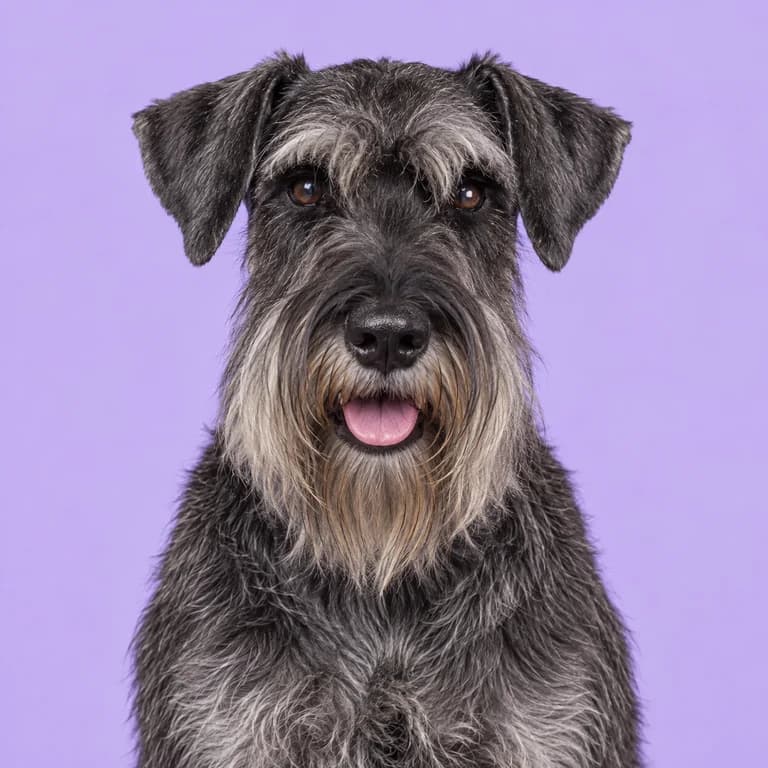
Working group
Standard Schnauzer
14 to 20 kg · 13 to 16 years
The original Schnauzer, a bearded German farm dog whose wiry coat looks its best when it is plucked by hand.
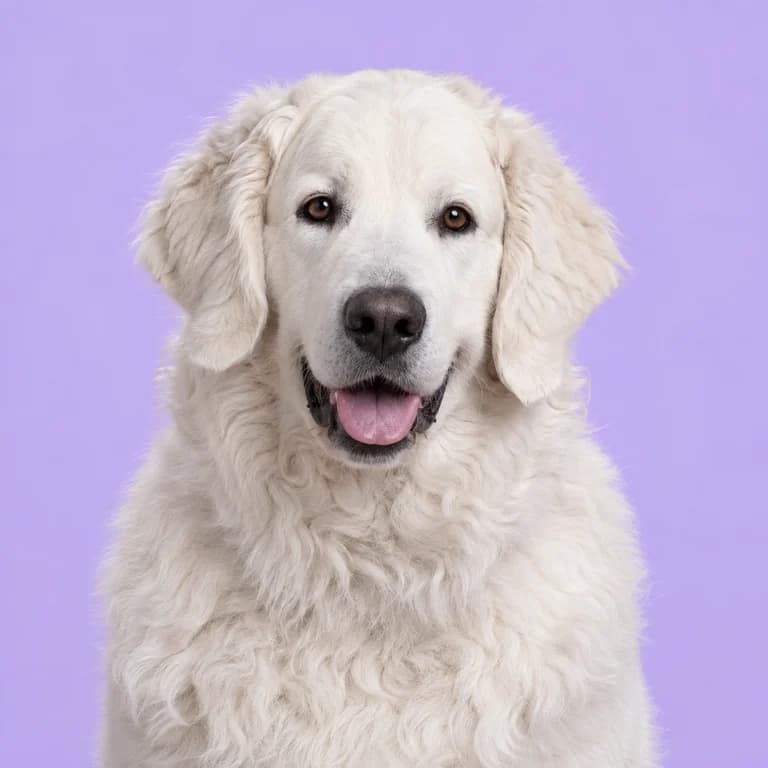
Working group
Kuvasz
37 to 62 kg · 10 to 12 years
A white Hungarian flock guardian that thinks for itself and treats your whole property as its patrol route.
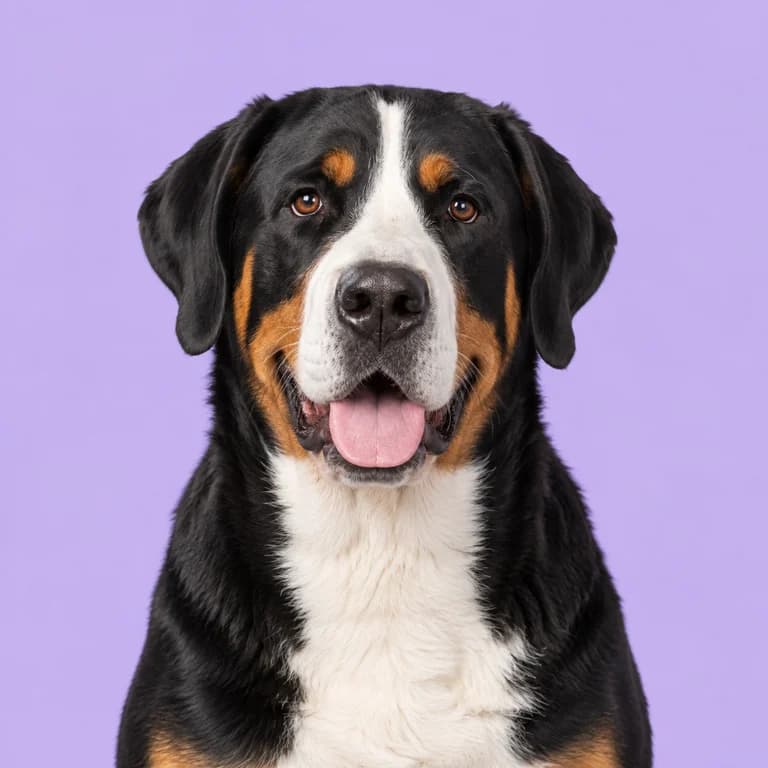
Working group
Greater Swiss Mountain Dog
39 to 64 kg · 8 to 11 years
The largest Swiss mountain breed, once a farm's cart puller and still a gentle, heavyweight family worker.
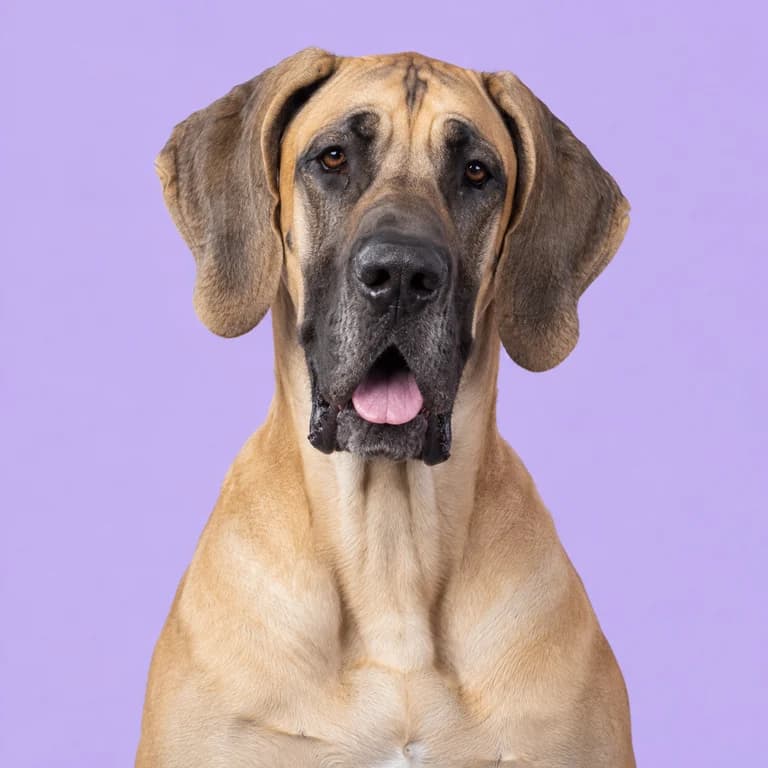
Working group
Great Dane
50 to 79 kg · 7 to 10 years
A dog the height of a small pony that would rather lean on you than guard anything.
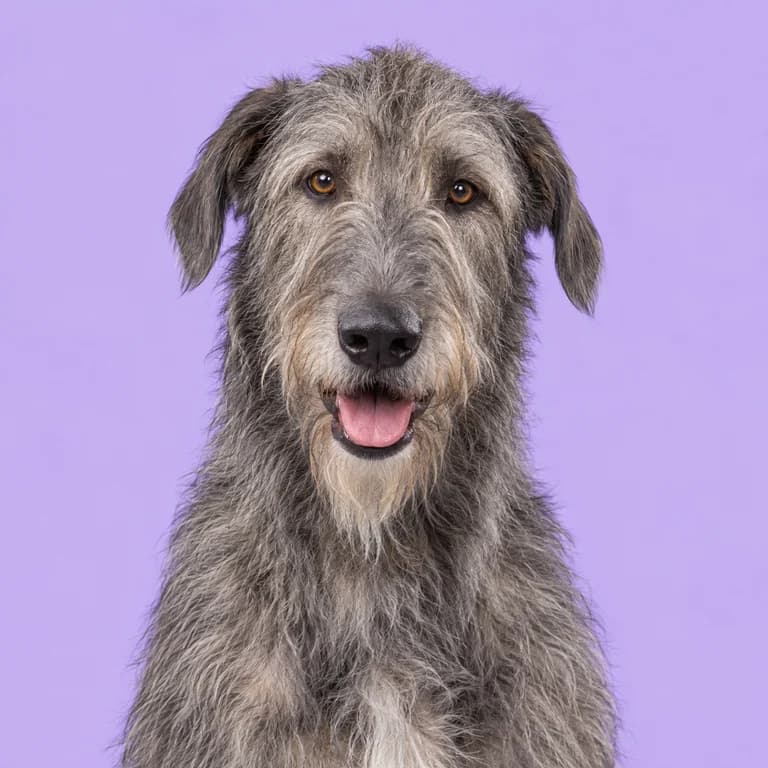
Hound group
Irish Wolfhound
45 to 70 kg · 6 to 8 years
Once a hunter of wolves, the Irish Wolfhound is now a soft-natured giant that towers over every other hound.