Sources for this article
Hound group · United States
Black and Tan Coonhound
Also called American Black and Tan Coonhound, Black and Tan
Mellow and sociable on the sofa, but outdoors a single raccoon scent turns it into a baying tracker.
The Black and Tan Coonhound is an American scent hound bred to track raccoons at night, following old trails and baying loudly once the quarry is up a tree. Indoors it is easygoing, gentle and friendly with nearly everyone. Outdoors its nose and voice take charge, so secure fencing, lead walks and some thought for the neighbors are part of owning one.
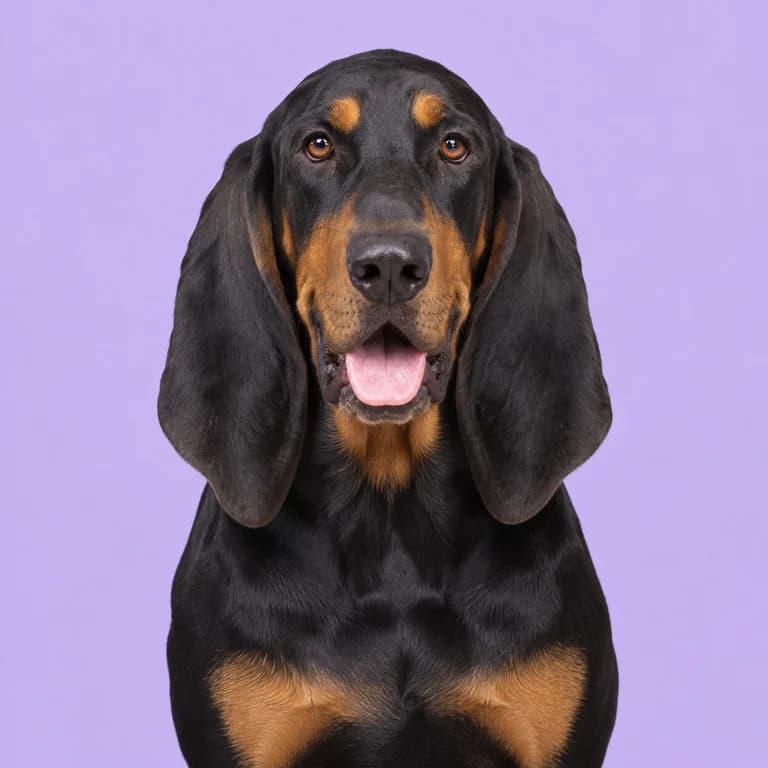
Original AI-generated breed illustration
Weight
25 to 45 kg
55 to 99 lb
Height
58 to 69 cm
at the shoulder
Life expectancy
10 to 12 yrs
Activity estimate
60 to 90 min
editorial daily planning range
Adult-size estimate
20 months
approximate model input
Life with a Black and Tan Coonhound
Coonhound owners often describe living with two different dogs. One is sprawled across the sofa, snoring gently and happy to be ignored. The other is at the end of a lead, nose down, having just found where a raccoon crossed the path an hour ago. Indoors the Black and Tan is gentle, patient and undemanding; outside it is a determined, vocal tracker with a nose that is very hard to switch off.
The breed took shape in the American South and the Appalachian mountains, where hunters wanted a hound that could follow the faint, old scent of a raccoon through woods at night, then stand at the foot of the tree and bay once the animal climbed. It is often said to descend from Bloodhounds and early American foxhounds, possibly with older hounds brought over by colonists in the mix. In 1945 it became the first coonhound breed recognized by the American Kennel Club.
Temperament is friendly and sociable. Having been hunted in pairs and packs, most Black and Tans get along well with other dogs, and they are usually gentle with children. They are not guard dogs in any real sense, though a visitor will certainly be announced with a deep bawl. Many are sensitive souls that sulk if handled roughly.
Everyday life with one involves drool, weekly ear care, a distinct hound smell and, above all, sound. That voice was bred to carry across a valley, and it does.
What stands out
Training
Black and Tans are intelligent but independent, bred to solve a trail without any help from a handler. Patient, reward-based training with really good food works best. Keep sessions short and fun, and expect to repeat lessons more often than you would with a retriever or a herding breed.
Read the full training guideEasy to train
Open with strangers
Good with other dogs
A great match for
- people who enjoy hiking and long walks
- homes with other dogs
- rural homes with secure fencing
- owners who like a laid-back dog indoors
Think twice if
- loud baying and howling
- a powerful urge to follow scent and ignore recall
- can escape poorly fenced gardens
- ear infections linked to the long ears
- slow to mature and harder to train than many breeds
Personality and needs at a glance
Living together
Good with children
Good with other dogs
Open with strangers
Apartment friendly
Copes with alone time
Energy and character
Energy level
Playfulness
Easy to train
Barking
5 means very vocal
Care and climate
Grooming needs
Shedding
Drooling
Handles cold
Handles heat
How much a Black and Tan Coonhound eats
Illustrative calculations for neutered adults at midpoint breed weights, with food at 370 kcal per 100 g and 100 g per cup. These are not measured breed requirements. Use actual weight, the food label and veterinary body-condition advice.
| Dog | Weight | Calories | Dry food |
|---|---|---|---|
| Female, relaxed lifestyle | 32 kg | 1300 kcal | 350 g (3.5 cups) |
| Female, typical pet | 32 kg | 1490 kcal | 400 g (4 cups) |
| Male, typical pet | 38 kg | 1700 kcal | 460 g (4.5 cups) |
| Male, very active | 38 kg | 2120 kcal | 575 g (5.8 cups) |
Care guides for the Black and Tan Coonhound
Things owners are often surprised by
- 1The first coonhound breed recognized by the American Kennel Club, in 1945
- 2Often said to descend from Bloodhounds and early American foxhounds
- 3Known as a cold-nosed hound, able to follow trails that are hours old
- 4Has a deep, bawling bay that carries a long way on a still night
- 5The long, low-set ears can reach past the tip of the nose when drawn forward
Black and Tan Coonhound questions
Are Black and Tan Coonhounds loud?
Yes. They have a deep, bawling bay that carries a long way, and they use it when tracking, when excited or when bored. Training can reduce nuisance noise, but it will not remove the voice entirely. They suit rural homes or neighborhoods with understanding neighbors far better than apartments or tightly packed terraced streets.
Can a Black and Tan Coonhound be trusted off leash?
Rarely. Once a coonhound picks up a scent it tends to follow it single-mindedly, sometimes for kilometers, and may not respond to recall at all. Use a long line in open areas and let the dog run free only in securely fenced spaces. Many owners use scentwork or tracking classes to give the nose a safe outlet.
How is a Black and Tan different from a Bloodhound?
Both are large scent hounds with long ears and deep voices, but the Black and Tan is lighter, less wrinkled and quicker, built to trail raccoons through woods at night. The Bloodhound is heavier and droolier, with much looser skin, and is best known for following human trails. Black and Tans come only in black with tan markings.
Are Black and Tan Coonhounds good with cats?
Some live peacefully with cats they have grown up with, but many have a strong urge to chase small animals that run, especially outdoors. Introduce any cat slowly, supervise early meetings, and make sure the cat has high escape routes. Neighborhood cats and wildlife in the garden may always be seen as fair game.
Do Black and Tan Coonhounds drool?
Moderately. The loose lips drip after drinking and when food is around, though usually less than a Bloodhound or a mastiff. Keep a towel near the water bowl, wipe the lips after meals, and clean any folds regularly to prevent smell. A sudden jump in drooling, especially with pawing at the mouth, is worth a vet check.
Popular answers for owners
- Puppy feeding and growthWhat should I feed a puppy during weaning?
- How much to feedHow much more should I feed my dog if we start a new hiking routine?
- Exercise and playHow do I build up my dog's distance for running?
- Puppy feeding and growthWhy is my puppy always hungry after eating?
- How much to feedThe bag says a certain number of cups, how do I convert that to grams?
- Puppy feeding and growthHow much should an 8 month old puppy eat?
Breeds you might compare
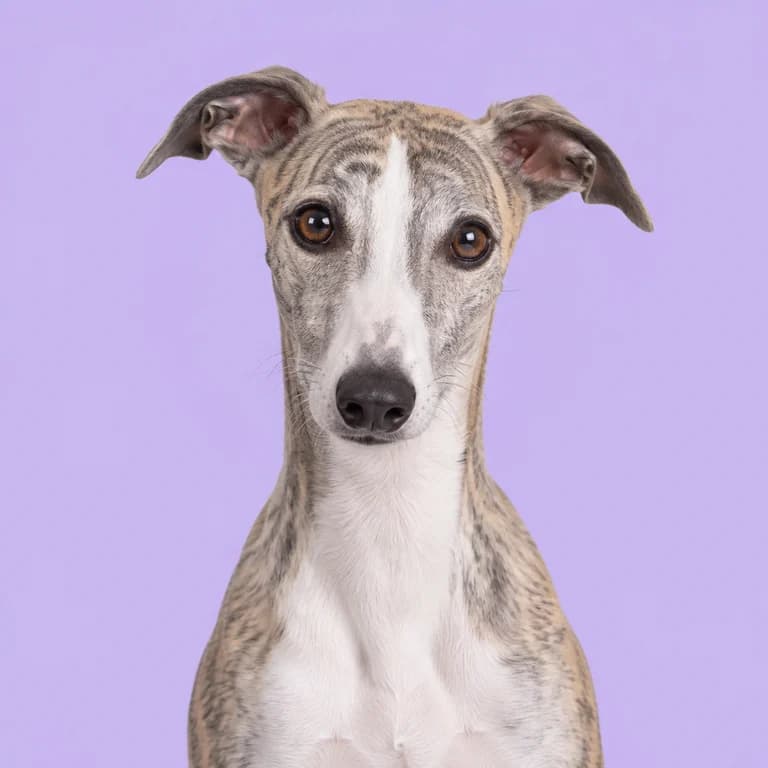
Hound group
Whippet
9 to 16 kg · 12 to 15 years
Built for 55 km/h sprints, yet happiest curled under a blanket for most of the day.
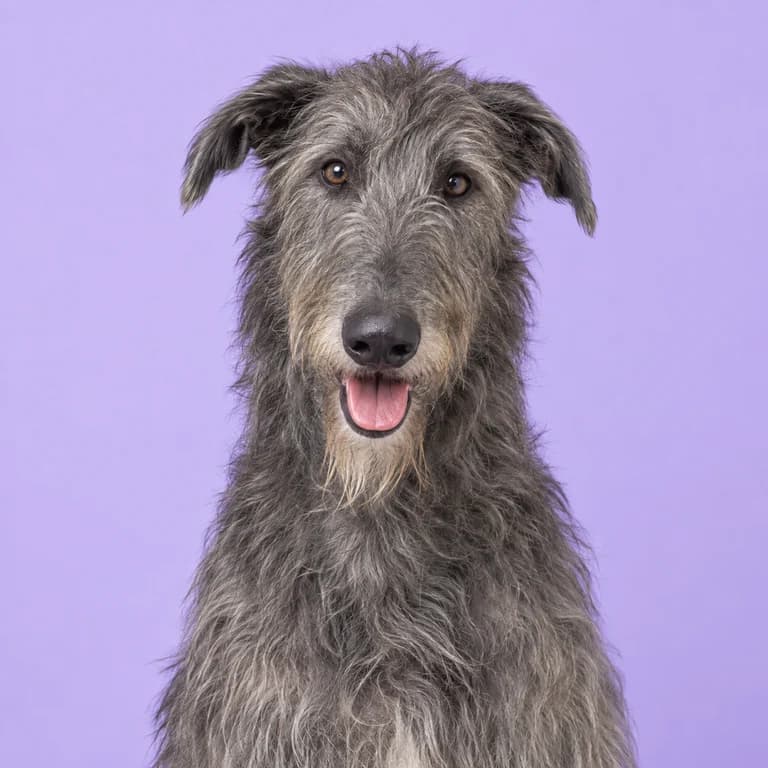
Hound group
Scottish Deerhound
34 to 50 kg · 8 to 11 years
Tall enough to rest its chin on your dining table, yet gentle, quiet and happiest stretched out on the sofa.
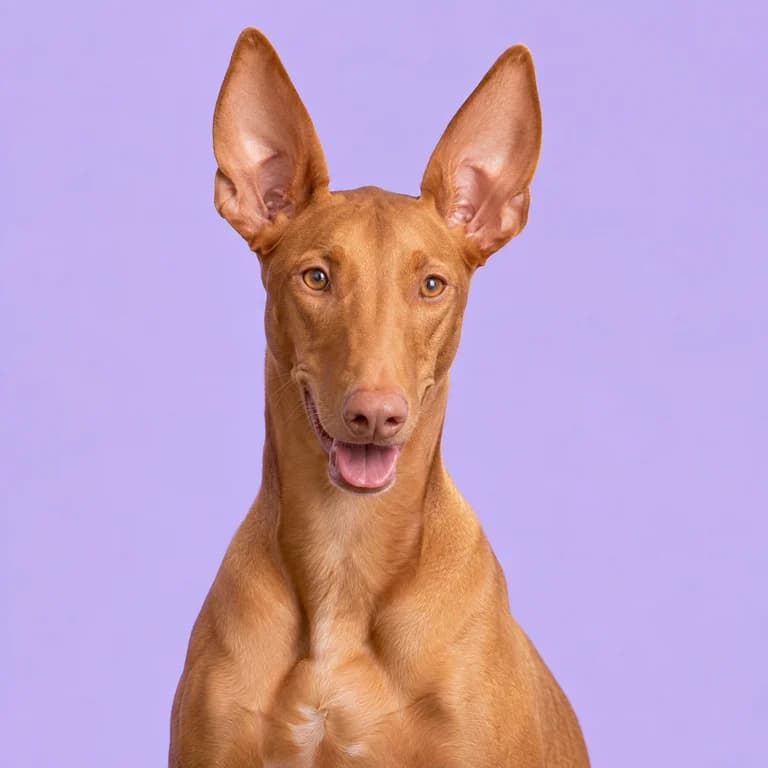
Hound group
Pharaoh Hound
18 to 25 kg · 12 to 14 years
Malta's national dog, a night-hunting rabbit hound whose ears and nose flush pink when it is happy.
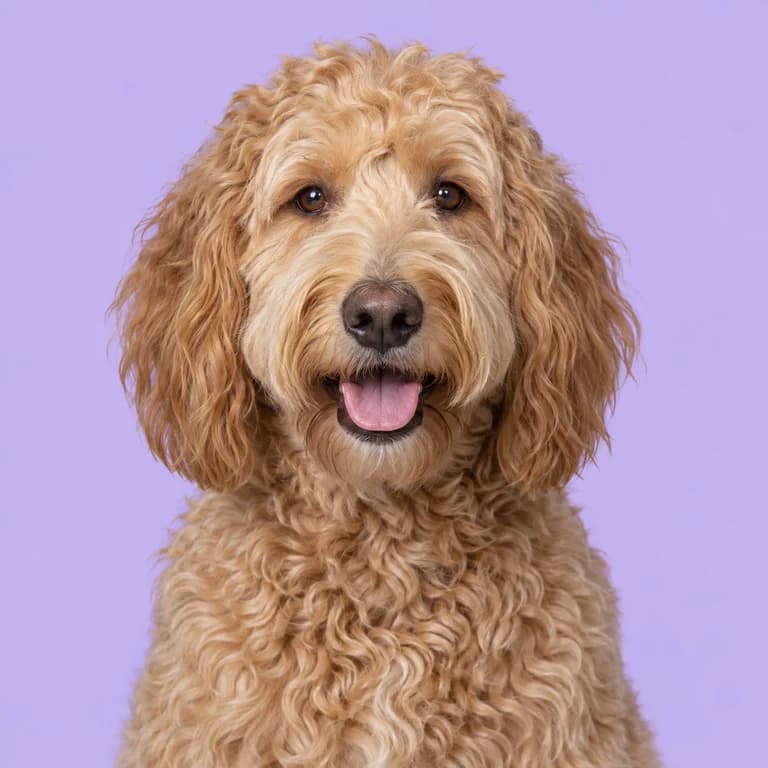
Crossbreed
Goldendoodle
23 to 36 kg · 10 to 15 years
A sociable Golden Retriever and Poodle cross whose coat type decides how much of your week goes to brushing.
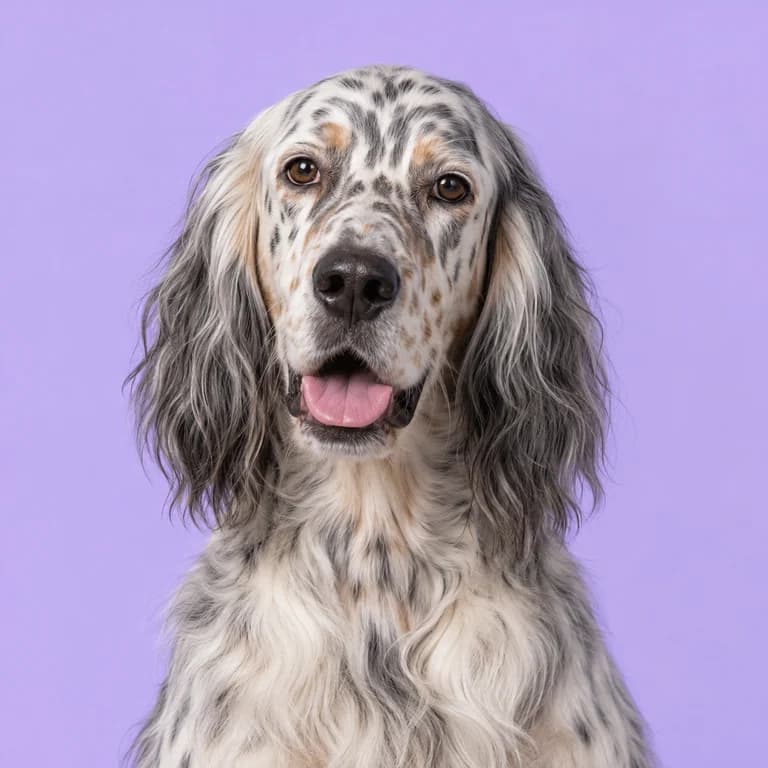
Sporting group
English Setter
20 to 36 kg · 10 to 12 years
A speckled gentleman of the field, mellow at home yet slow to grow out of puppy silliness.
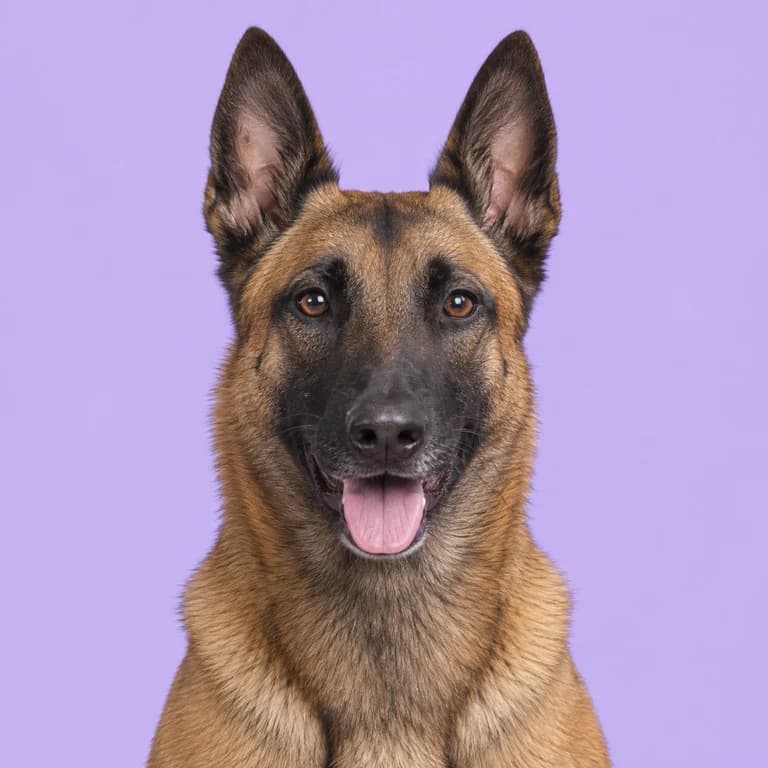
Herding group
Belgian Malinois
20 to 34 kg · 12 to 14 years
A lean Belgian herder turned police partner, built for work at full speed and bored by anything less.