Crossbreed · United States
Goldendoodle
Also called Groodle, Golden Doodle, Doodle
A sociable Golden Retriever and Poodle cross whose coat type decides how much of your week goes to brushing.
The Goldendoodle blends the Golden Retriever's easy friendliness with the Poodle's quick mind and often lower shedding. Size and coat vary widely depending on the Poodle parent and the generation of the cross. Most are playful, people-loving dogs that need frequent grooming, regular exercise and company.
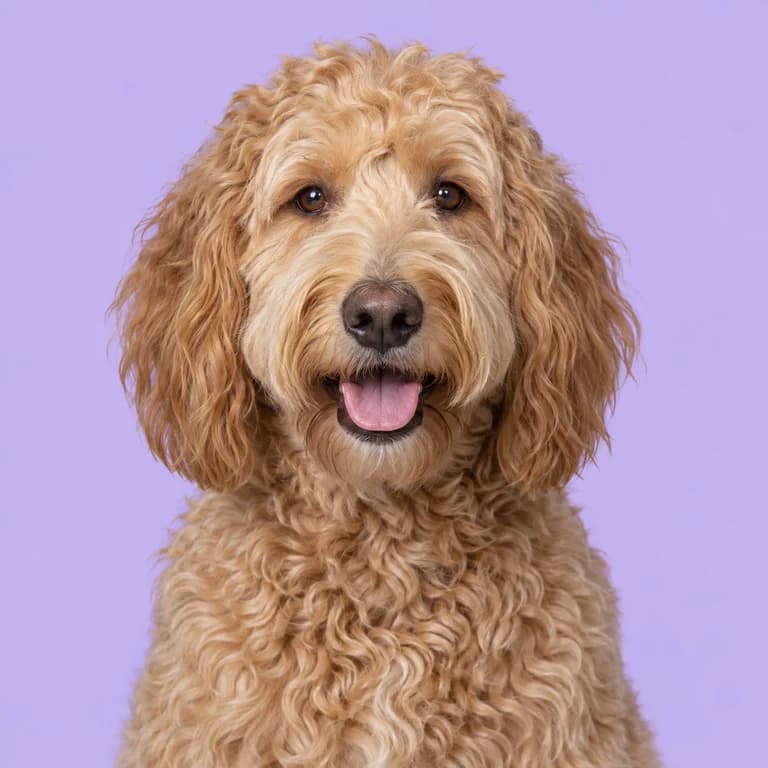
Original AI-generated breed illustration
Weight
23 to 36 kg
51 to 79 lb
Height
51 to 61 cm
at the shoulder
Life expectancy
10 to 15 yrs
Activity estimate
90 to 120 min
editorial daily planning range
Adult-size estimate
15 months
approximate model input
Life with a Goldendoodle
Ask ten Goldendoodle owners what their dog looks like and you may get ten different answers. Breeders began crossing Golden Retrievers with Poodles in the 1990s, hoping to combine the retriever's gentle, sociable nature with the Poodle's intelligence and low-shedding coat. Demand grew quickly, and today the cross comes in several sizes and in coats ranging from nearly flat to tightly curled.
Because the Goldendoodle is a cross rather than a standardized breed, predictability depends on breeding. A first-generation F1 litter can contain puppies with very different coats, while multigenerational lines bred for several generations tend to be more consistent. Size depends mostly on the Poodle parent: Standard Poodles produce large dogs, while Miniature and Toy Poodles produce minis and smaller.
In temperament, most Goldendoodles are affectionate, outgoing and playful, often greeting guests with enthusiasm and getting on well with children and other dogs. They are bright and trainable but can be boisterous in youth. They thrive on company and do best in homes where someone is around for a good part of the day, since long hours alone can lead to distress and chewing.
What stands out
Grooming
Grooming is the defining commitment. Wavy and curly coats need thorough brushing three to four times a week using a slicker brush and a metal comb, working in sections down to the skin (line brushing). Pay attention to behind the ears, the armpits, under the collar and the legs.
Read the full grooming guideIllustrative grooming schedule based on our editorial coat-care score. Adjust it to the individual coat and professional advice.
Brushing
Daily
Bathing
Every 3 to 6 weeks
Shedding
Light
Nail trim
Every 3 to 4 weeks
A great match for
- families with children who want a friendly, social dog
- people who prefer low shedding and accept that it is not guaranteed
- owners with time or budget for regular grooming
- active households that enjoy walks, swimming and games
Think twice if
- professional grooming every six to eight weeks
- unpredictable adult size and coat in early generations
- bouncy, mouthy adolescence
- struggles when left alone for long hours
- ear infections under hairy, floppy ears
Personality and needs at a glance
Living together
Good with children
Good with other dogs
Open with strangers
Apartment friendly
Copes with alone time
Energy and character
Energy level
Playfulness
Easy to train
Barking
5 means very vocal
Care and climate
Grooming needs
Shedding
Drooling
Handles cold
Handles heat
How much a Goldendoodle eats
Illustrative calculations for neutered adults at midpoint breed weights, with food at 370 kcal per 100 g and 100 g per cup. These are not measured breed requirements. Use actual weight, the food label and veterinary body-condition advice.
| Dog | Weight | Calories | Dry food |
|---|---|---|---|
| Female, relaxed lifestyle | 28 kg | 1180 kcal | 320 g (3.3 cups) |
| Female, typical pet | 28 kg | 1340 kcal | 365 g (3.8 cups) |
| Male, typical pet | 31 kg | 1450 kcal | 395 g (4 cups) |
| Male, very active | 31 kg | 1820 kcal | 490 g (5 cups) |
Care guides for the Goldendoodle
Things owners are often surprised by
- 1Goldendoodles started appearing in North America and Australia in the 1990s, shortly after the Labradoodle drew attention to Poodle crosses.
- 2An F1 is a first cross between a Golden Retriever and a Poodle; an F1B is an F1 bred back to a Poodle, giving about 75 percent Poodle ancestry.
- 3DNA tests can predict whether a puppy will have furnishings (the beard and eyebrows) and how curly its coat is likely to be.
- 4Standard Goldendoodles usually weigh 23 to 36 kg (50 to 80 lb), while minis from Miniature Poodle crosses often land between 7 and 16 kg (15 to 35 lb).
- 5A thorough brush-out down to the skin, several times a week, is what keeps a wavy or curly coat mat free between grooms.
Goldendoodle questions
Are Goldendoodles hypoallergenic?
Not reliably. Many wavy and curly Goldendoodles shed little, but allergens come from saliva and skin as well as hair, and some Goldendoodles inherit a shedding coat. People with mild allergies often cope well, while others react. Spend time with the specific dog or its parents before committing, and ask the breeder about coat DNA testing.
What do F1, F1B and multigen mean?
F1 is a first cross between a Golden Retriever and a Poodle. F1B is an F1 bred back to a Poodle, giving roughly 75 percent Poodle ancestry and often a curlier, lower-shedding coat. Multigenerational Goldendoodles come from Goldendoodle parents over several generations, usually with more predictable size and coat.
How big will my Goldendoodle get?
Size depends mainly on the Poodle parent. Standards typically weigh 23 to 36 kg (50 to 80 lb), minis 7 to 16 kg (15 to 35 lb), and smaller toy crosses less. The weights of both parents are the best guide. Early-generation crosses vary more, so a single litter may include puppies of different adult sizes.
Why is my Goldendoodle's coat straight?
Some Goldendoodles inherit the Golden Retriever's flat coat and lack furnishings, the facial hair that gives the doodle look. These dogs usually shed more. DNA tests can identify the furnishings and curl genes, helping breeders predict coat type. A straight-coated Goldendoodle is healthy, just different in appearance and shedding.
What is the difference between a Goldendoodle and a Labradoodle?
Both are Poodle crosses, but one uses a Golden Retriever and the other a Labrador. Goldendoodles often have slightly softer, longer coats and may be a touch gentler, while Labradoodles can be more energetic and sturdy. Individual variation is large, so temperament and coat depend more on the specific parents than on the label.
Popular answers for owners
- Bowls and feeding gearHow often should water bowls be refilled and washed?
- How much to feedDo I really need a kitchen scale for my dog's food?
- Bowls and feeding gearShould I move my dog's bowl to a new spot after a move?
- Puppy feeding and growthHow much should an 18 month old puppy eat?
- How much to feedHow much should I feed a 30kg dog?
- How much to feedHow much should I feed if my dog's weight is exactly between two amounts on the feeding chart?
Breeds you might compare
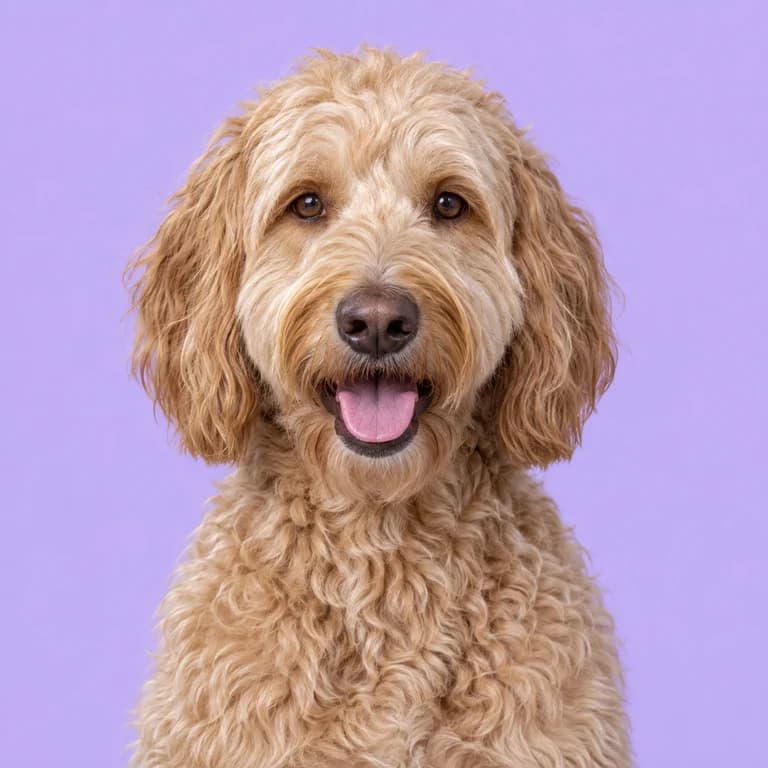
Crossbreed
Labradoodle
17 to 32 kg · 12 to 15 years
A cross first bred for an Australian guide-dog program, now among the world's most popular family dogs.
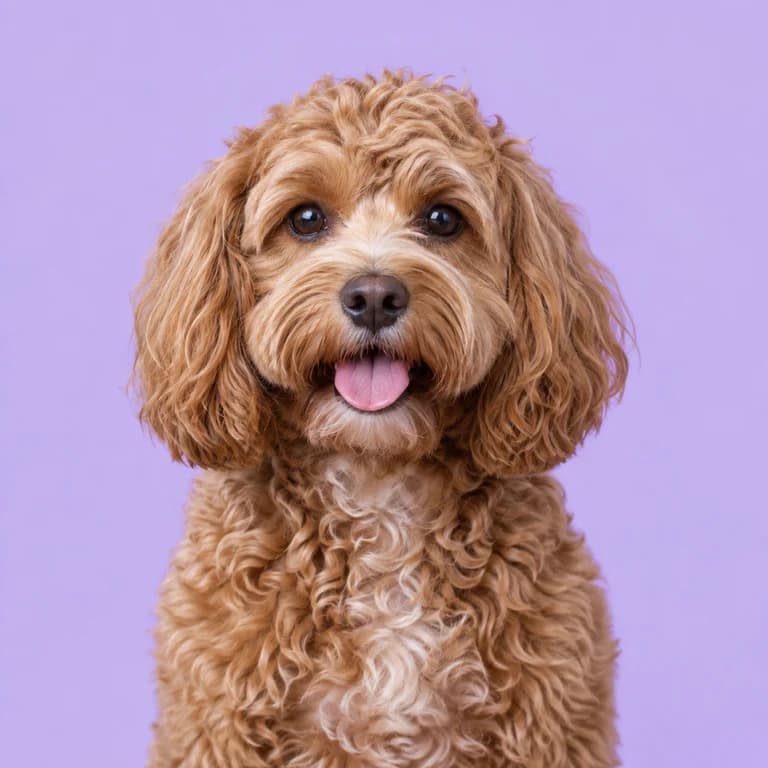
Crossbreed
Cavapoo
5 to 11 kg · 12 to 15 years
Cavalier softness meets Poodle brains in a people-focused cross sized for almost any home.
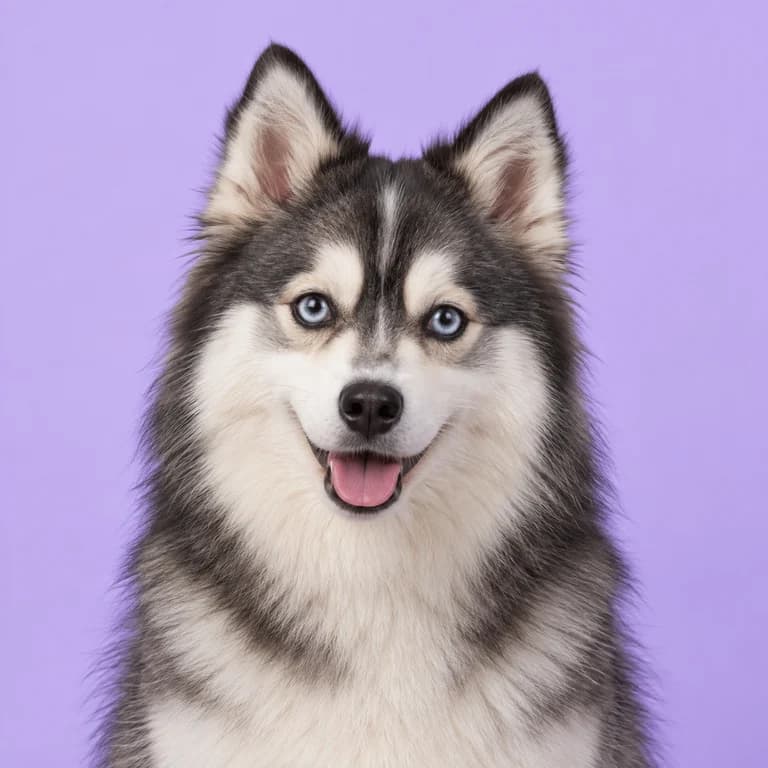
Crossbreed
Pomsky
7 to 14 kg · 12 to 15 years
A Husky look in a smaller package, with size and personality that vary more than many buyers expect.
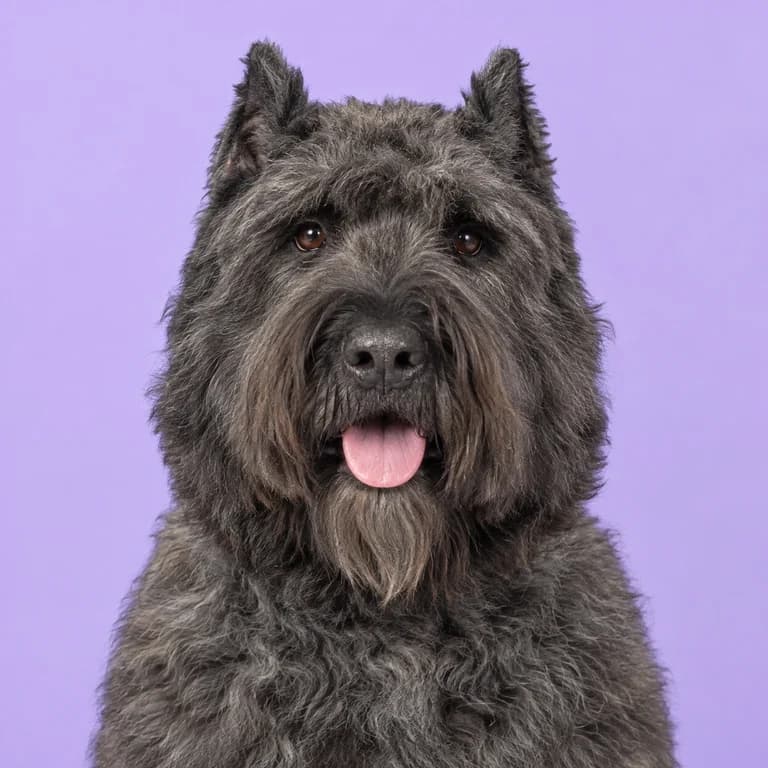
Herding group
Bouvier des Flandres
27 to 40 kg · 10 to 12 years
A rugged Flemish cattle dog hidden under a shaggy coat that demands weekly work and regular trimming.
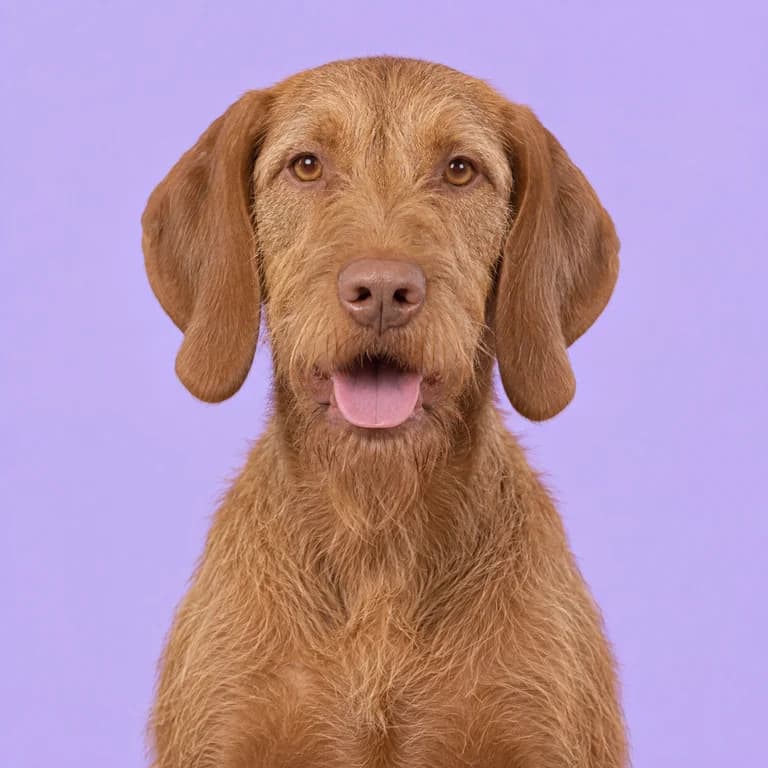
Sporting group
Wirehaired Vizsla
20 to 30 kg · 12 to 14 years
A Hungarian gun dog with a weatherproof beard, built to hunt all day in cold water and thick cover.
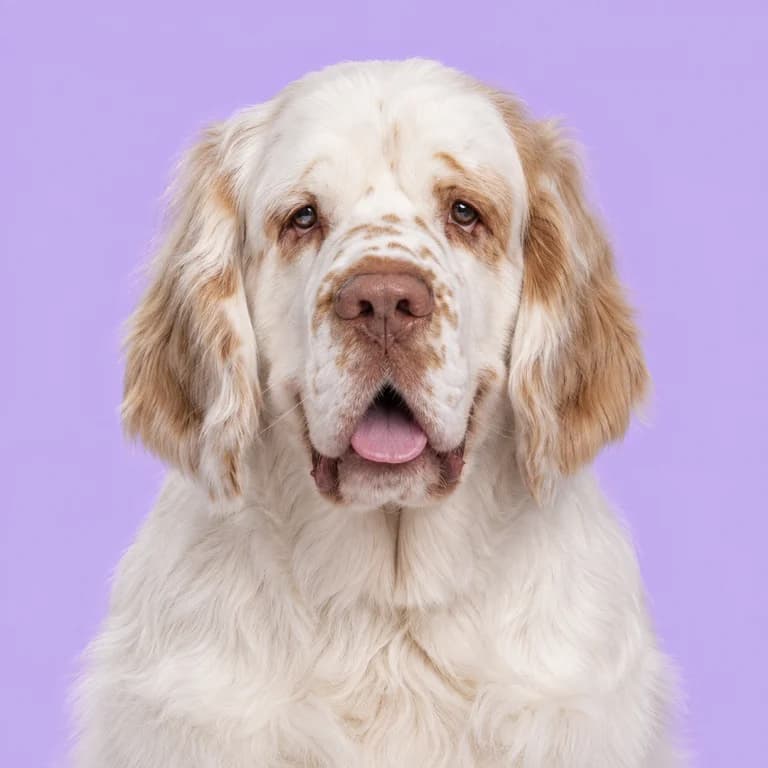
Sporting group
Clumber Spaniel
25 to 39 kg · 10 to 12 years
A heavy, low-slung spaniel with a rolling walk, a gentle soul and no interest in rushing anything.