Sources for this article
Hound group · Belgium
Bloodhound
Also called St. Hubert Hound, Chien de Saint-Hubert
A patient, drooling giant whose trailing work has been accepted as evidence in courtrooms.
The Bloodhound descends from hounds kept by Belgian monks more than a thousand years ago and remains the best-known trailing dog in the world. It is gentle and sociable, but it drools, bays, follows its nose without hesitation and needs owners with space, patience and a strong fence.
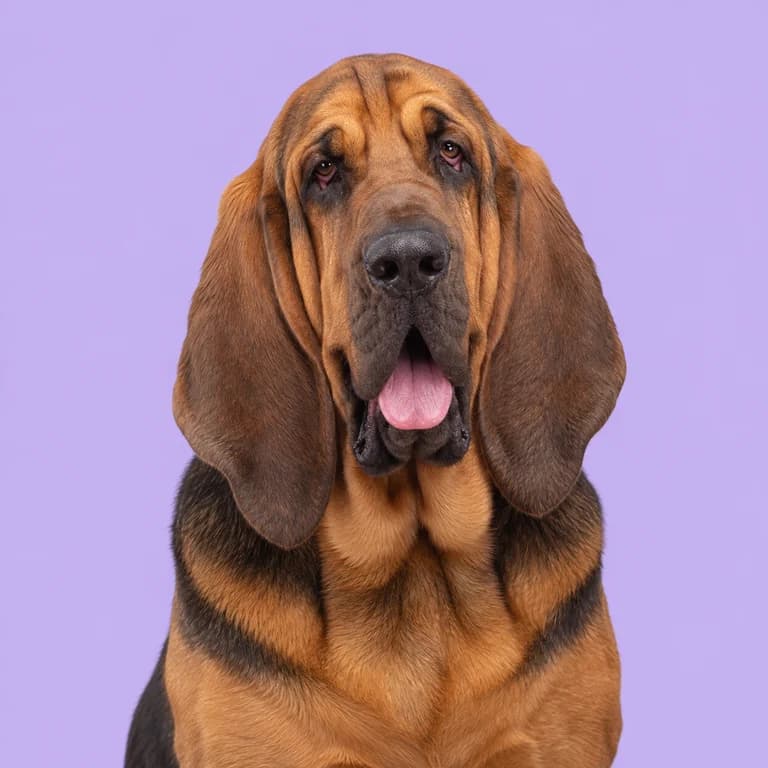
Original AI-generated breed illustration
Weight
40 to 54 kg
88 to 119 lb
Height
58 to 72 cm
at the shoulder
Life expectancy
10 to 12 yrs
Activity estimate
60 to 90 min
editorial daily planning range
Adult-size estimate
24 months
approximate model input
Life with a Bloodhound
Medieval monks at the abbey of Saint-Hubert, in what is now the Belgian Ardennes, kept a line of heavy, deep-voiced scent hounds that they sent each year as gifts to French kings. Descendants of those dogs reached England after the Norman Conquest, where they were refined and prized by the aristocracy. The name Bloodhound comes from that setting: a blooded hound was one of pure, noble breeding.
The breed's reputation rests on its nose. Bloodhounds were used to track poachers and livestock thieves in Britain, and in the United States their trailing results have been accepted as evidence in court. Their work differs from a sniffer dog searching a bag: a Bloodhound is given a scent article, such as a worn glove, and then follows that one person's trail over hours and across towns, fields and roads.
Living with one is a mix of charm and mess. Bloodhounds are affectionate, easygoing with people and other dogs, and surprisingly sensitive to criticism. They also leave ropes of drool on walls, bay at interesting sounds and wander off the moment a smell catches their interest. Families who love them tend to accept all three with good humor and a supply of towels.
A great match for
- owners with a large, securely fenced garden
- people interested in mantrailing or search work
- calm families with older children
- those who love a gentle, sociable giant
Think twice if
- heavy drooling, especially after drinking
- loud baying that carries a long way
- recall that fails once a scent is found
- bloat risk linked to a deep chest
- slow to mature and to train
Personality and needs at a glance
Living together
Good with children
Good with other dogs
Open with strangers
Apartment friendly
Copes with alone time
Energy and character
Energy level
Playfulness
Easy to train
Barking
5 means very vocal
Care and climate
Grooming needs
Shedding
Drooling
Handles cold
Handles heat
How much a Bloodhound eats
Illustrative calculations for neutered adults at midpoint breed weights, with food at 370 kcal per 100 g and 100 g per cup. These are not measured breed requirements. Use actual weight, the food label and veterinary body-condition advice.
| Dog | Weight | Calories | Dry food |
|---|---|---|---|
| Female, relaxed lifestyle | 44 kg | 1670 kcal | 450 g (4.5 cups) |
| Female, typical pet | 44 kg | 1910 kcal | 515 g (5.3 cups) |
| Male, typical pet | 50 kg | 2110 kcal | 570 g (5.8 cups) |
| Male, very active | 50 kg | 2630 kcal | 710 g (7 cups) |
Care guides for the Bloodhound
Things owners are often surprised by
- 1Traces back to hounds bred at the abbey of Saint-Hubert in the Belgian Ardennes
- 2The name refers to blooded, meaning pure-bred, rather than to any taste for blood
- 3Can follow a human scent trail that is a day or more old
- 4Loose skin and long ears give the breed its famous wrinkled face
- 5Among the breeds most at risk of bloat, so meal routine matters
Bloodhound questions
Why do Bloodhounds drool so much?
Their loose lips hang in deep pendulous flews, and saliva collects there instead of staying in the mouth. When the dog shakes its head, drinks or smells food, that saliva is released, often in long strings. It is normal for the breed and cannot be trained away. Owners keep towels handy, wipe the lips after drinking and choose wipe-clean surfaces near the water bowl.
Can a Bloodhound ever be trusted off lead?
Only in a securely fenced area. A Bloodhound that picks up a scent becomes absorbed in following it and can cover several kilometers, crossing roads without noticing traffic. Even well-trained individuals rarely respond to recall once trailing. A 10 meter long line clipped to a harness gives freedom to sniff in open spaces while keeping your dog safe.
Are Bloodhounds really used by police?
Yes. Police and search teams in several countries use Bloodhounds to follow a specific missing or wanted person from a scent article. Their trailing results have been accepted in court in the United States. Today many handlers train the breed for mantrailing, finding lost children, older people with dementia and hikers, sometimes following trails that are more than a day old.
Do Bloodhounds bark a lot?
They bark less than many breeds, but they bay, a deep, drawn-out howl that carries a long distance. Baying often happens when the dog finds an interesting scent, hears sirens or is left alone and bored. Neighbors in close housing may notice it. Plenty of scent-based exercise and gradually building up time alone reduce baying caused by boredom.
Are Bloodhounds good with children?
Generally, yes. They are tolerant and affectionate with family members, including children. Size is the main concern: a playful 45 kg adolescent can knock over a toddler without meaning to, and the swinging tail sits at a small child's face height. They suit families with children over about six who can learn to stay calm around a big, clumsy dog.
Popular answers for owners
- Grooming and coatShould you trim a dog's whiskers?
- How much to feedHow often should I check my dog's weight?
- Exercise and playHow do you teach a dog the name of each toy?
- Exercise and playHow do I know if a toy is too small for my dog?
- Puppy feeding and growthDo puppy vitamins or supplements help growth?
- Grooming and coatCan you brush a dog too much?
Breeds you might compare
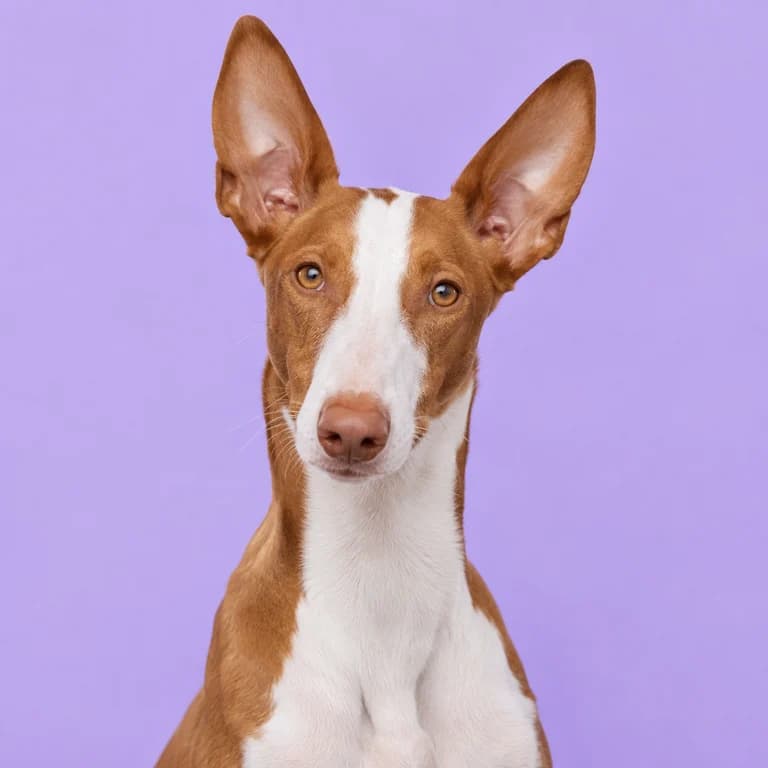
Hound group
Ibizan Hound
19 to 25 kg · 11 to 14 years
A graceful island hunter that tracks rabbits by sight, sound and scent, and clears fences from a standstill.
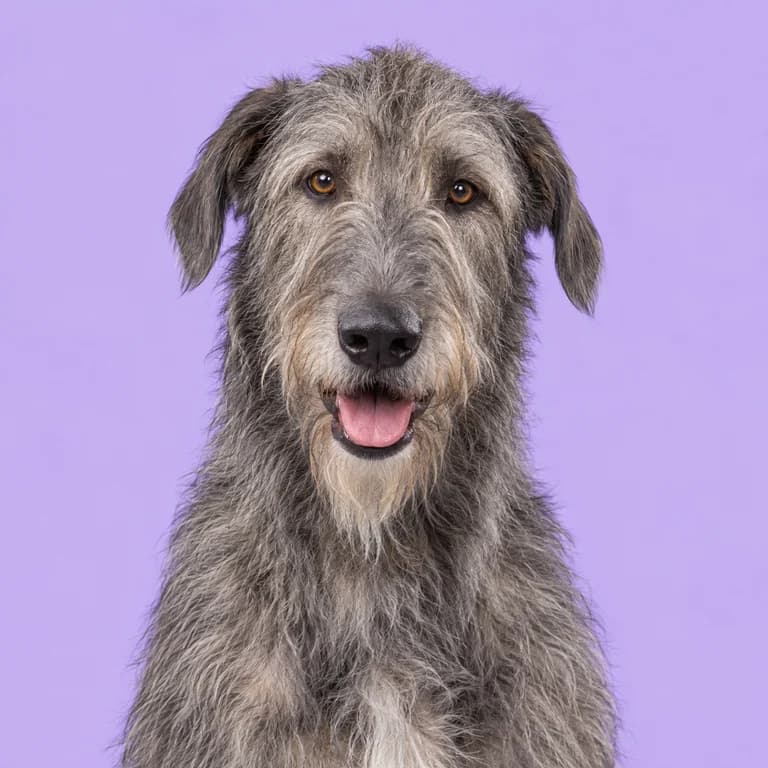
Hound group
Irish Wolfhound
45 to 70 kg · 6 to 8 years
Once a hunter of wolves, the Irish Wolfhound is now a soft-natured giant that towers over every other hound.
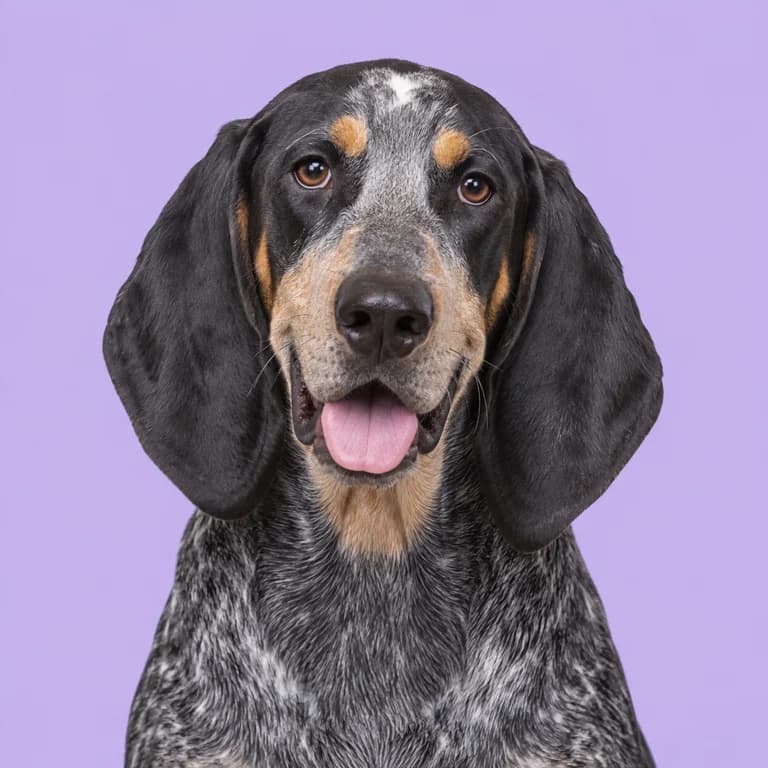
Hound group
Bluetick Coonhound
20 to 36 kg · 11 to 12 years
A cold-nosed American hound with a booming voice that follows a raccoon's trail long after it has faded.
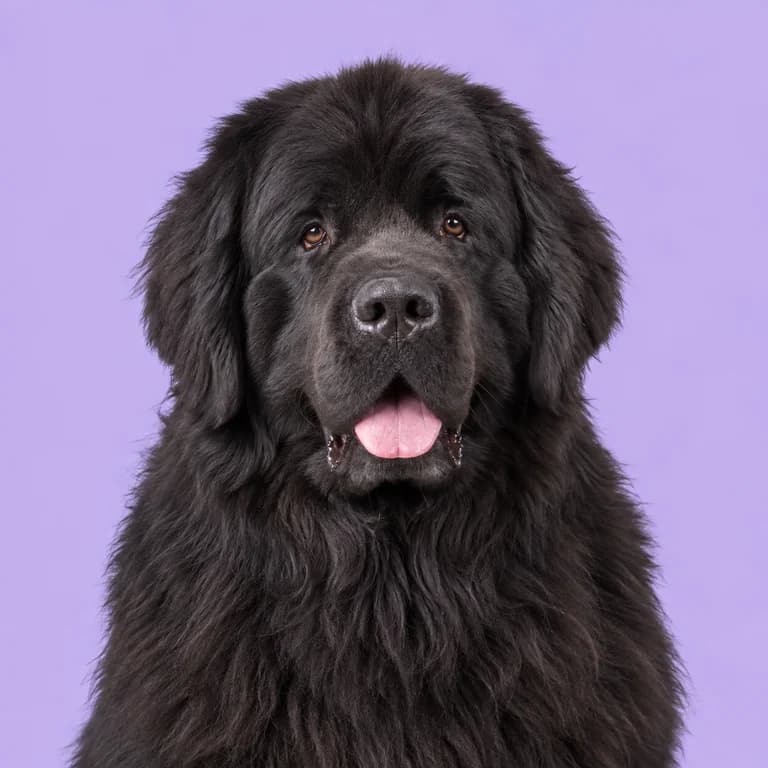
Working group
Newfoundland
45 to 70 kg · 8 to 10 years
A gentle giant with webbed feet, a lifesaving instinct in water and a drool towel never far away.
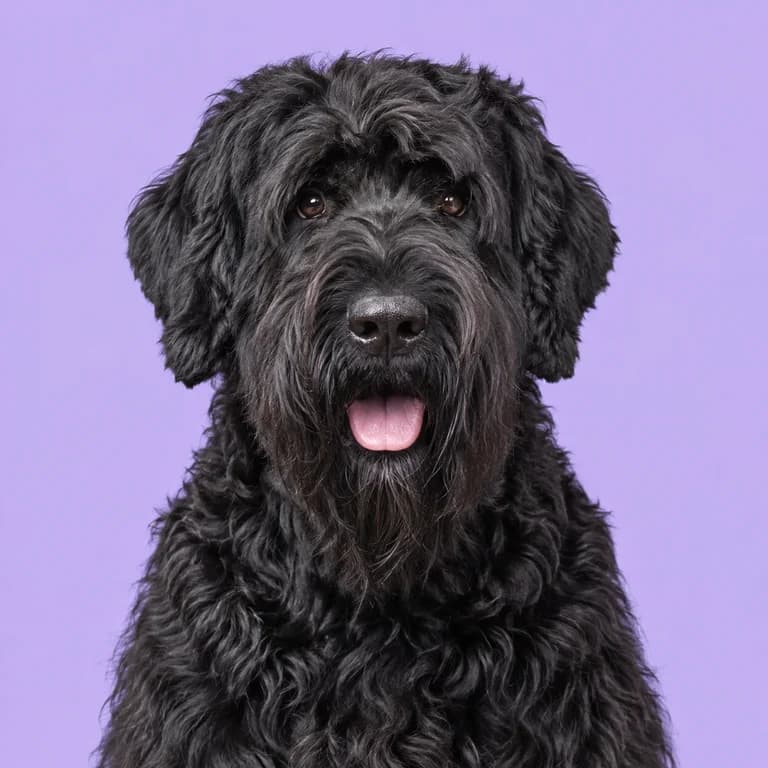
Working group
Black Russian Terrier
45 to 60 kg · 10 to 12 years
A guardian designed by the Soviet army from a mix of breeds, calm at home and serious at the gate.
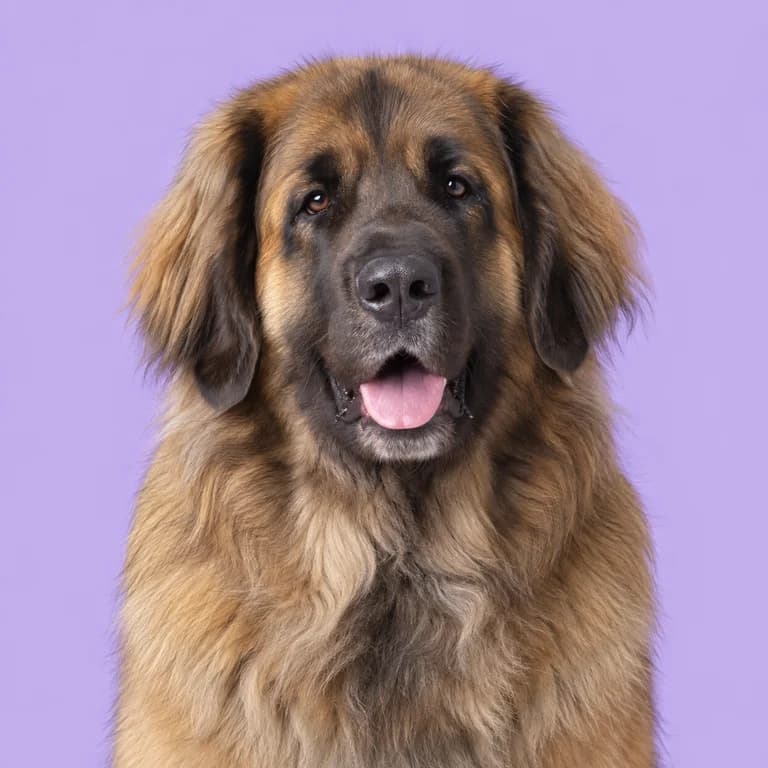
Working group
Leonberger
41 to 77 kg · 7 to 9 years
Named for a lion and built like a bear, the Leonberger fills any room, then settles quietly into it.