Working group · Canada (Newfoundland)
Newfoundland
Also called Newfie, Newf
A gentle giant with webbed feet, a lifesaving instinct in water and a drool towel never far away.
Newfoundlands are enormous, calm working dogs from Canada's Atlantic coast, famous for hauling nets and pulling people out of the sea. Males often top 65 kg (143 lb), so everything from car size to vet bills scales up with them. In return you get one of the sweetest, most patient temperaments in the dog world.
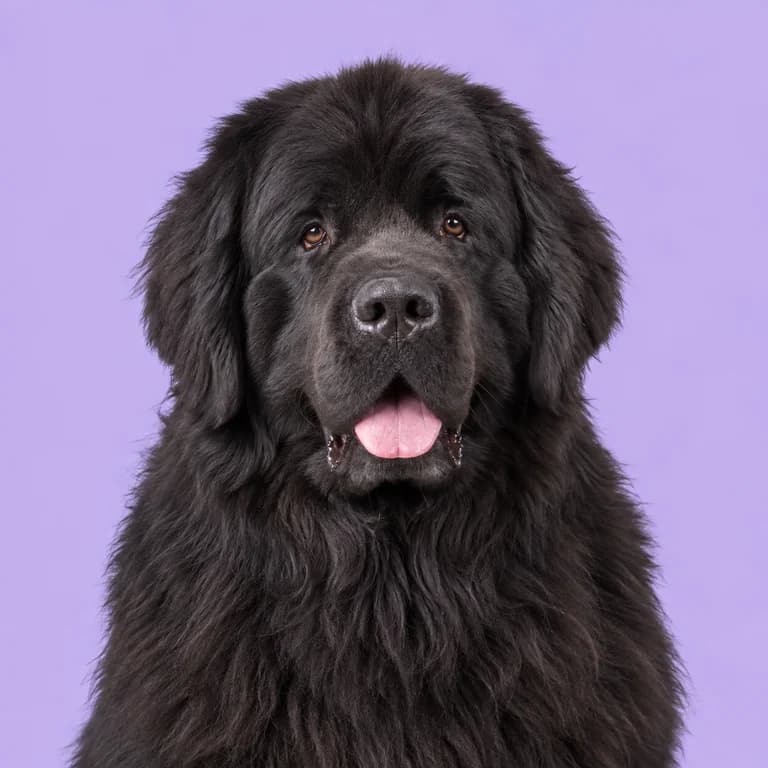
Original AI-generated breed illustration
Weight
45 to 70 kg
99 to 154 lb
Height
63 to 74 cm
at the shoulder
Life expectancy
8 to 10 yrs
Activity estimate
30 to 60 min
editorial daily planning range
Adult-size estimate
24 months
approximate model input
Life with a Newfoundland
Size is the first thing everyone notices, and it should be the first thing you plan for. A mature male stands around 71 cm (28 in) at the shoulder and can outweigh many adults, while females are only a little smaller. That frame needs a big car boot, a sturdy bed, room to turn in the hallway and, eventually, help getting in and out of vehicles.
The breed took shape on the island of Newfoundland, where fishermen needed a dog that could haul carts of wood and nets, work in icy water and retrieve anything, or anyone, that went overboard. Settlers' dogs probably mixed with earlier working dogs on the island, and by the 1700s ships were carrying them to Britain. Stories of Newfies dragging sailors to shore are old and numerous, and water rescue trials are still held across Europe.
Temperament is the reason people accept the drool and the hair. Well-bred Newfies are placid, patient and famously tender with children, happier to lean against you than to race around the garden. They are not guard dogs in the usual sense, though their bulk and deep bark put off most unwanted visitors. Expect a slow, thoughtful dog that simply wants to be wherever you are.
What stands out
Puppy growth
5 lb) at birth to 45 kg (100 lb) or more by their first birthday, then keep filling out until 2 years or later. Many 10-week-old puppies already weigh 10 to 14 kg (22 to 31 lb), so the days of carrying them around end very quickly.
Read the full puppy growth guideIllustrative model, not observed breed data or a healthy-weight standard. Use actual measurements and veterinary advice to assess growth.
A great match for
- families with children of all ages
- homes near lakes or the sea
- cool or temperate climates
- owners with a large car and plenty of indoor space
Think twice if
- heavy drooling, especially after drinking
- very high food, vet and boarding costs
- short lifespan compared with smaller breeds
- struggles in hot weather
- sheds heavily all year
Personality and needs at a glance
Living together
Good with children
Good with other dogs
Open with strangers
Apartment friendly
Copes with alone time
Energy and character
Energy level
Playfulness
Easy to train
Barking
5 means very vocal
Care and climate
Grooming needs
Shedding
Drooling
Handles cold
Handles heat
How much a Newfoundland eats
Illustrative calculations for neutered adults at midpoint breed weights, with food at 370 kcal per 100 g and 100 g per cup. These are not measured breed requirements. Use actual weight, the food label and veterinary body-condition advice.
| Dog | Weight | Calories | Dry food |
|---|---|---|---|
| Female, relaxed lifestyle | 50 kg | 1840 kcal | 500 g (5 cups) |
| Female, typical pet | 50 kg | 2110 kcal | 570 g (5.8 cups) |
| Male, typical pet | 65 kg | 2560 kcal | 695 g (7 cups) |
| Male, very active | 65 kg | 3200 kcal | 865 g (8.8 cups) |
Care guides for the Newfoundland
Things owners are often surprised by
- 1Webbed feet and a powerful swimming stroke that looks more like breaststroke than a doggy paddle
- 2The black and white Landseer color takes its name from painter Sir Edwin Landseer, who featured such dogs in 19th century paintings
- 3Italian water rescue schools train Newfoundlands to leap from boats and helicopters to reach swimmers
- 4Lord Byron wrote a famous epitaph for his Newfoundland, Boatswain, whose monument still stands at Newstead Abbey
Newfoundland questions
Do Newfoundlands really rescue people from water?
Many have a strong natural urge to swim out to people in the water and tow them back, often by an arm or clothing. That instinct is real, but trained water rescue dogs spend months learning specific skills, including towing a person by a float line and working from boats. An untrained family Newfie may also try to 'rescue' children who are happily swimming, so supervise at the lake.
How much does a Newfoundland drool?
A lot, particularly after drinking or eating, and when excited or warm. Strings of drool can land on walls and even ceilings when they shake their heads. Some lines have tighter lips and drool a little less, but no Newfie is dry-mouthed. Owners typically keep a towel in every room and one in the car. If daily slobber would bother you, look at a different breed.
Can a Newfoundland live in a flat?
Only in a large ground-floor flat with easy outdoor access, and even then it is hard work. Carrying a sick or elderly 60 kg dog up stairs is not realistic, lifts may be too small, and the dog needs room to stretch right out. A house with a garden, cool floors and space by the door for towels and coat drying suits them far better.
Are brown and gray Newfoundlands different from black ones?
Only in color. Black is most common, brown ranges from chocolate to bronze, and gray is a diluted black. Landseers are white with black markings; under FCI rules the Landseer (European Continental Type) is a separate, longer-legged breed, while in the UK and US black and white dogs are shown as Newfoundlands. Temperament and care are the same across all colors.
Why is the Newfoundland lifespan so short?
Very large dogs tend to age faster than small ones, a pattern seen across most giant breeds. Their bodies grow enormously in the first two years, and heart disease, joint problems and some cancers are more common in them. Many Newfies live 8 to 10 years, and a fair number reach 12. A lean body and parents screened for heart and joint problems give the best odds.
Popular answers for owners
- Grooming and coatShould I use conditioner on my dog's coat after shampooing?
- Grooming and coatHow do I choose a shampoo for a dog with a sensitive coat?
- Bowls and feeding gearHow often should water bowls be refilled and washed?
- Puppy feeding and growthHow much should a German Shepherd puppy eat at 4 months?
- How much to feedHow much should I feed a 50kg dog?
- Exercise and playHow do I teach my dog to drop the ball during fetch?
Breeds you might compare
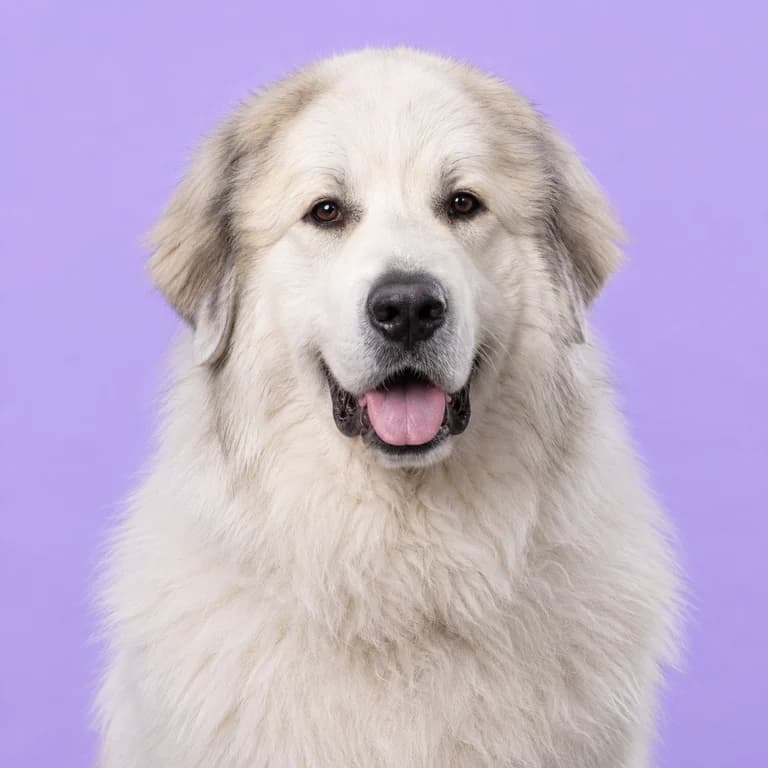
Working group
Great Pyrenees
38 to 60 kg · 10 to 12 years
A calm white giant that sleeps through the afternoon and patrols through the night, exactly as it was bred to.
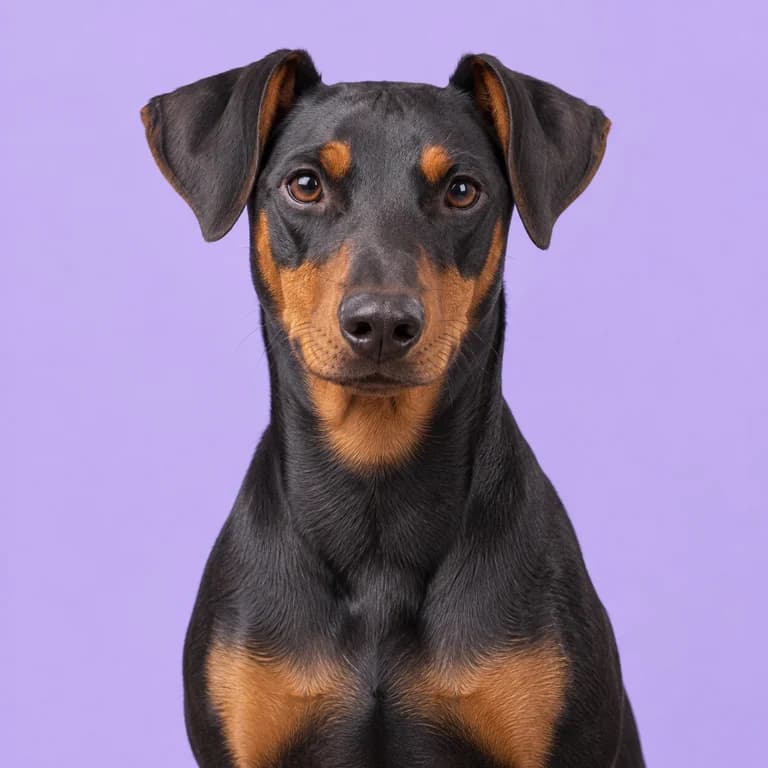
Working group
German Pinscher
11 to 20 kg · 12 to 14 years
A sleek German farm dog built for rat catching and speed, with a motor that rarely idles.
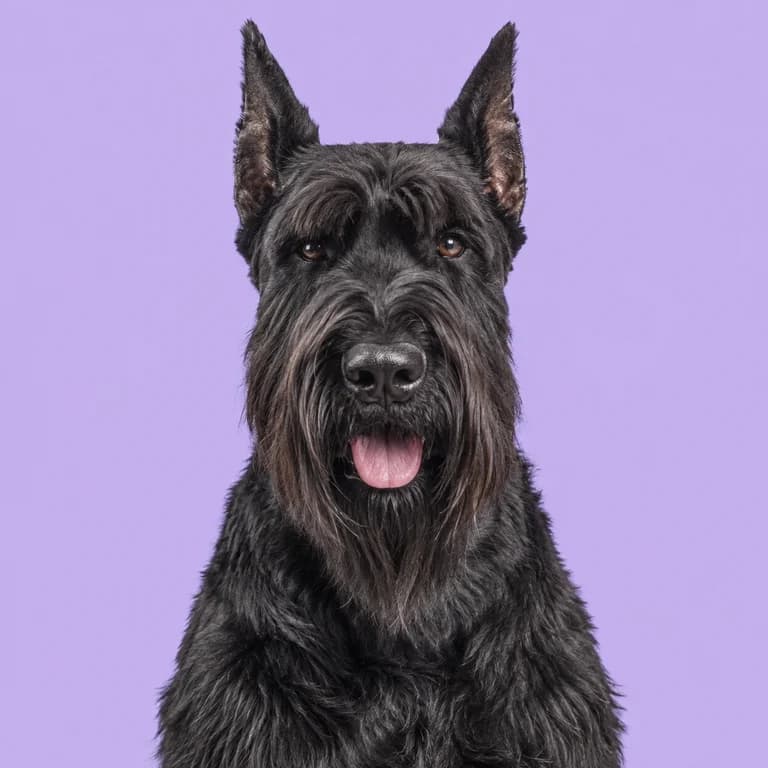
Working group
Giant Schnauzer
25 to 45 kg · 10 to 12 years
A powerful, clever working dog that thrives on structure and a job, and makes up its own without them.
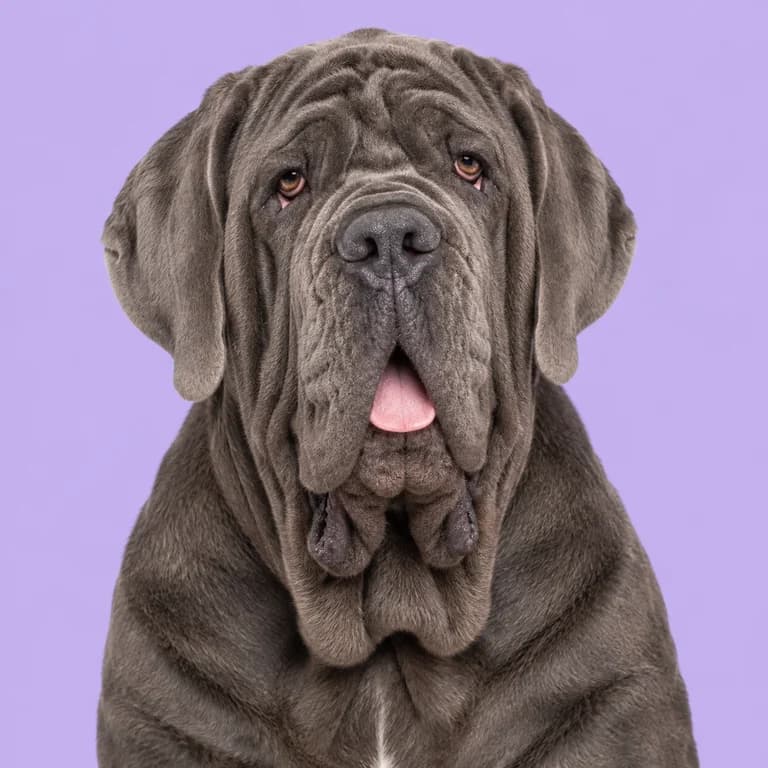
Working group
Neapolitan Mastiff
50 to 70 kg · 7 to 9 years
A slow-moving mountain of wrinkles from southern Italy whose sheer bulk is its main line of defense.
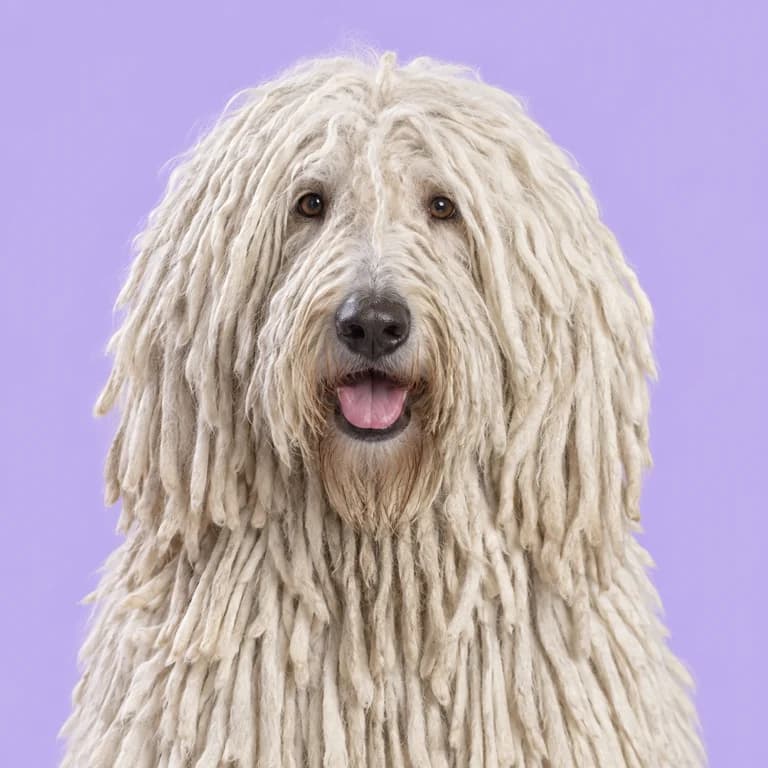
Working group
Komondor
40 to 60 kg · 10 to 12 years
A Hungarian flock guardian wrapped in heavy white cords, serious about its job and slow to trust outsiders.
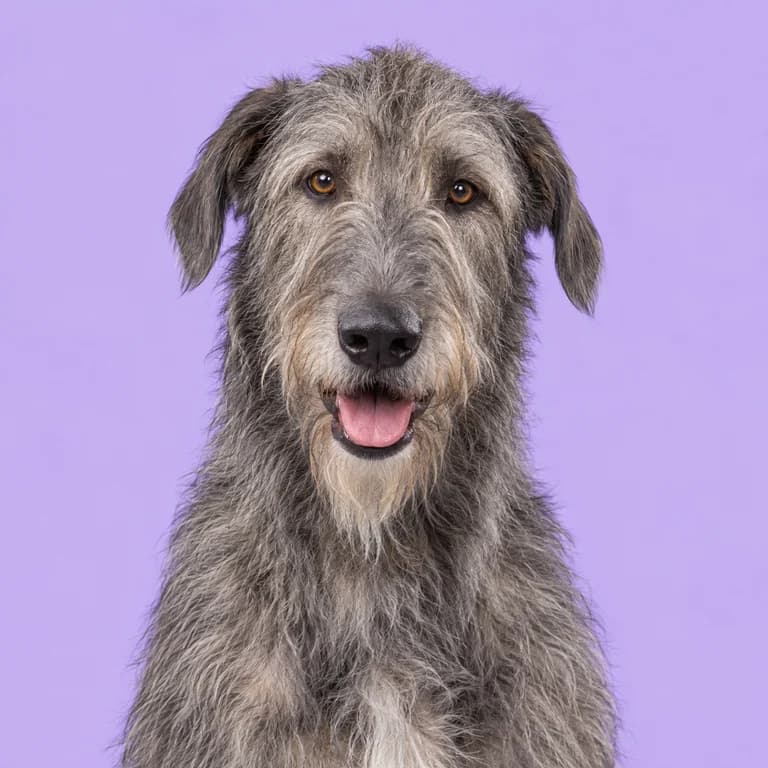
Hound group
Irish Wolfhound
45 to 70 kg · 6 to 8 years
Once a hunter of wolves, the Irish Wolfhound is now a soft-natured giant that towers over every other hound.