Sources for this article
Toy group · Germany and France
Toy Poodle
Also called Toy Pudel, Caniche Toy
A full Poodle brain packed into a body under 4 kg, quick to learn and quicker to notice your habits.
The Toy Poodle is the smallest of the Poodle sizes, standing no taller than about 25 to 28 cm (10 to 11 in) depending on the kennel club. It keeps the sharp mind and springy build of its water-retrieving ancestors, which makes it one of the easiest toy breeds to train and one of the most demanding to groom.
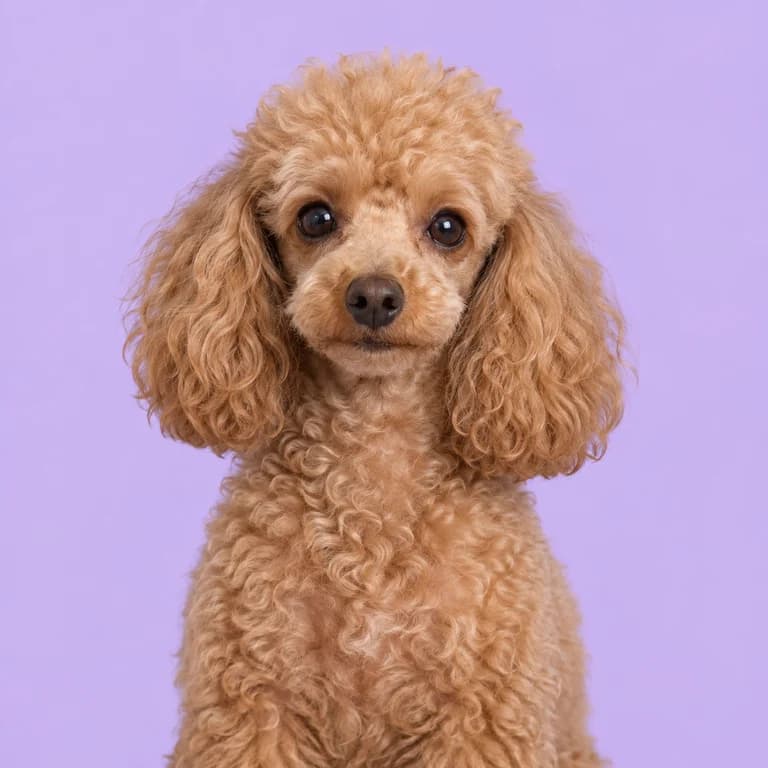
Original AI-generated breed illustration
Weight
2 to 4 kg
4 to 9 lb
Height
22 to 28 cm
at the shoulder
Life expectancy
14 to 17 yrs
Activity estimate
60 to 90 min
editorial daily planning range
Adult-size estimate
10 months
approximate model input
Life with a Toy Poodle
Poodles started out as working water dogs in Germany, fetching shot birds from lakes and marshes. The French took to them, refined them, and by the 1700s smaller versions were popular in European towns as companions and performers. The Toy is that same retriever reduced in size, with the square outline, springy trot and alert head carriage of its larger relatives.
New owners are often surprised by how little of a lapdog the Toy Poodle turns out to be. It studies your routine closely, learns the sound of your keys and your car, and will invent its own games if you do not provide any. Plenty of Toy Poodles compete in trick titles, scent work and small-dog agility, and they tend to enjoy it more than lying on a cushion all day.
Space is never the problem with this breed; attention is. A Toy Poodle usually bonds tightly, often to one person, and follows that person from room to room. If your working days are long, budget for a dog walker, a friend who drops in, or daycare, because a bored Toy Poodle usually expresses itself through barking at every sound in the stairwell.
What stands out
Training
Toy Poodles pick things up in very few repetitions, including lessons you never meant to give. If lifting the dog up ends the barking, the dog soon learns that barking gets it lifted. Keep sessions to 5 to 10 minutes, use tiny food rewards or a favorite toy, and stop while the dog is still keen.
Read the full training guideEasy to train
Open with strangers
Good with other dogs
A great match for
- owners who enjoy short daily training games
- apartment living with regular outings
- people who want minimal hair on the floor
- adults and calm older children
Think twice if
- grooming bills every month or so
- delicate legs that break from a sofa jump
- barking and anxiety when left alone for long days
- crowded teeth that build tartar quickly
Personality and needs at a glance
Living together
Good with children
Good with other dogs
Open with strangers
Apartment friendly
Copes with alone time
Energy and character
Energy level
Playfulness
Easy to train
Barking
5 means very vocal
Care and climate
Grooming needs
Shedding
Drooling
Handles cold
Handles heat
How much a Toy Poodle eats
Illustrative calculations for neutered adults at midpoint breed weights, with food at 370 kcal per 100 g and 100 g per cup. These are not measured breed requirements. Use actual weight, the food label and veterinary body-condition advice.
| Dog | Weight | Calories | Dry food |
|---|---|---|---|
| Female, relaxed lifestyle | 3 kg | 220 kcal | 60 g (0.5 cups) |
| Female, typical pet | 3 kg | 260 kcal | 70 g (0.8 cups) |
| Male, typical pet | 3 kg | 260 kcal | 70 g (0.8 cups) |
| Male, very active | 3 kg | 320 kcal | 85 g (0.8 cups) |
Care guides for the Toy Poodle
Things owners are often surprised by
- 1Height limit is 25 cm (10 in) under the American standard and 28 cm (11 in) in the UK
- 2The curly coat needs a professional clip roughly every 4 to 6 weeks
- 3The name traces back to the old German word Pudel, linked to splashing in water
- 4Many live 14 to 17 years, one of the longest lifespans of any breed
- 5Very small puppies can dip in blood sugar if meals are spaced too far apart
Toy Poodle questions
Is a Toy Poodle the same as a Teacup Poodle?
No. Teacup is a sales label, not a recognized size. It usually describes a dog bred to weigh well under 2 kg, and that extreme smallness tends to bring more trouble with blood sugar, fragile bones and crowded teeth. The Toy standard already describes a very small dog. If a seller advertises teacups, ask to see health test results for both parents and be cautious.
Do Toy Poodles really not shed?
They drop very little hair around the house, because loose hairs stay caught in the curly coat until a brush pulls them out. That is why many people with mild dog allergies manage well with them, though no dog is completely free of allergens. If allergies are a worry, spend a few hours with adult Poodles before you commit.
What is the difference between a Toy and a Miniature Poodle?
Mostly size. Toys top out at 25 cm (10 in) in the US and 28 cm (11 in) in the UK, while Miniatures go up to about 38 cm (15 in) and often weigh 5 to 8 kg. The coat and temperament are the same. Miniatures are a little sturdier around children and keep going on longer walks.
Can a Toy Poodle live with young children?
It can, with supervision and clear rules. The risk is mostly physical: a toddler can drop a 3 kg dog or tread on it and break a leg. Families with children under about 6 often do better with a Miniature or Standard Poodle. Older children who sit on the floor to cuddle and play gently usually find the Toy a willing, playful companion.
Why does my white Toy Poodle have brown marks under its eyes?
Tears contain natural pigments that tint pale hair reddish brown when the face stays damp. White, cream and apricot Poodles show it most. Wiping under the eyes daily and keeping the hair there trimmed short usually reduces the marks. If staining appears suddenly, or the eye looks red, cloudy or squinted, have a vet look at it.
Popular answers for owners
- Grooming and coatHow do I stop my house smelling of wet dog?
- Grooming and coatAre mats painful for dogs?
- Puppy feeding and growthHow much should a 10 month old puppy eat?
- How much to feedHow many calories are in a typical cup of dry dog food?
- Grooming and coatHow often should you bathe a puppy?
- Exercise and playHow do I build up my dog's distance for running?
Breeds you might compare
Toy group
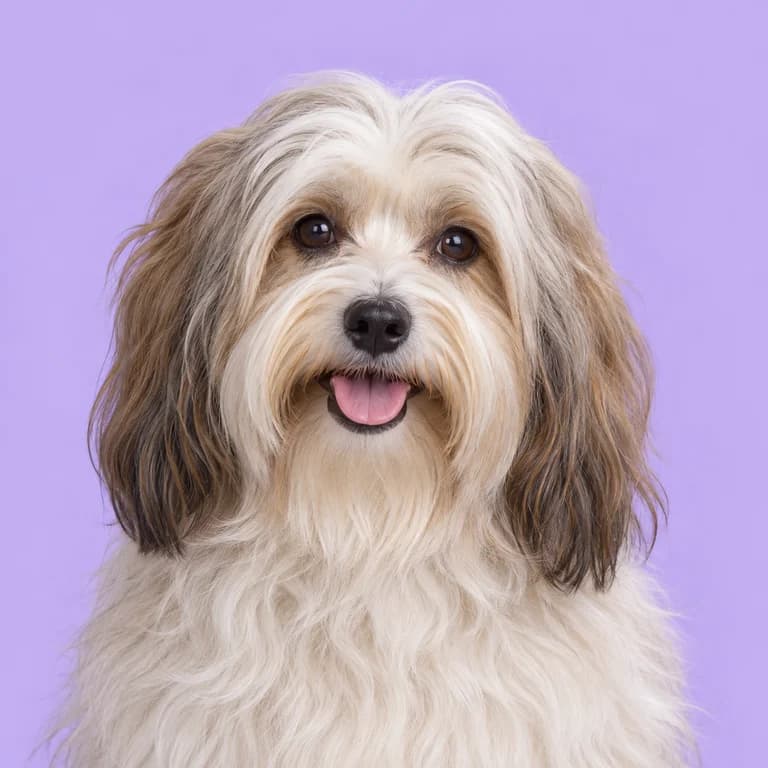
Havanese
3 to 6 kg · 14 to 16 years
Cuba's national dog, a cheerful little shadow that treats every room you enter as the place to be.
Toy group
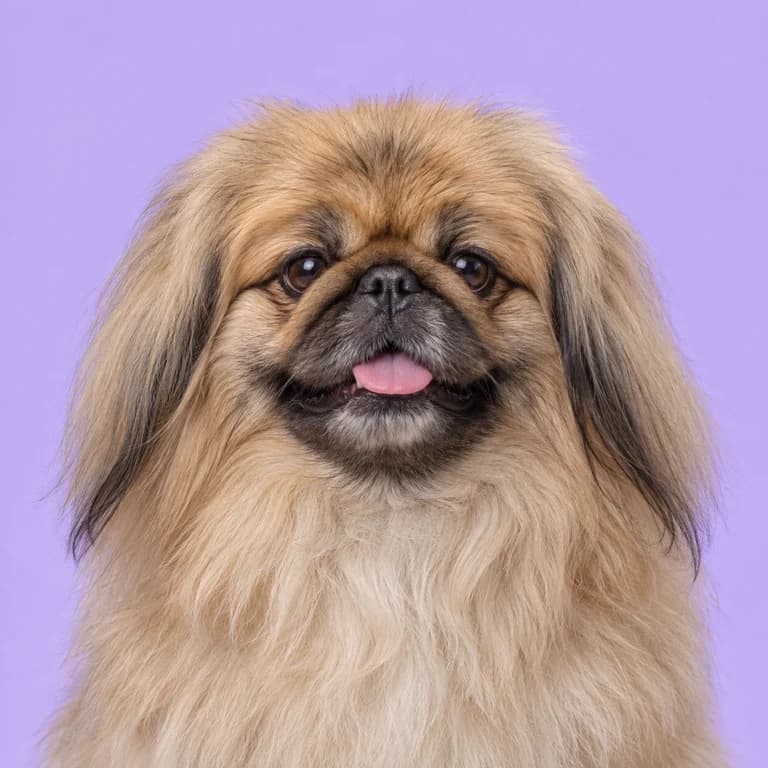
Pekingese
3 to 6 kg · 12 to 14 years
A dignified little dog from the Chinese imperial court, whose flat face and heavy coat shape almost every care decision.
Toy group
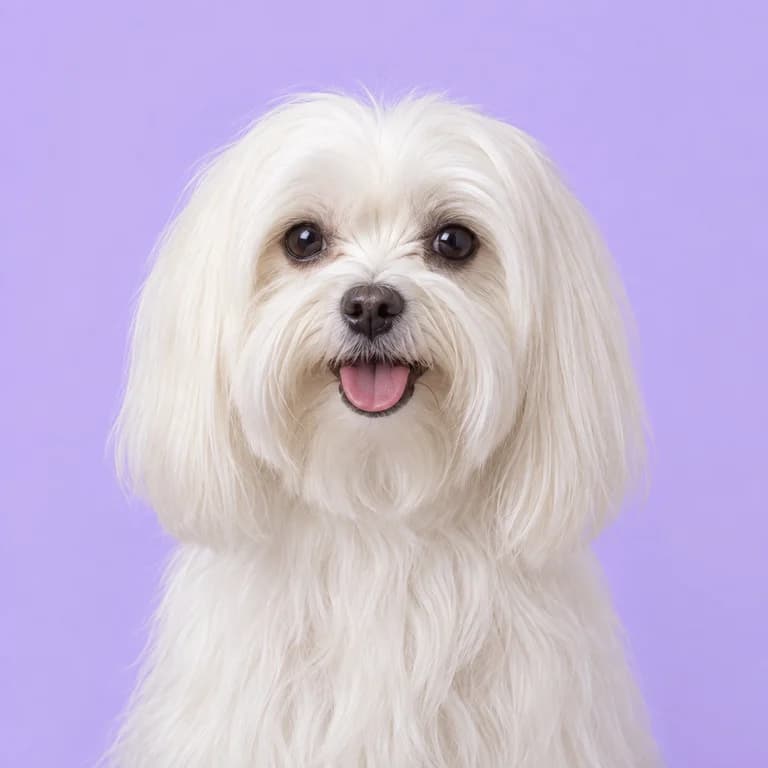
Maltese
2 to 4 kg · 12 to 15 years
A tiny white companion with a bold, cheerful personality and a silky coat that asks for daily attention.
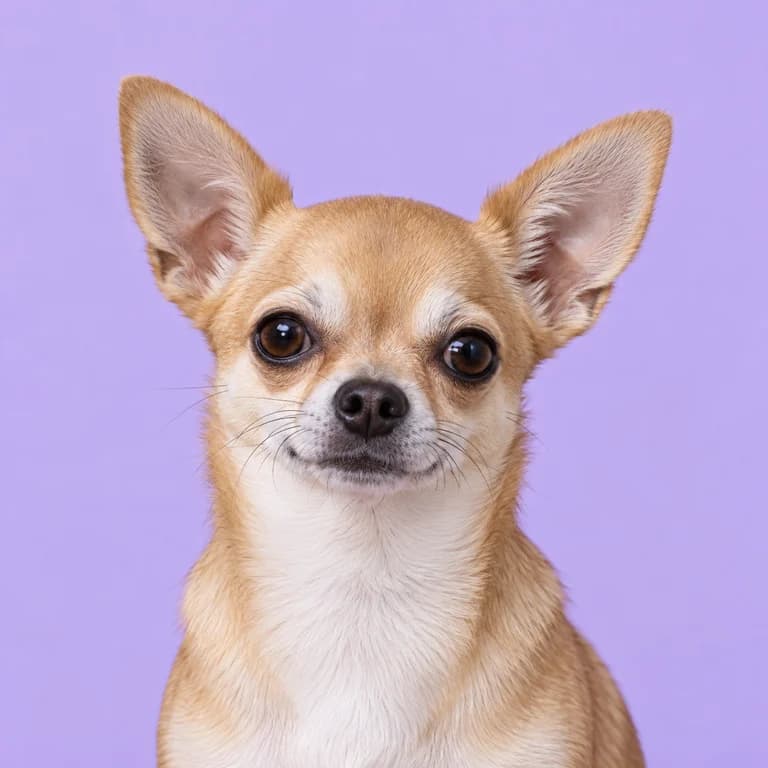
Toy group
Chihuahua
2 to 3 kg · 14 to 17 years
The smallest recognized breed in the world, carrying the confidence and opinions of a much larger dog.
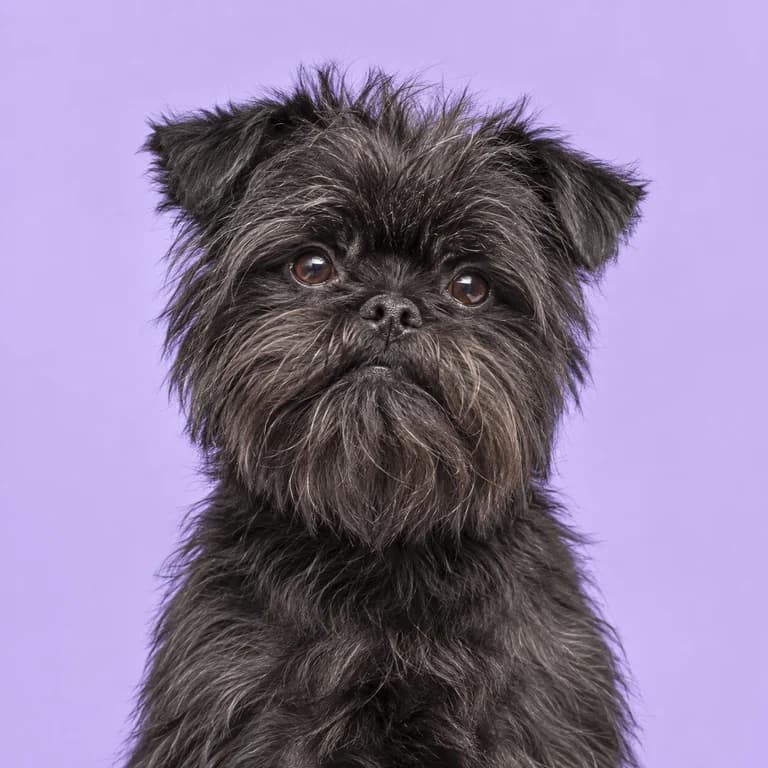
Toy group
Affenpinscher
3 to 6 kg · 12 to 15 years
Barely 4 kg of confidence, a monkey-faced stable ratter that behaves as if nobody told it how small it is.
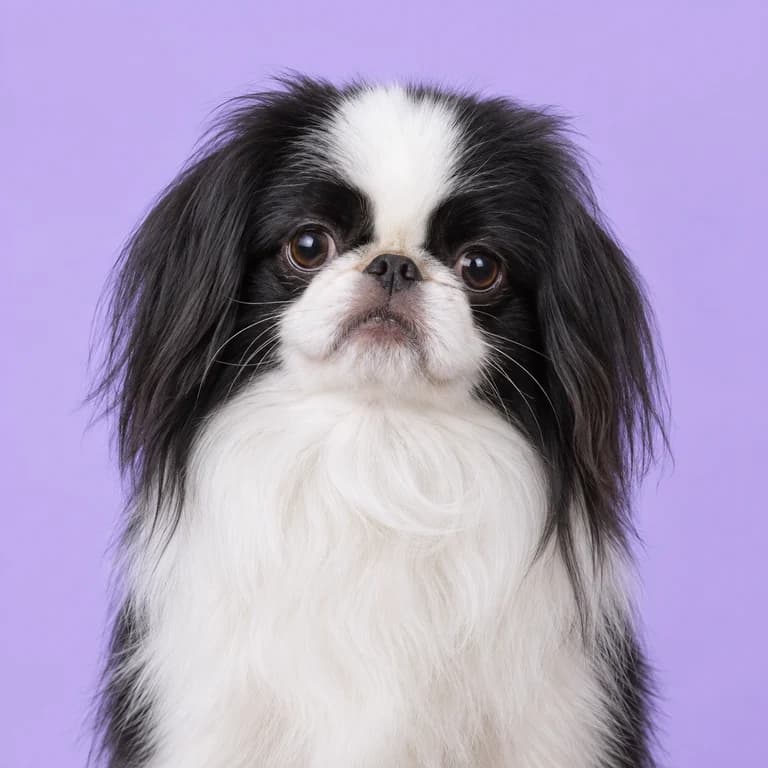
Toy group
Japanese Chin
2 to 5 kg · 10 to 14 years
A quiet, cat-like lap dog that washes its face with its paws and watches from the highest cushion.