Sources for this article
Toy group · China
Pekingese
Also called Peke, Lion Dog, Pekinese
A dignified little dog from the Chinese imperial court, whose flat face and heavy coat shape almost every care decision.
The Pekingese carries itself like royalty because, for centuries, it was bred for royalty. Loyal to its own people and calm indoors, it makes a steady companion for quiet homes. Its short muzzle, prominent eyes and long back mean health and heat management come first, so choose a breeder carefully and learn the warning signs early.
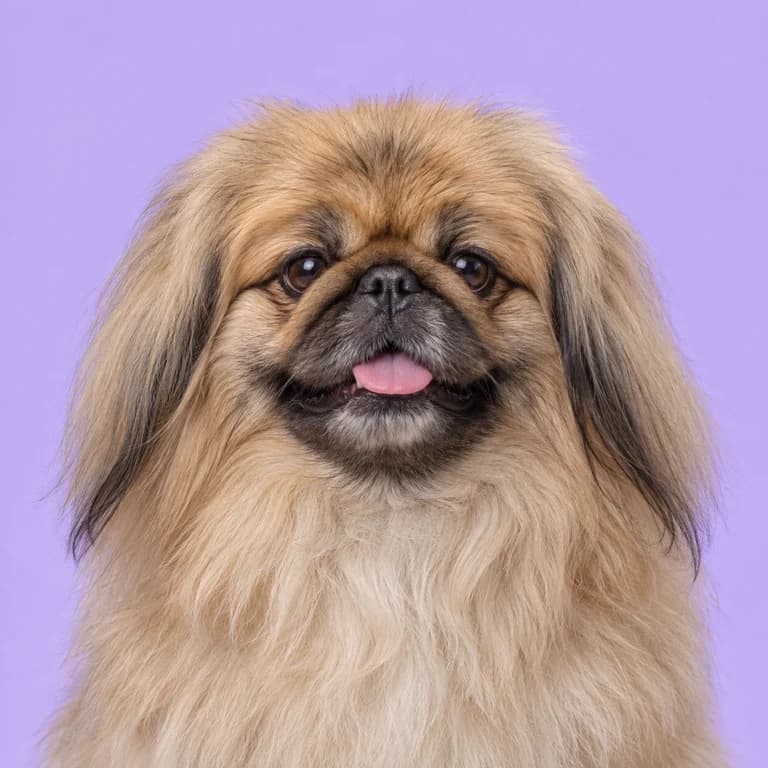
Original AI-generated breed illustration
Weight
3 to 6 kg
7 to 13 lb
Height
15 to 23 cm
at the shoulder
Life expectancy
12 to 14 yrs
Activity estimate
30 to 60 min
editorial daily planning range
Adult-size estimate
12 months
approximate model input
Life with a Pekingese
Few breeds have a court biography like the Pekingese. For centuries these dogs lived inside the imperial palaces of China, and legends grew around them, including the tale that the first Peke was born when a lion shrank himself to court a marmoset. The breed reached the West in 1860, when British and French troops looted the Summer Palace near Beijing and carried off a handful of dogs. One, fittingly named Looty, was given to Queen Victoria.
The personality still has something of the palace about it. Pekes are loyal, often devoted to one person, and quietly sure of themselves. They are not fawning with visitors and may simply walk away from someone they haven't made up their mind about. Indoors they are calm and content with modest exercise, which makes them good company for older owners and apartment dwellers.
Health, though, is the thread that runs through everything else. The flat face, large eyes, long back and dense coat were all selected for appearance, and each brings practical consequences. Understanding them is the difference between a Peke that lives comfortably into its teens and one that struggles. The encouraging news is that many problems can be reduced by choosing a dog with a more open nose and moderate build, and by managing weight and heat with care.
What stands out
Health
The flat face puts the breed at risk of brachycephalic obstructive airway syndrome, in which narrow nostrils, a long soft palate and a small windpipe make breathing hard work. Large, prominent eyes are easily scratched and, after a knock or rough handling, can even slip forward out of the socket. The long back and short legs raise the risk of intervertebral disc disease.
Read the full health guideLife expectancy
12 to 14 yrs
Senior care
Individual assessment
age alone does not define care needs
A great match for
- calm adult households
- apartment living
- owners who are home much of the day
- people who prefer short, gentle walks
Think twice if
- breathing difficulty and poor heat tolerance
- prominent eyes that injure easily
- back problems linked to the long body
- heavy coat needs brushing several times a week
- can be stubborn and aloof with strangers
Personality and needs at a glance
Living together
Good with children
Good with other dogs
Open with strangers
Apartment friendly
Copes with alone time
Energy and character
Energy level
Playfulness
Easy to train
Barking
5 means very vocal
Care and climate
Grooming needs
Shedding
Drooling
Handles cold
Handles heat
How much a Pekingese eats
Illustrative calculations for neutered adults at midpoint breed weights, with food at 370 kcal per 100 g and 100 g per cup. These are not measured breed requirements. Use actual weight, the food label and veterinary body-condition advice.
| Dog | Weight | Calories | Dry food |
|---|---|---|---|
| Female, relaxed lifestyle | 5 kg | 300 kcal | 80 g (0.8 cups) |
| Female, typical pet | 5 kg | 350 kcal | 95 g (1 cups) |
| Male, typical pet | 4 kg | 320 kcal | 85 g (0.8 cups) |
| Male, very active | 4 kg | 400 kcal | 105 g (1 cups) |
Care guides for the Pekingese
Things owners are often surprised by
- 1Kept for centuries in Chinese imperial palaces, where ordinary people were said to be forbidden from owning them
- 2Reached Britain in 1860, when troops took several dogs from the Summer Palace near Beijing; one was presented to Queen Victoria
- 3A heavy front and lighter hindquarters give it a distinctive rolling walk
- 4Usually weighs under 6 kg (14 lb) yet feels surprisingly heavy when lifted
- 5Legend says the breed was born when a lion shrank himself to marry a marmoset
Pekingese questions
Why do Pekingese snore so much?
Snoring comes from the shortened airway: soft tissue packed into a small space vibrates as air passes through. Almost every Peke makes some noise asleep, but loud snoring while awake, gasping, or sleeping sitting up with the chin propped high suggests the dog is working hard to breathe. Mention these signs to your vet, since some dogs benefit from an assessment of their airway.
Can Pekingese live with young children?
They can, but they are not the most tolerant choice. Pekes dislike rough handling and being chased, and their eyes and backs are easily hurt if a child drops or squeezes them. Families with calm children over about eight, who understand how to let the dog come to them, tend to do best. Always give the dog a quiet space it can retreat to.
How often should a Pekingese see a groomer?
Every six to eight weeks is typical for a pet trim, with brushing at home in between. Show coats stay long and demand several hours of home grooming each week. A professional visit is also a good chance to tidy the feet, the hygiene area and the face, which many owners find hard to do neatly. Ask for a tidy finish around the nose wrinkle rather than a close shave.
Are Pekingese lazy dogs?
Calm is a better word. They were bred as palace companions, not workers, so they are content with short walks and long naps. Most still enjoy a daily wander, a sniff around the yard and a few minutes of play, and they become bored and overweight without it. Their modest exercise needs are a real strength for older owners, as long as weight is kept in check.
What is a sleeve Pekingese?
The smallest Pekes were said to have been carried in the wide sleeves of court robes, which is where the name comes from. Today the term usually refers to very small dogs under about 3 kg (6 lb). Breeding for tiny size can increase health problems, including fragile bones and difficult births, so be wary of breeders who advertise extra-small puppies at premium prices.
Popular answers for owners
- Bowls and feeding gearHow do I sanitize a dog bowl without harsh chemicals?
- How much to feedHow much should I feed a dog with a very slow metabolism?
- Grooming and coatCan I use human shampoo on my dog?
- Bowls and feeding gearWhy do long eared dogs get food stuck behind their ears?
- Grooming and coatDoes pool chlorine damage a dog's coat?
- Exercise and playHow often should I rotate my dog's toys?
Breeds you might compare
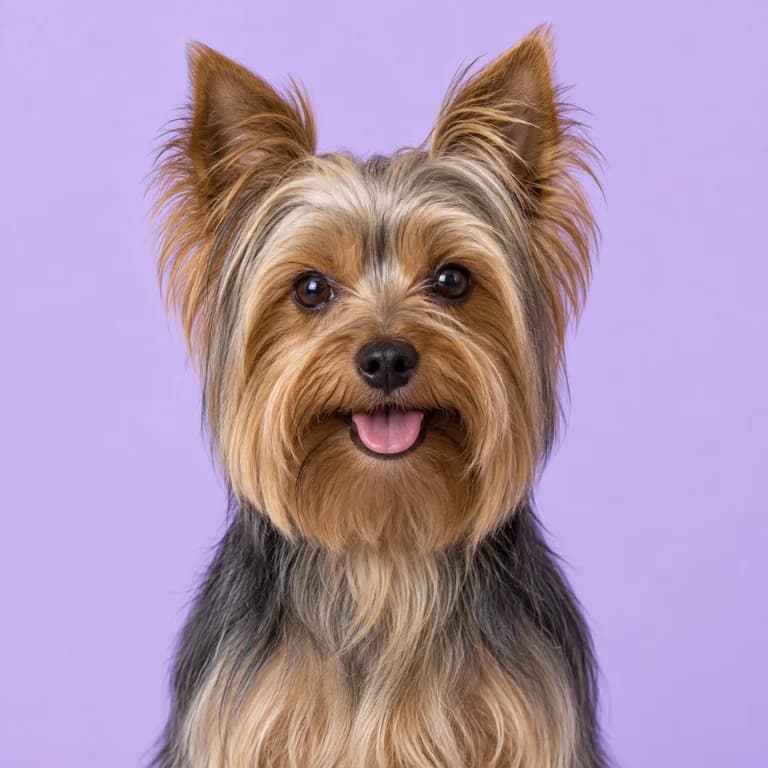
Toy group
Yorkshire Terrier
2 to 3 kg · 12 to 15 years
Three kilos of mill-town ratter wrapped in silk, with the self-belief of a dog ten times the size.

Toy group
Cavalier King Charles Spaniel
6 to 8 kg · 9 to 14 years
A gentle lap spaniel with royal portraits in its past and a heart that deserves careful watching.

Toy group
Pug
6 to 9 kg · 12 to 14 years
A compact comedian from imperial China whose flat face shapes almost every part of daily care.
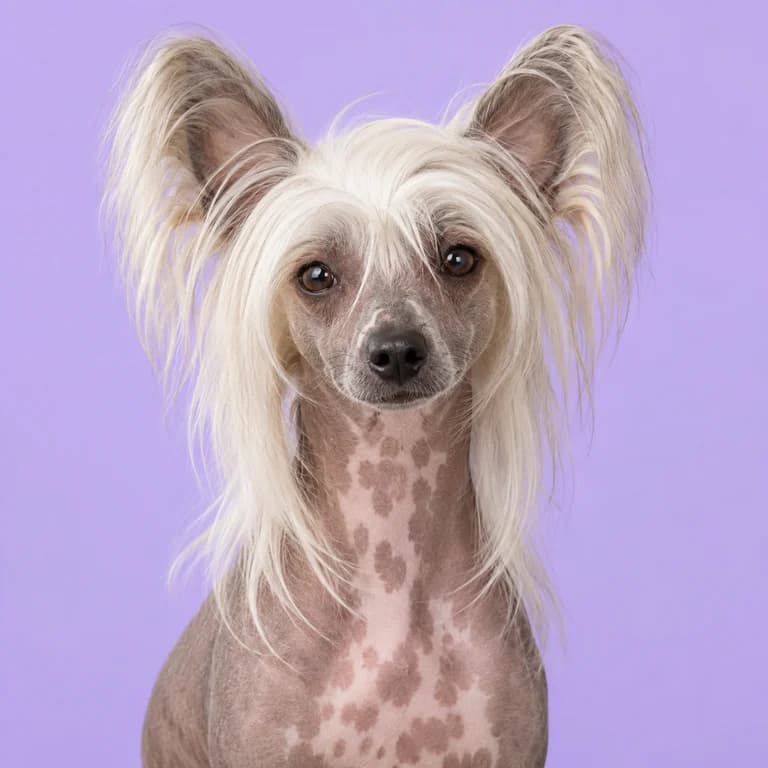
Toy group
Chinese Crested
3 to 5 kg · 13 to 16 years
A toy breed that arrives in two coats from the same litter, with skin needing as much care as hair.
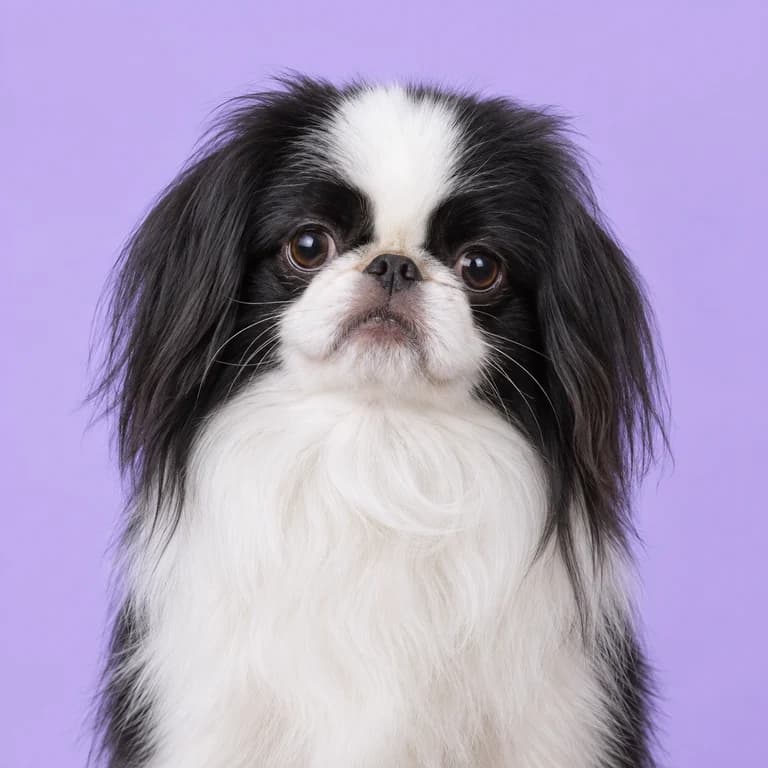
Toy group
Japanese Chin
2 to 5 kg · 10 to 14 years
A quiet, cat-like lap dog that washes its face with its paws and watches from the highest cushion.
Non-sporting group
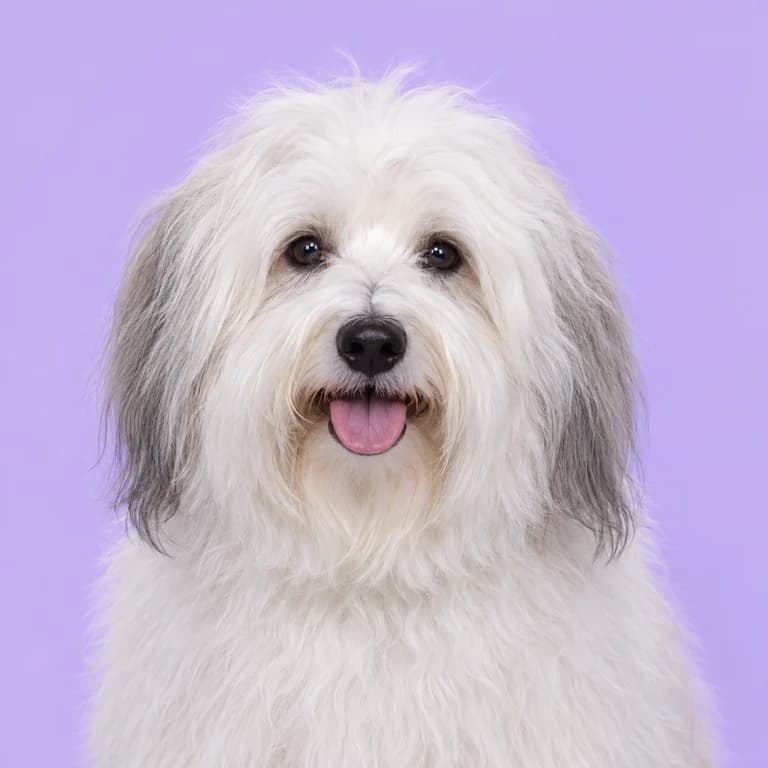
Coton de Tulear
4 to 6 kg · 14 to 16 years
A cotton-coated clown from Madagascar whose soft white hair needs daily attention and rewards it generously.