Sources for this article
Toy group · China
Pug
Also called Mops, Carlin, Chinese Pug
A compact comedian from imperial China whose flat face shapes almost every part of daily care.
Pugs were kept by Chinese emperors, carried to Europe by Dutch traders, and have stayed loyal lap companions ever since. They are gentle, sociable and happy in small homes. Their short airway, prominent eyes and skin folds mean you need to choose a healthy puppy carefully and manage heat, weight and hygiene every single day.
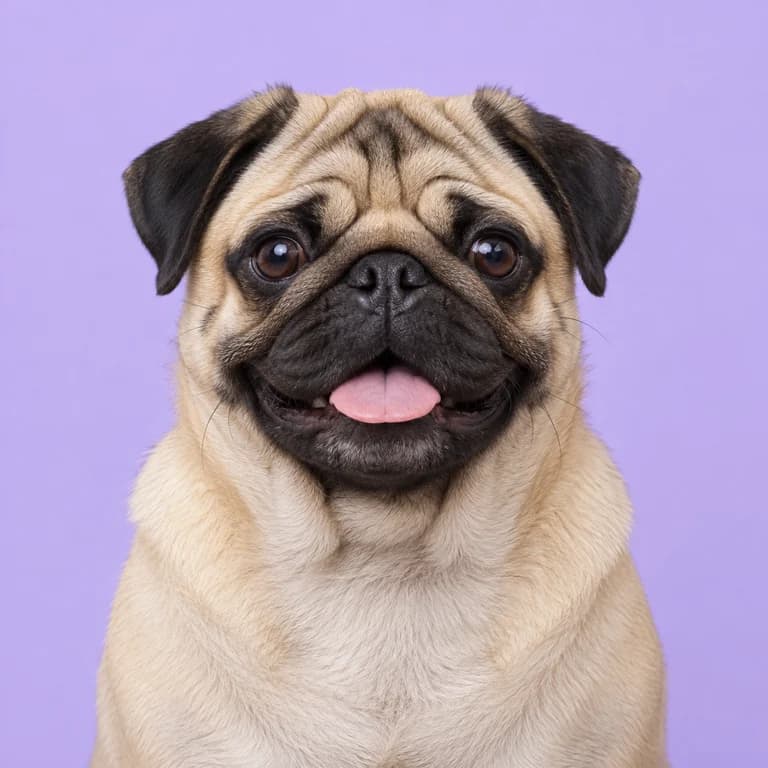
Original AI-generated breed illustration
Weight
6 to 9 kg
13 to 20 lb
Height
25 to 33 cm
at the shoulder
Life expectancy
12 to 14 yrs
Activity estimate
30 to 60 min
editorial daily planning range
Adult-size estimate
12 months
approximate model input
Life with a Pug
The Pug is one of the oldest toy breeds still around. Short-faced lap dogs lived in Chinese palaces for centuries before Dutch East India Company ships brought them to Europe in the 16th century. From there they spread through royal courts, sat for painters like Hogarth and Goya, and became a symbol of comfortable domestic life.
Temperamentally, a Pug is about as easygoing as dogs get. They rarely bark without reason, like strangers and other pets, and would rather follow you from room to room than guard anything. Their expressive wrinkled faces and loud snorts make them natural clowns, and many are surprisingly stubborn once they have decided a walk is over.
The honest truth is that a Pug's appearance comes at a cost. The very short nose, narrow nostrils and long soft palate can make breathing noisy and effortful, and the round eyes sit exposed. When you choose a Pug, look for open nostrils, a slightly longer muzzle and parents who breathe quietly at rest. A good Pug is a joyful little dog; a poorly bred one can struggle every day.
What stands out
Health
Pugs are well known for brachycephalic obstructive airway syndrome, which includes narrow nostrils, an elongated soft palate and other airway changes. They are also prone to eye injuries and ulcers, skin fold irritation, kneecap problems, spinal conditions, and a rare inflammatory brain disease called Pug dog encephalitis. Obesity makes nearly all of these worse.
Read the full health guideLife expectancy
12 to 14 yrs
Senior care
Individual assessment
age alone does not define care needs
A great match for
- flat and apartment living
- people who are home most of the day
- calm families and older owners
- anyone wanting a sociable dog that likes everyone
Think twice if
- breathing problems linked to the flat face
- dangerous in heat and after hard exercise
- eyes that injure easily
- heavy shedding for a short coat
- puts on weight with very little food
Personality and needs at a glance
Living together
Good with children
Good with other dogs
Open with strangers
Apartment friendly
Copes with alone time
Energy and character
Energy level
Playfulness
Easy to train
Barking
5 means very vocal
Care and climate
Grooming needs
Shedding
Drooling
Handles cold
Handles heat
How much a Pug eats
Illustrative calculations for neutered adults at midpoint breed weights, with food at 370 kcal per 100 g and 100 g per cup. These are not measured breed requirements. Use actual weight, the food label and veterinary body-condition advice.
| Dog | Weight | Calories | Dry food |
|---|---|---|---|
| Female, relaxed lifestyle | 7 kg | 420 kcal | 115 g (1.3 cups) |
| Female, typical pet | 7 kg | 480 kcal | 130 g (1.3 cups) |
| Male, typical pet | 8 kg | 510 kcal | 135 g (1.3 cups) |
| Male, very active | 8 kg | 630 kcal | 170 g (1.8 cups) |
Care guides for the Pug
Things owners are often surprised by
- 1Pug-type dogs appear in Chinese records from well over 1,000 years ago
- 2The breed is often credited with alerting William of Orange to an assassination attempt in 1572, which helped make it popular in the Netherlands
- 3The Latin motto 'multum in parvo', meaning a lot in a little, is widely used for the breed
- 4A double curl in the tail is considered ideal by many breed standards
- 5Fawn Pugs usually shed more than black Pugs because many have a thicker undercoat
- 6Pugs cannot cool down efficiently by panting, so overheating can happen within minutes on a warm day
Pug questions
Why do Pugs snort and reverse sneeze so much?
The Pug's short skull packs the same soft tissue into a much smaller space, so air moves through narrow passages. Snorting, snuffling and reverse sneezing, a sudden honking inhale, are common. A short episode that passes within a minute is usually harmless. If breathing sounds loud even when your Pug is resting, or it struggles after light exercise, ask your vet about an airway assessment.
Are black Pugs different from fawn Pugs?
Only in color and coat. Many owners notice black Pugs have a slightly shorter, single-layer coat and shed less, while fawns often carry a denser undercoat. Temperament and health risks are the same. Some people claim black Pugs are more lively, but there is no reliable evidence for that. Choose based on the parents' breathing, eyes and temperament, not on coat color.
Can a Pug be left alone during the workday?
Pugs were bred purely for companionship and many find long hours alone stressful. Four hours is a reasonable limit for most adults, and puppies need much shorter gaps. If you work full time, a dog walker at midday, a relative who drops in, or daycare can make the difference. Signs of stress include howling, chewing the door area and accidents indoors.
Why do Pugs get eye problems so easily?
A Pug's eyes are large and sit in shallow sockets, and the flat face offers little protection. A scratch from a plant, a cat's claw or rough play can lead to an ulcer quickly. Some Pugs also cannot fully close their eyelids during sleep. Check both eyes daily and see a vet the same day if one looks red, cloudy or your dog keeps squinting.
Do Pugs make good first dogs?
In temperament, yes: they are friendly, portable and rarely aggressive. The challenge is health management rather than behavior. A first-time owner needs to budget for vet care, learn about heat safety and keep a strict eye on weight. If you are ready for that, and you choose a puppy from parents with open nostrils and quiet breathing, a Pug can be a lovely first companion.
Popular answers for owners
- Grooming and coatHow often should I brush a curly coated dog?
- Bowls and feeding gearAre automatic feeders good for dogs on a diet?
- Exercise and playHow long can a dog swim safely in one session?
- Bowls and feeding gearDo stainless steel bowls get too hot or cold?
- Bowls and feeding gearHow do I choose a bowl size for two meals a day?
- Exercise and playWhy does my dog suddenly seem uninterested in a game they used to love?
Breeds you might compare
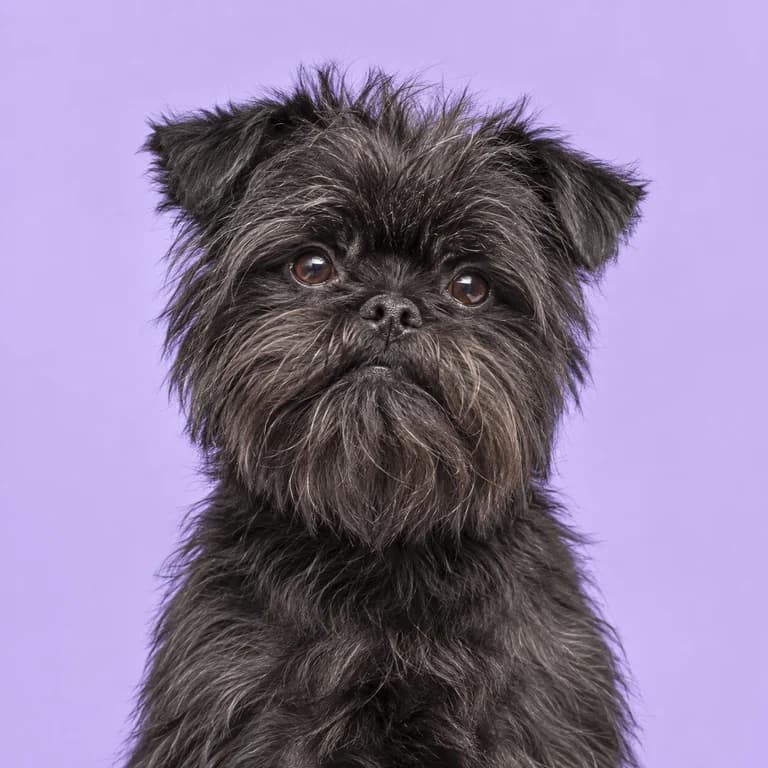
Toy group
Affenpinscher
3 to 6 kg · 12 to 15 years
Barely 4 kg of confidence, a monkey-faced stable ratter that behaves as if nobody told it how small it is.
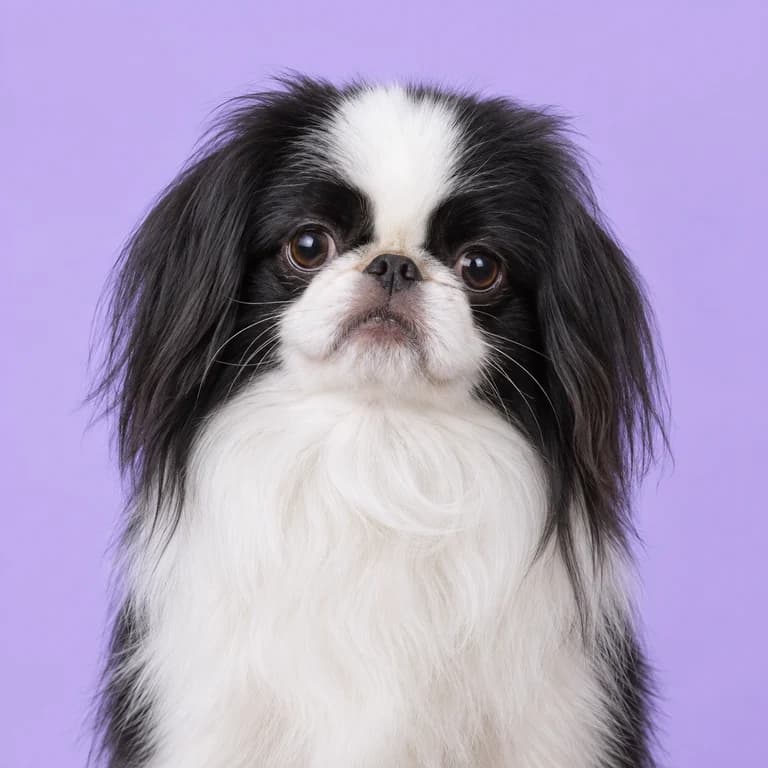
Toy group
Japanese Chin
2 to 5 kg · 10 to 14 years
A quiet, cat-like lap dog that washes its face with its paws and watches from the highest cushion.
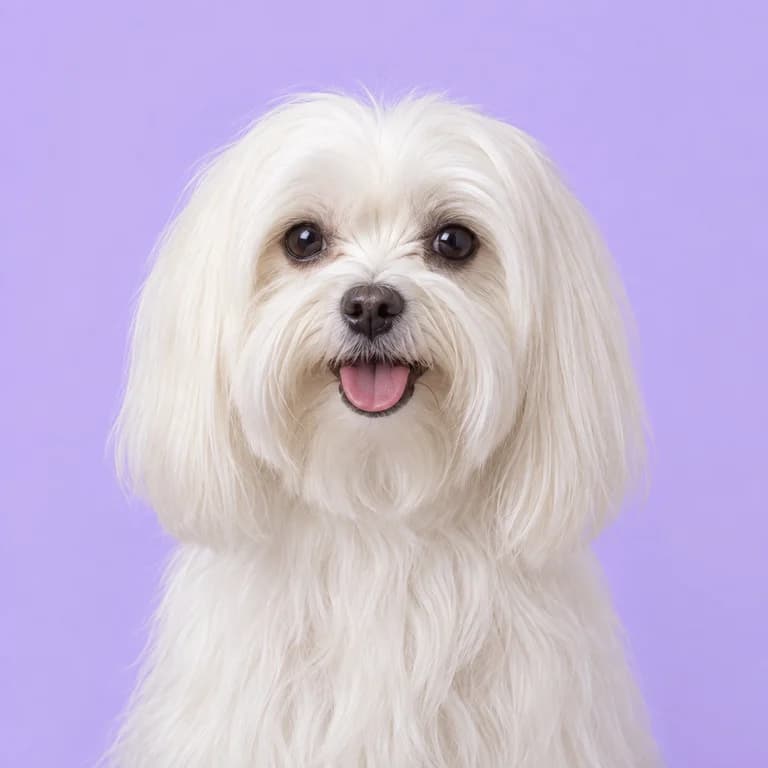
Toy group
Maltese
2 to 4 kg · 12 to 15 years
A tiny white companion with a bold, cheerful personality and a silky coat that asks for daily attention.
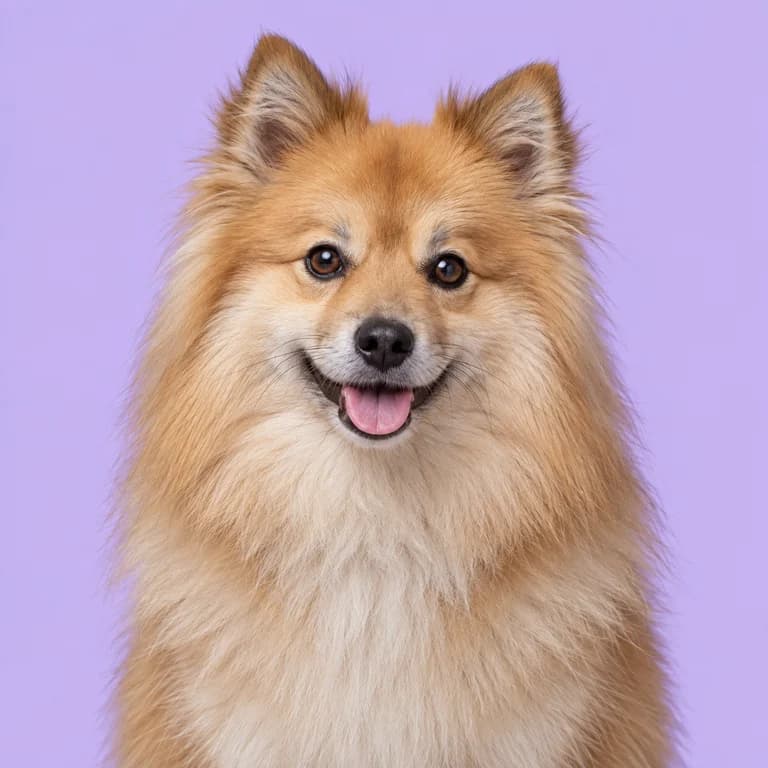
Non-sporting group
German Spitz
5 to 11 kg · 13 to 15 years
One of central Europe's oldest farm watchdogs, the German Spitz still guards the doorstep with its voice.
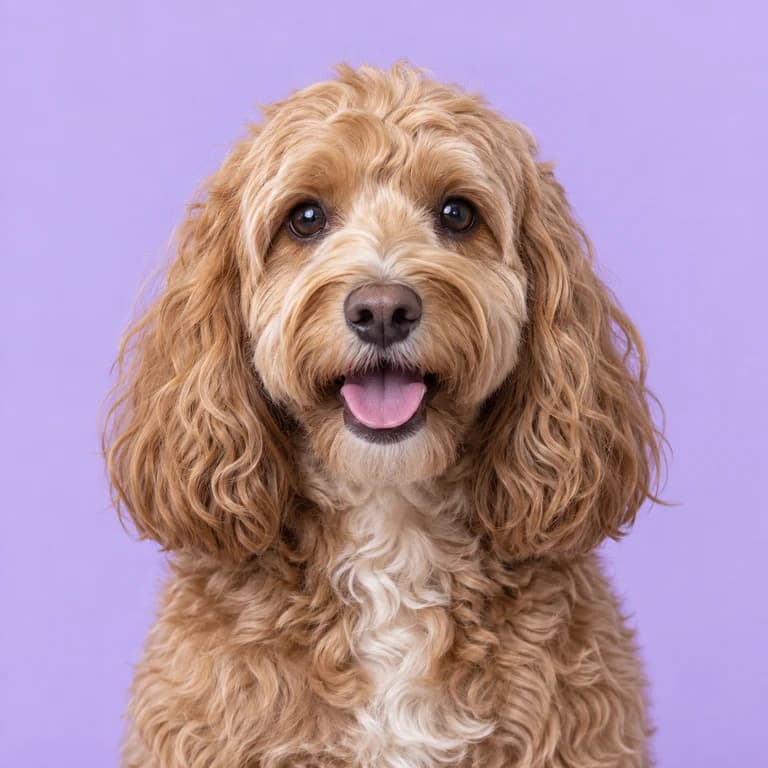
Crossbreed
Cockapoo
5 to 11 kg · 12 to 15 years
Part spaniel, part poodle, the Cockapoo is a sociable, playful companion with a coat that never lets you skip grooming.
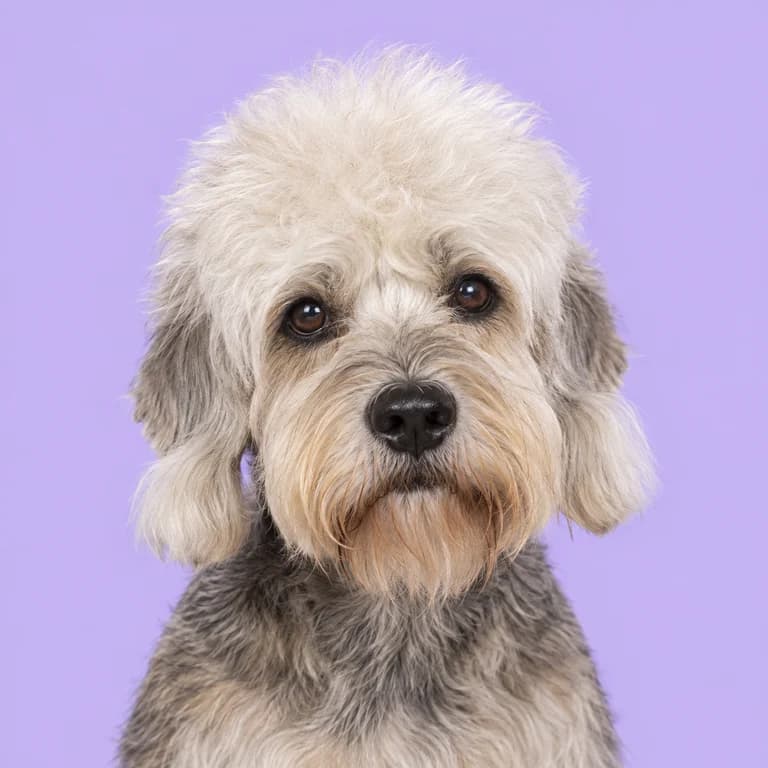
Terrier group
Dandie Dinmont Terrier
8 to 11 kg · 12 to 15 years
A long, low Border terrier with a soft topknot, a dignified stare and a coat that shows off good grooming.