Sources for this article
Sporting group · France
Wirehaired Pointing Griffon
Also called Korthals Griffon, Griffon d'Arrêt à Poil Dur
A bearded, close-working bird dog shaped by one man's obsession, eager to please and happiest in mud.
Designed in the late 1800s by one determined Dutchman, the Wirehaired Pointing Griffon points, tracks and retrieves over rough ground and in cold water. It is famously cooperative and family-minded, and it needs an active owner who can give it daily exercise and a task.
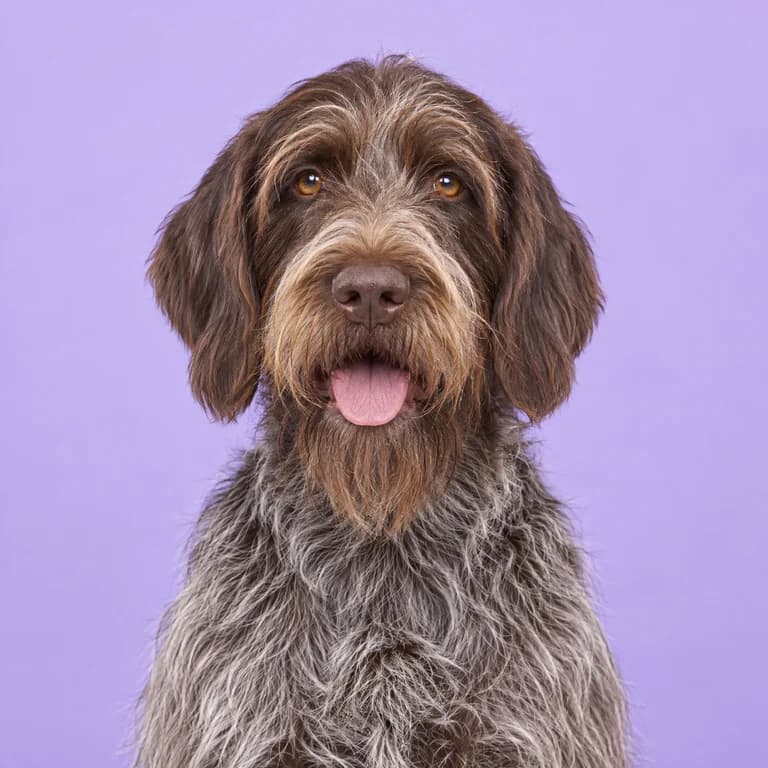
Original AI-generated breed illustration
Weight
20 to 32 kg
44 to 70 lb
Height
50 to 60 cm
at the shoulder
Life expectancy
12 to 14 yrs
Activity estimate
90 to 120 min
editorial daily planning range
Adult-size estimate
18 months
approximate model input
Life with a Wirehaired Pointing Griffon
Eduard Korthals was the son of a wealthy Dutch cattle breeder, and in the 1870s he set out to build the perfect dog for a hunter on foot. Working first in the Netherlands and then in Germany, where he ran a kennel for a German prince, he started with a small group of rough-coated dogs and bred selectively for about two decades. The goal was one dog that would point birds, track wounded game and retrieve from land or water, all within easy reach of the gun.
The breed took hold most firmly in France, which is why the FCI lists France as its country of origin. In English-speaking countries it has a small but loyal following, especially among hunters who want a single dog for many jobs, and fans like to call it the supreme gundog.
Away from the field, the Griffon is friendly, gentle and devoted. It tends to be less intense than some pointing breeds and more closely attached to its people, often following them from room to room. It is playful, good with children and endearingly scruffy, with a beard that collects mud, water and the occasional twig.
What stands out
Training
Cooperative, sensitive and eager to please, the Griffon is often described as one of the easiest pointing breeds to train. Korthals selected for dogs that checked in with their handler, and that trait shows in how readily young Griffons look to you for direction. Calm, consistent, reward-based methods work best; harsh corrections tend to make them anxious or hesitant.
Read the full training guideEasy to train
Open with strangers
Good with other dogs
A great match for
- hunters who want one versatile, close-working dog
- active families with children
- hikers and outdoor enthusiasts
- owners who enjoy training
Think twice if
- high exercise needs
- coat needs hand-stripping or trimming to stay harsh
- a beard that carries water and mud indoors
- struggles when left alone for long periods
- a strong nose that distracts on walks
Personality and needs at a glance
Living together
Good with children
Good with other dogs
Open with strangers
Apartment friendly
Copes with alone time
Energy and character
Energy level
Playfulness
Easy to train
Barking
5 means very vocal
Care and climate
Grooming needs
Shedding
Drooling
Handles cold
Handles heat
How much a Wirehaired Pointing Griffon eats
Illustrative calculations for neutered adults at midpoint breed weights, with food at 370 kcal per 100 g and 100 g per cup. These are not measured breed requirements. Use actual weight, the food label and veterinary body-condition advice.
| Dog | Weight | Calories | Dry food |
|---|---|---|---|
| Female, relaxed lifestyle | 24 kg | 1050 kcal | 285 g (2.8 cups) |
| Female, typical pet | 24 kg | 1200 kcal | 325 g (3.3 cups) |
| Male, typical pet | 29 kg | 1380 kcal | 375 g (3.8 cups) |
| Male, very active | 29 kg | 1730 kcal | 465 g (4.8 cups) |
Care guides for the Wirehaired Pointing Griffon
Things owners are often surprised by
- 1Developed from the 1870s by Eduard Karel Korthals, a Dutchman who bred dogs in the Netherlands and Germany
- 2Bred to hunt within gun range of a walking hunter, unlike wide-ranging pointers and setters
- 3The rough coat protects against brambles, thorns and icy water
- 4Usually called the Korthals Griffon in continental Europe, where France is listed as its country of origin
- 5Sheds less than most sporting breeds
Wirehaired Pointing Griffon questions
What does close-working mean for a Griffon?
It means the dog hunts within easy range of a hunter on foot, checking back regularly, rather than covering huge distances like some pointers and setters. Korthals bred for this deliberately so the dog would suit walking hunters in mixed terrain. For pet owners it also means Griffons tend to stay nearer on off-lead walks than many sporting breeds.
Is a Wirehaired Pointing Griffon good for non-hunters?
Yes, if you can give it enough activity. Many Griffons live as family pets and thrive on hiking, swimming, scent games and dog sports. What they struggle with is a sedentary life. They were bred to work all day, so they need daily exercise and mental challenges to stay content and well behaved.
Do Wirehaired Pointing Griffons shed?
Less than many sporting breeds. The wiry coat tends to hold loose hair until it is brushed or stripped out, so you find less on the sofa. They are not non-shedding, however, and some hair will still appear around the house. Weekly brushing and occasional hand-stripping keep it under control.
How is a Griffon different from a German Wirehaired Pointer?
Both are rough-coated versatile hunting breeds, but they have different origins and styles. The German Wirehaired Pointer was developed in Germany, is generally larger and more intense, and often ranges farther. The Griffon was bred by Korthals as a close-working, cooperative dog with a longer, shaggier coat, and it tends to be softer in temperament.
Why is the breed also called the Korthals Griffon?
The name honors Eduard Korthals, the Dutch breeder who developed the dog in the late 19th century. In continental Europe it is usually called the Korthals Griffon, while in North America the name Wirehaired Pointing Griffon is more common. Both names refer to the same breed.
Popular answers for owners
- How much to feedHow much should I feed a 30kg dog?
- How much to feedHow much more should I feed my dog if we start a new hiking routine?
- Exercise and playHow much exercise does a high energy breed need?
- Bowls and feeding gearHow do I set up bowls for two dogs that eat at different speeds?
- Grooming and coatHow do I detangle a curly coat without shaving it?
- How much to feedHow should I split food across meals during a weight loss plan?
Breeds you might compare
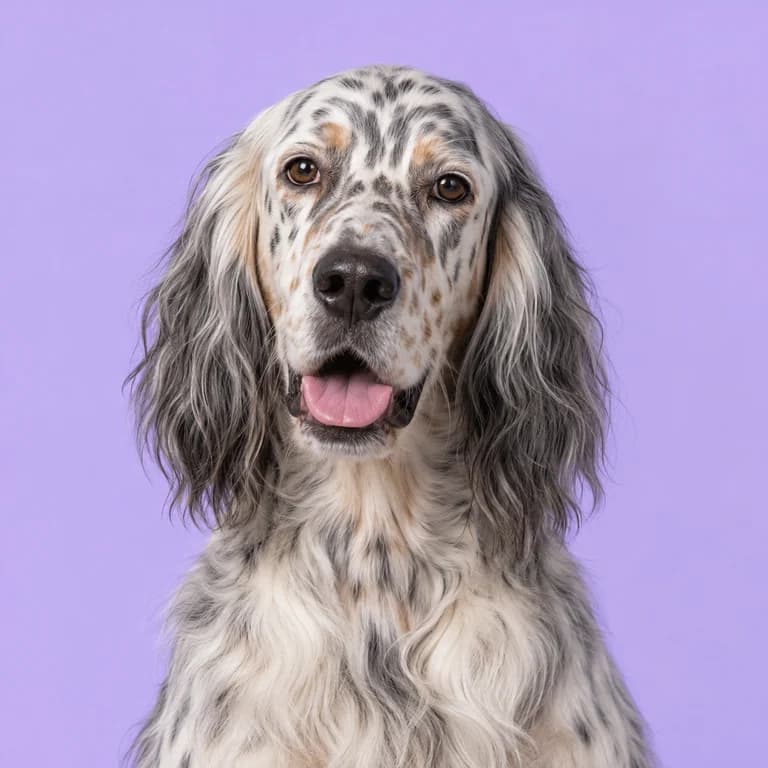
Sporting group
English Setter
20 to 36 kg · 10 to 12 years
A speckled gentleman of the field, mellow at home yet slow to grow out of puppy silliness.
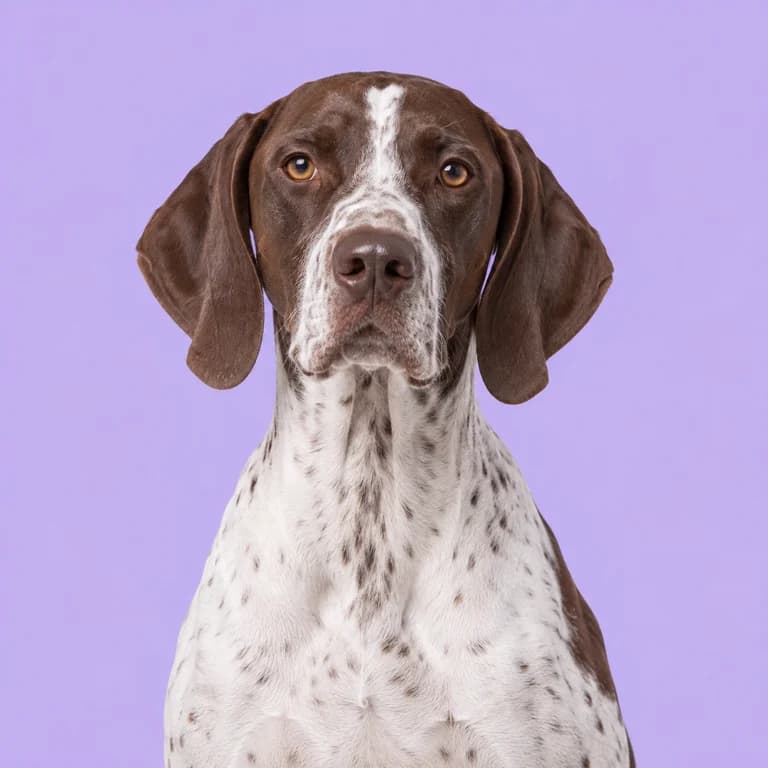
Sporting group
English Pointer
20 to 34 kg · 12 to 15 years
An athlete sculpted for speed across open moorland, with a statue-still point that stops people mid-conversation.
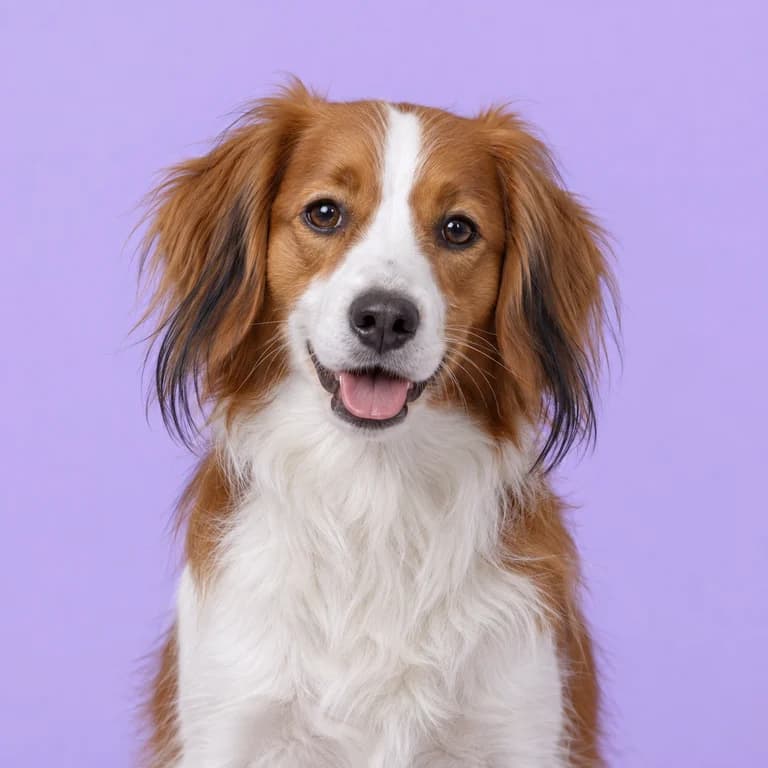
Sporting group
Kooikerhondje
9 to 12 kg · 12 to 15 years
Bred to wave a white plumed tail and lure curious ducks into Dutch decoy traps, and still just as alert.
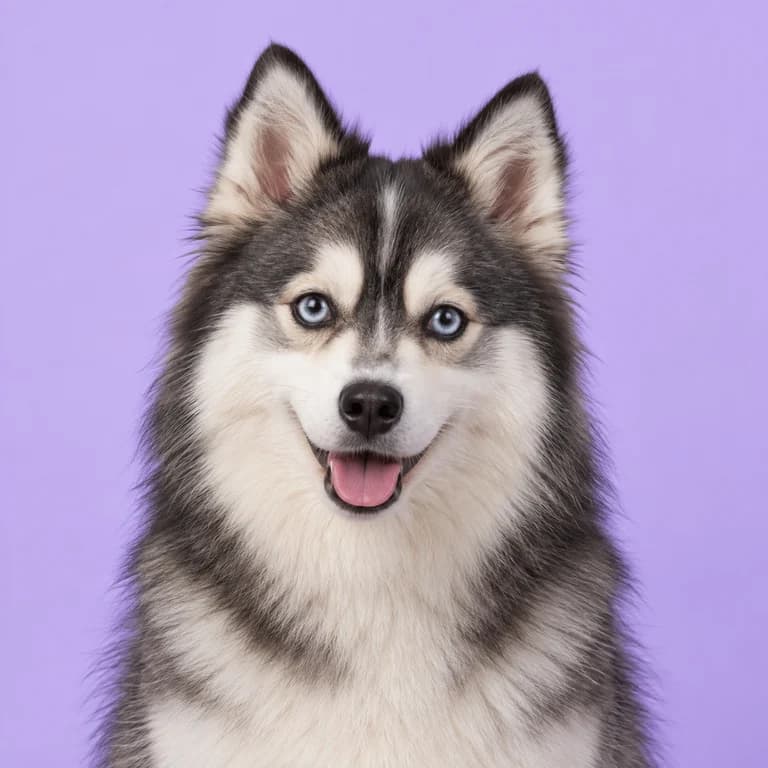
Crossbreed
Pomsky
7 to 14 kg · 12 to 15 years
A Husky look in a smaller package, with size and personality that vary more than many buyers expect.
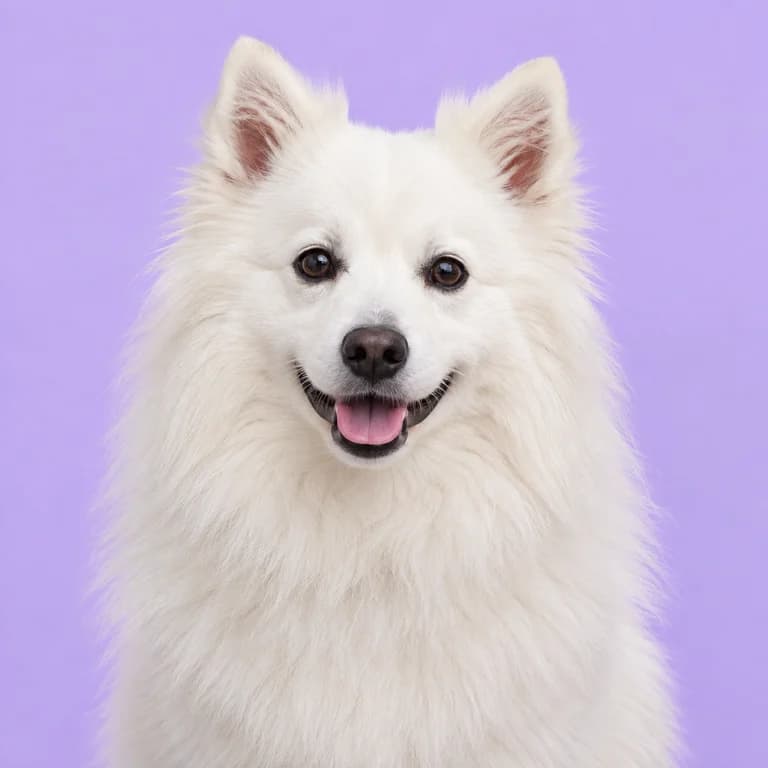
Non-sporting group
American Eskimo Dog
9 to 16 kg · 13 to 15 years
A German spitz renamed in America, once a circus star, now a bright and vocal family watchdog.
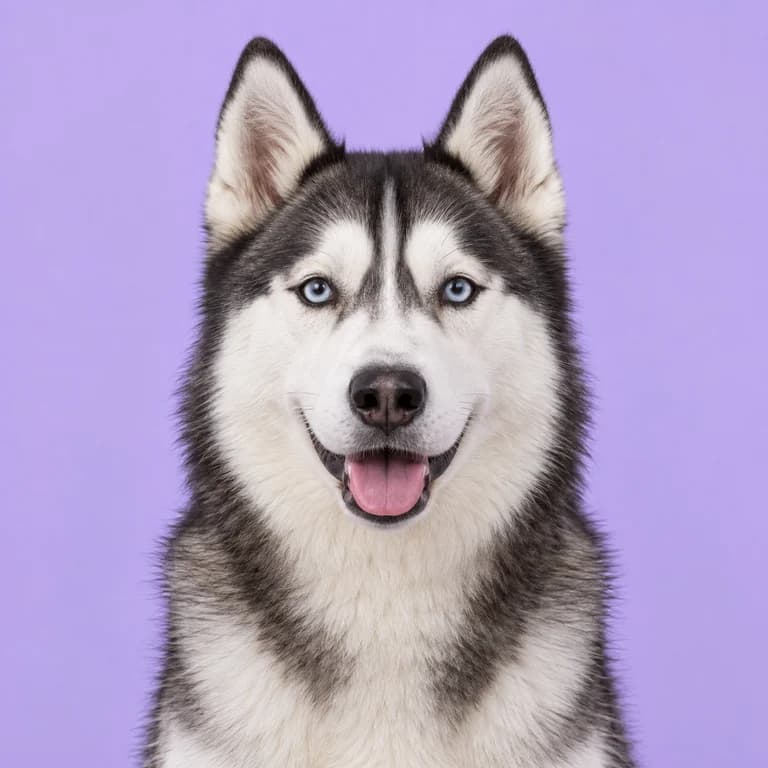
Working group
Siberian Husky
16 to 27 kg · 12 to 14 years
Built to pull light loads over huge distances, this friendly sled dog needs a real outlet or invents its own.