Sources for this article
Non-sporting group · Mexico
Xoloitzcuintli
Also called Xolo, Mexican Hairless Dog
An ancient Mexican breed, hairless by nature, calm indoors and deeply devoted to the few people it chooses.
The Xoloitzcuintli (show-low-eats-QUEENT-lee) lived in Mexico long before European contact and was tied to both daily life and religious belief. Today it comes in three sizes and two coat types, and it makes a quiet, watchful and affectionate companion that needs skin care instead of brushing.
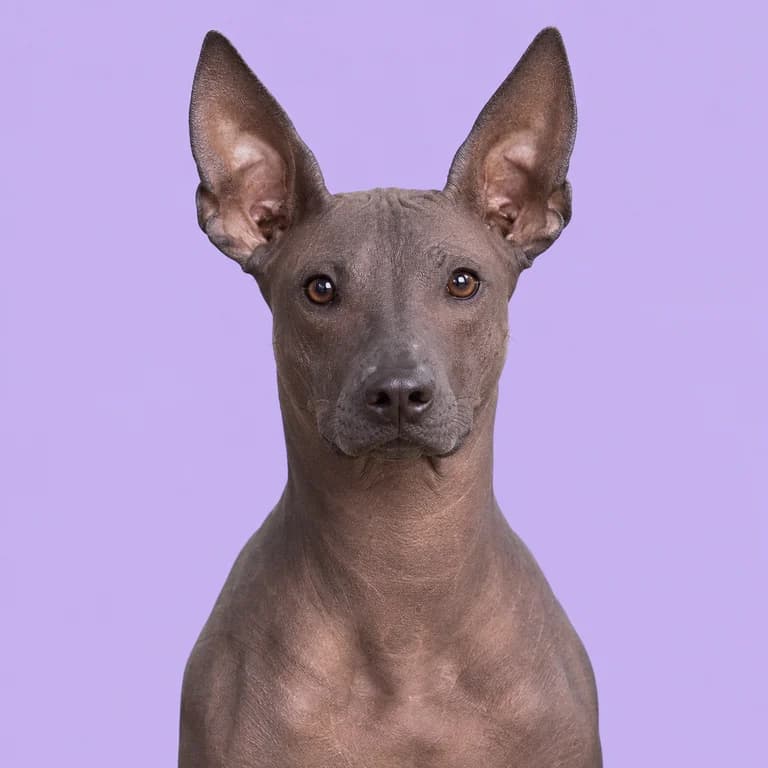
Original AI-generated breed illustration
Weight
11 to 25 kg
24 to 55 lb
Height
46 to 60 cm
at the shoulder
Life expectancy
13 to 18 yrs
Activity estimate
60 to 90 min
editorial daily planning range
Adult-size estimate
14 months
approximate model input
Life with a Xoloitzcuintli
Few breeds can point to such a long presence in one place. Dogs with the Xolo's lean shape and bare skin appear in clay figures from the Colima region of western Mexico, some roughly 2,000 years old, and Spanish chroniclers in the 1500s described hairless dogs kept by local people. In Aztec belief these dogs were linked to the god Xolotl, and they are said to have been buried with their owners to guide souls across the dangers of Mictlan, the underworld.
The dogs had practical value as well. Bare skin feels warm to the touch, and Xolos were traditionally held against the body in the belief that they eased aches. Less happily, they were also eaten in some periods. After the Spanish conquest the breed dwindled, and by the mid-20th century it was close to vanishing. In the 1950s breeders, working with the Mexican kennel club, searched remote villages for surviving dogs and rebuilt the breed, which is now a cherished national symbol in Mexico.
Temperament reflects that long history as a household dog and guardian. A Xolo is calm indoors, loyal and affectionate with its family and usually reserved with strangers. It watches more than it barks, although most will alert you to anything truly unusual. Adolescents are lively and full of mischief, and the breed is known for maturing slowly, often not fully settling until about two years old.
The weights and heights on this page describe the standard size. Miniatures typically weigh 6 to 14 kg and toys around 2.5 to 7 kg, so there is a Xolo to suit almost any home, from a city flat to a house with land.
A great match for
- people with mild dog allergies (no dog is fully allergen free)
- calm households and apartments
- owners who want a watchful but quiet companion
- warm climates, with sensible sun precautions
Think twice if
- hairless skin burns in strong sun and chills easily
- reserved or wary with strangers
- slow to mature and mischievous until about two
- can climb or jump garden fences
- teenage acne and blackheads on the skin
Personality and needs at a glance
Living together
Good with children
Good with other dogs
Open with strangers
Apartment friendly
Copes with alone time
Energy and character
Energy level
Playfulness
Easy to train
Barking
5 means very vocal
Care and climate
Grooming needs
Shedding
Drooling
Handles cold
Handles heat
How much a Xoloitzcuintli eats
Illustrative calculations for neutered adults at midpoint breed weights, with food at 370 kcal per 100 g and 100 g per cup. These are not measured breed requirements. Use actual weight, the food label and veterinary body-condition advice.
| Dog | Weight | Calories | Dry food |
|---|---|---|---|
| Female, relaxed lifestyle | 17 kg | 820 kcal | 220 g (2.3 cups) |
| Female, typical pet | 17 kg | 940 kcal | 255 g (2.5 cups) |
| Male, typical pet | 20 kg | 1040 kcal | 280 g (2.8 cups) |
| Male, very active | 20 kg | 1300 kcal | 350 g (3.5 cups) |
Care guides for the Xoloitzcuintli
Things owners are often surprised by
- 1The name joins Xolotl, an Aztec god linked with lightning and death, and itzcuintli, the Nahuatl word for dog
- 2Three sizes are recognized: toy about 25 to 35 cm (10 to 14 in), miniature 36 to 45 cm (14 to 18 in) and standard 46 to 60 cm (18 to 23.5 in)
- 3Hairless and coated puppies can arrive in the same litter, because the hairless gene is dominant
- 4Hairless Xolos often lack some premolar teeth, which the breed standard accepts
- 5Clay figures of hairless dogs from tombs in western Mexico are around 2,000 years old
- 6The painter Frida Kahlo kept several Xolos, and they appear in some of her paintings
Xoloitzcuintli questions
How do you pronounce Xoloitzcuintli?
The usual pronunciation is show-low-eats-QUEENT-lee, with the stress on the fourth syllable. Most owners simply say Xolo, pronounced SHOW-low, which is far easier at the dog park. The name comes from Nahuatl, the language of the Aztecs, and joins the name of the god Xolotl with the word for dog, itzcuintli.
Can two hairless Xolos have coated puppies?
Yes. The hairless trait comes from a single dominant gene, and every living hairless Xolo carries one copy of it plus one normal copy. When two hairless dogs are mated, on average about one puppy in four is coated. Coated Xolos are a full part of the breed, and breeders value them for keeping good teeth and structure in the gene pool.
Are Xolos hypoallergenic?
No dog is fully allergen free, because allergens are found in skin, saliva and urine as well as hair. Hairless Xolos do not shed, however, and some allergic people find them much easier to live with than coated breeds. If allergies are a concern, spend a few hours with adult Xolos before committing, since reactions vary from person to person.
Do Xolos need sunscreen?
Hairless Xolos, especially those with lighter or pink skin, can burn. Limit midday sun, provide shade and consider a lightweight UV-protective dog shirt for long outings. If you want to use sunscreen, ask your vet to recommend one made for dogs, since some ingredients in human sunscreens are harmful if licked off. Dark-skinned Xolos burn less but still benefit from shade.
Which Xolo size suits apartment life best?
All three sizes can live in apartments, because the breed is calm indoors and not a big barker. Toys and miniatures are simply easier to carry up stairs and need less floor space. Standards also do well in flats when they get daily walks and regular off-lead running somewhere safe. Pick the size that matches your activity level and how much dog you want on the sofa.
Popular answers for owners
- Bowls and feeding gearIs it safe to leave a dog alone with an automatic feeder?
- Puppy feeding and growthWhy has my puppy's growth slowed down?
- Exercise and playAre tennis balls bad for a dog's teeth?
- Grooming and coatWhat do dog clipper blade numbers mean?
- Bowls and feeding gearWhat bowl shape helps a Boston Terrier eat more slowly?
- Grooming and coatHow do I remove tree sap from my dog's coat?
Breeds you might compare

Non-sporting group
Japanese Spitz
5 to 10 kg · 12 to 16 years
A snow-white spitz with a cheerful, people-centered nature and a coat that sheds dirt better than you would expect.

Non-sporting group
Chow Chow
20 to 32 kg · 8 to 12 years
A lion-maned, blue-tongued dog whose dense coat demands as much attention as its independent mind.
Non-sporting group
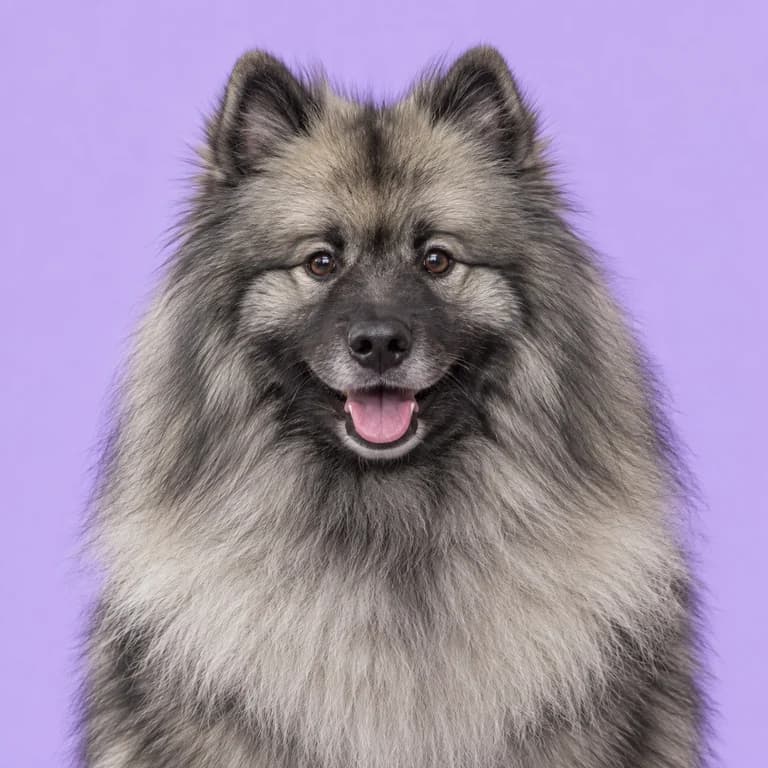
Keeshond
14 to 20 kg · 12 to 15 years
Once the watchdog of Dutch river barges, now a spectacled, fluffy companion with a talent for reading people.

Sporting group
Lagotto Romagnolo
11 to 16 kg · 14 to 16 years
An Italian marsh retriever turned truffle hunter, with a curly coat and a nose that loves to dig.

Non-sporting group
English Bulldog
18 to 25 kg · 8 to 10 years
A low-slung, sociable couch companion whose flat face shapes nearly every decision you make about its care.

Non-sporting group
American Eskimo Dog
9 to 16 kg · 13 to 15 years
A German spitz renamed in America, once a circus star, now a bright and vocal family watchdog.