Sources for this article
Sporting group · United States
American Cocker Spaniel
Also called Cocker Spaniel, Cocker
The smallest American sporting spaniel, famous for a flowing coat that demands nearly as much attention as the dog.
The American Cocker Spaniel is a cheerful, compact gundog that became one of America's most popular companions in the mid-20th century. Its silky coat, long ears and large dark eyes are beautiful, but they come with real grooming and ear-care commitments that owners should plan for from day one.

Original AI-generated breed illustration
Weight
9 to 14 kg
20 to 31 lb
Height
34 to 39 cm
at the shoulder
Life expectancy
12 to 14 yrs
Activity estimate
60 to 90 min
editorial daily planning range
Adult-size estimate
12 months
approximate model input
Life with a American Cocker Spaniel
Run your hand along a well-kept American Cocker and you will understand both the appeal and the workload. The hair on the ears, chest, belly and legs is long and silky, and left alone it tangles within days. Plenty of people fall for that look, then discover it is effectively a part-time hobby. Go in knowing that, and this spaniel is one of the sweetest companions you can find.
The breed descends from English spaniels brought to North America in the 1800s. American breeders gradually favored a smaller dog with a rounder skull, a shorter muzzle and far more coat, and by the 1930s the difference from the English Cocker was obvious. The two were formally separated in 1946. My Own Brucie, a black Cocker who took Best in Show at Westminster two years running, is often credited with sparking a nationwide craze.
Underneath all that hair is still a gundog. Most Cockers love to sniff, carry toys around the house and bustle along on walks with the tail going. They tend to be gentle and people focused, happy to join a family outing or curl up beside you. Some are sensitive souls, so harsh handling or shouting can make them timid or defensive.
Popularity took a toll in the past, when careless breeding produced nervous or snappy dogs. Choosing a puppy from parents with steady, friendly temperaments matters every bit as much as their health tests.
What stands out
Grooming
Brush and comb the full coat at least three to four times a week, working in sections down to the skin with a slicker brush followed by a metal comb. Mats form first behind the ears, in the armpits and on the inner thighs, so check those spots every session. A bath every two to four weeks, followed by a thorough blow dry, keeps the coat manageable.
Read the full grooming guideIllustrative grooming schedule based on our editorial coat-care score. Adjust it to the individual coat and professional advice.
Brushing
Daily
Bathing
Every 3 to 6 weeks
Shedding
Moderate, year round
Nail trim
Every 3 to 4 weeks
A great match for
- families wanting a medium-sized, affectionate dog
- people who enjoy grooming or budget for a groomer
- town and suburban homes with daily walks
- owners keen on trick training
Think twice if
- heavy grooming workload and regular groomer costs
- ear infections without weekly care
- gains weight easily
- some lines prone to eye problems
Personality and needs at a glance
Living together
Good with children
Good with other dogs
Open with strangers
Apartment friendly
Copes with alone time
Energy and character
Energy level
Playfulness
Easy to train
Barking
5 means very vocal
Care and climate
Grooming needs
Shedding
Drooling
Handles cold
Handles heat
How much an American Cocker Spaniel eats
Illustrative calculations for neutered adults at midpoint breed weights, with food at 370 kcal per 100 g and 100 g per cup. These are not measured breed requirements. Use actual weight, the food label and veterinary body-condition advice.
| Dog | Weight | Calories | Dry food |
|---|---|---|---|
| Female, relaxed lifestyle | 11 kg | 570 kcal | 155 g (1.5 cups) |
| Female, typical pet | 11 kg | 650 kcal | 175 g (1.8 cups) |
| Male, typical pet | 13 kg | 740 kcal | 200 g (2 cups) |
| Male, very active | 13 kg | 930 kcal | 250 g (2.5 cups) |
Care guides for the American Cocker Spaniel
Things owners are often surprised by
- 1Smallest breed in the sporting group of the major American kennel clubs
- 2Formally separated from the English Cocker Spaniel in the US in 1946
- 3Colors are grouped into black, ASCOB (any solid color other than black) and parti-color
- 4Professional grooming every 6 to 8 weeks is typical for a pet coat
- 5A black Cocker called My Own Brucie won Best in Show at Westminster in 1940 and 1941
American Cocker Spaniel questions
What is the difference between an American and an English Cocker Spaniel?
The American is smaller, with a rounder domed head, a shorter muzzle and a much heavier coat. The English Cocker is taller and longer in the leg, with a narrower head and a more practical field coat. They share ancestry but have been separate breeds in the US since 1946, and English Cockers are often a little more work oriented.
How often does an American Cocker Spaniel need a professional groom?
Every 6 to 8 weeks is typical for a pet trim, and owners keeping a longer coat often go every 4 weeks. Between appointments you still need to brush several times a week. Skipping home brushing usually leads to mats that have to be shaved out, which is uncomfortable for the dog and often means growing the coat again from scratch.
Why do Cocker Spaniels get so many ear problems?
The long, heavy ear flaps and the hair around the ear opening reduce airflow and hold moisture, creating a warm, damp environment. Food, water and grass seeds end up in there too. Regular cleaning, drying after baths and swims, and keeping the hair around the opening tidy all help. Head shaking, odor or redness are signs to book a vet visit.
Are American Cocker Spaniels good with children?
Well-bred Cockers are usually gentle and playful with children, and their size makes them manageable for a family. They do best with kids who know not to pull ears or grab the dog while it eats or sleeps, since some Cockers are touchy about handling. Supervise young children and give the dog a quiet place to retreat.
Do American Cocker Spaniels shed?
A moderate amount. The silky coat drops hair steadily rather than in dramatic seasonal blowouts, and much of it gets caught in the coat itself, which is one more reason regular brushing matters. A short clip reduces how much ends up on furniture, but no Cocker is truly low shedding.
Popular answers for owners
- Puppy feeding and growthHow do I calculate my puppy's daily food amount from the bag guidelines?
- Bowls and feeding gearDo flat faced dogs need a special bowl shape?
- Puppy feeding and growthHow much should a 4 month old puppy eat?
- Grooming and coatWhy does my dog get poop stuck in the fur around its bottom?
- Puppy feeding and growthHow much should a puppy eat the first night home?
- How much to feedMy dog is eating less because of stress or a change at home, what should I do?
Breeds you might compare

Sporting group
Clumber Spaniel
25 to 39 kg · 10 to 12 years
A heavy, low-slung spaniel with a rolling walk, a gentle soul and no interest in rushing anything.

Sporting group
Vizsla
18 to 29 kg · 12 to 14 years
Hungary's golden-rust pointer: a lean athlete that wants miles of running, then a lap to finish on.

Sporting group
English Cocker Spaniel
12 to 15 kg · 12 to 14 years
A merry, tail-going gundog that wants to be busy with you, whether that means flushing pheasants or carrying slippers.

Sporting group
Welsh Springer Spaniel
16 to 25 kg · 12 to 15 years
A red-and-white Welsh gundog that learns best through partnership, patience and plenty of miles.
Herding group
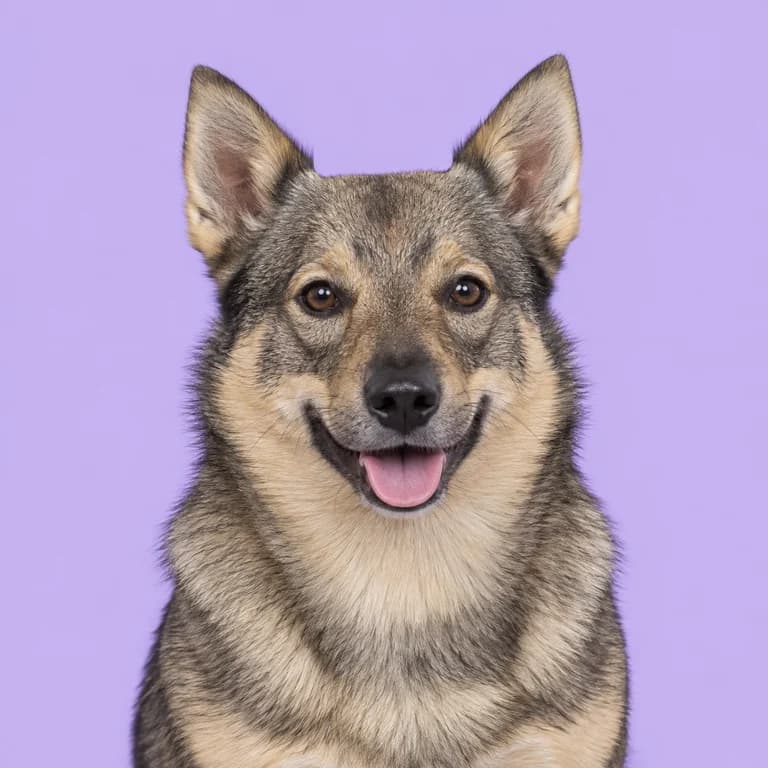
Swedish Vallhund
9 to 16 kg · 12 to 15 years
A low-slung Viking-age cattle dog with the drive of a much larger herder packed into 33 cm.

Herding group
Entlebucher Mountain Dog
20 to 30 kg · 11 to 13 years
The smallest Swiss mountain dog packs a cattle drover's stamina into a compact, tricolored body that rarely switches off.