Sources for this article
Terrier group · Australia
Australian Terrier
Also called Aussie Terrier
A sturdy little terrier from the Australian bush with big-dog confidence and a deeply devoted streak.
Australian Terriers are compact, spirited and affectionate, bred to keep snakes and rats away from remote homesteads. They pair the courage of a working terrier with a friendly, people-focused nature that suits many homes.
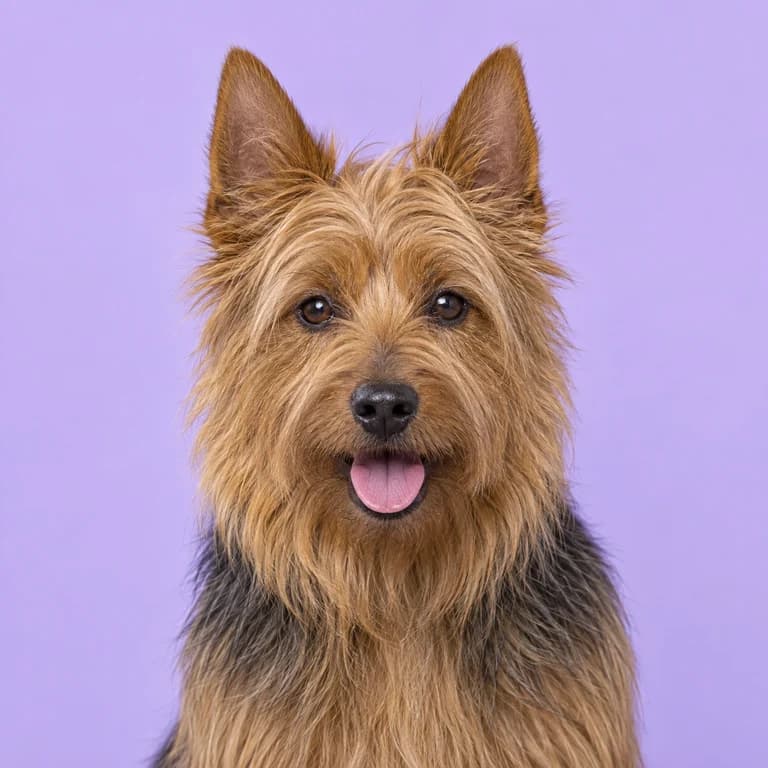
Original AI-generated breed illustration
Weight
5 to 8 kg
11 to 18 lb
Height
23 to 28 cm
at the shoulder
Life expectancy
12 to 15 yrs
Activity estimate
90 to 120 min
editorial daily planning range
Adult-size estimate
12 months
approximate model input
Life with a Australian Terrier
Small in size, but never timid: that sums up the Australian Terrier. It greets its family with full-body enthusiasm, follows you from room to room, and will square up to a rat or a far larger dog without hesitation. Owners often describe them as big dogs in small bodies, and they carry themselves with a proud, busy strut.
Its story begins in the 1800s in Tasmania and Victoria, where it was developed from rough-coated British terriers brought by settlers, with Cairn, Dandie Dinmont, Skye, Yorkshire and early Norwich types all mentioned in its background. Settlers needed a small, hardy dog to kill rats and snakes, raise the alarm when strangers approached and keep them company in isolated places. The result was shown in Melbourne in 1868, recognized in Britain in 1933 and in the United States in 1960.
Aussies are more people-focused than many terriers. They love to be included, usually get on with children who treat them kindly, and adapt well to flats and small homes provided they get out every day. They are keen watchdogs, sometimes too keen, announcing every visitor, courier and passing cat.
What stands out
Training
Aussies are quick learners and more eager to please than many terriers, but they still have independent streaks. Short sessions with food rewards and games work best. They enjoy learning tricks and often do well in rally, obedience and earthdog trials, where their terrier drive becomes an asset.
Read the full training guideEasy to train
Open with strangers
Good with other dogs
A great match for
- flat dwellers who walk daily
- families with respectful children
- older owners wanting a small, active companion
- first-time owners willing to train
Think twice if
- barks readily at sounds and passersby
- chases small animals
- can be scrappy with dogs of the same sex
- coat benefits from occasional hand-stripping
- the breed has a known tendency toward diabetes
Personality and needs at a glance
Living together
Good with children
Good with other dogs
Open with strangers
Apartment friendly
Copes with alone time
Energy and character
Energy level
Playfulness
Easy to train
Barking
5 means very vocal
Care and climate
Grooming needs
Shedding
Drooling
Handles cold
Handles heat
How much an Australian Terrier eats
Illustrative calculations for neutered adults at midpoint breed weights, with food at 370 kcal per 100 g and 100 g per cup. These are not measured breed requirements. Use actual weight, the food label and veterinary body-condition advice.
| Dog | Weight | Calories | Dry food |
|---|---|---|---|
| Female, relaxed lifestyle | 6 kg | 380 kcal | 100 g (1 cups) |
| Female, typical pet | 6 kg | 430 kcal | 115 g (1.3 cups) |
| Male, typical pet | 7 kg | 480 kcal | 130 g (1.3 cups) |
| Male, very active | 7 kg | 600 kcal | 165 g (1.8 cups) |
Care guides for the Australian Terrier
Things owners are often surprised by
- 1The first breed developed in Australia to be recognized and shown there
- 2Exhibited in Melbourne as early as 1868
- 3Recognized in Britain in 1933 and by the AKC in 1960
- 4Blue and tan puppies are born black and tan; the blue develops over the first year or two
- 5The soft, pale topknot on the head is a breed hallmark
Australian Terrier questions
Do Australian Terriers shed?
Very little. The harsh outer coat and short undercoat shed lightly, and most loose hair stays in the coat until it is brushed or stripped out. Weekly grooming and occasional hand-stripping keep shedding low. No dog is truly allergy free, but Australian Terriers are often a good choice for people who dislike hair on furniture and clothes.
Are Australian Terriers good with children?
Usually, yes. They are sturdy for their size, playful and affectionate with their family, which makes them good companions for children who treat them gently. Like most terriers, they may snap if grabbed or teased. Teach children to respect the dog's space, supervise young kids, and give the dog a quiet spot to retreat.
What is the difference between an Australian Terrier and a Silky Terrier?
The two share ancestry, but the Australian Terrier is sturdier, heavier and has a harsh working coat. The Australian Silky Terrier is smaller and more toy-like, with a long, fine, silky coat. Aussie Terriers are more of a working farm dog, while Silkies were bred largely as companions.
Can an Australian Terrier live in an apartment?
Yes, if you walk it daily and manage barking. Aussies are compact, adaptable and relatively calm indoors when exercised. The main issue is their alert-dog habit of barking at noises in corridors or outside windows. Teaching a quiet cue and limiting window views helps a lot.
Why does my Australian Terrier's coat color change?
Color change is normal. Blue and tan puppies are born almost black and tan, and the blue develops gradually over 1 to 2 years. Sand and red puppies may be darker at birth and clear or brighten with age. The topknot often lightens too. Stripping rather than clipping helps maintain rich color.
Popular answers for owners
- Grooming and coatHow do I groom a Bernese Mountain Dog's heavy coat?
- Exercise and playCan all dogs swim naturally?
- How much to feedShould I adjust my dog's portion after moving to a smaller home?
- Grooming and coatHow do I groom a nervous rescue dog that has never been brushed?
- How much to feedHow much should I feed a 13kg dog?
- Grooming and coatHow often should a dog get a professional groom?
Breeds you might compare
Terrier group
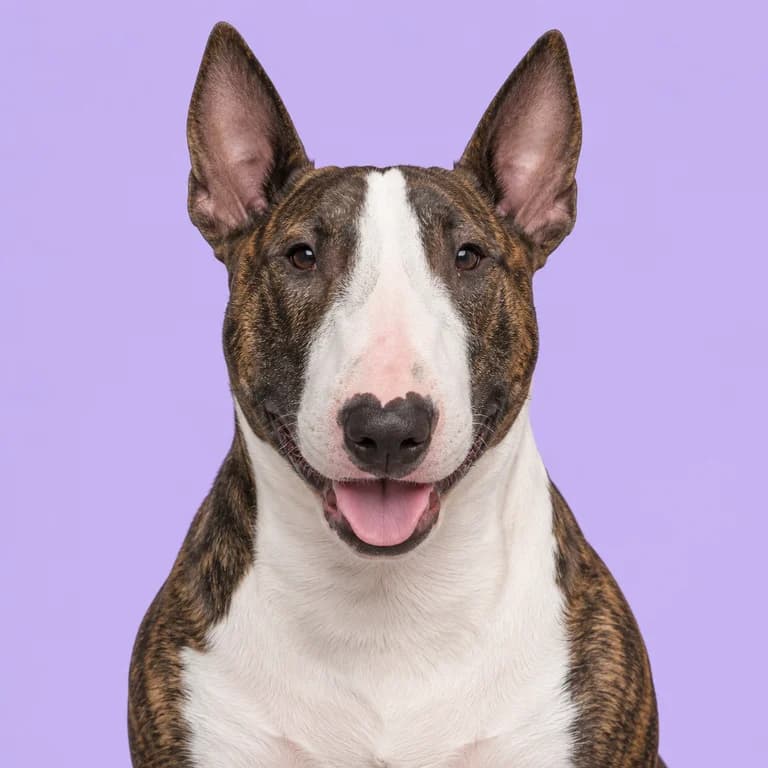
Bull Terrier
20 to 30 kg · 11 to 13 years
A muscular comedian with an egg-shaped head, loyal to its people and stubborn about almost everything else.
Terrier group
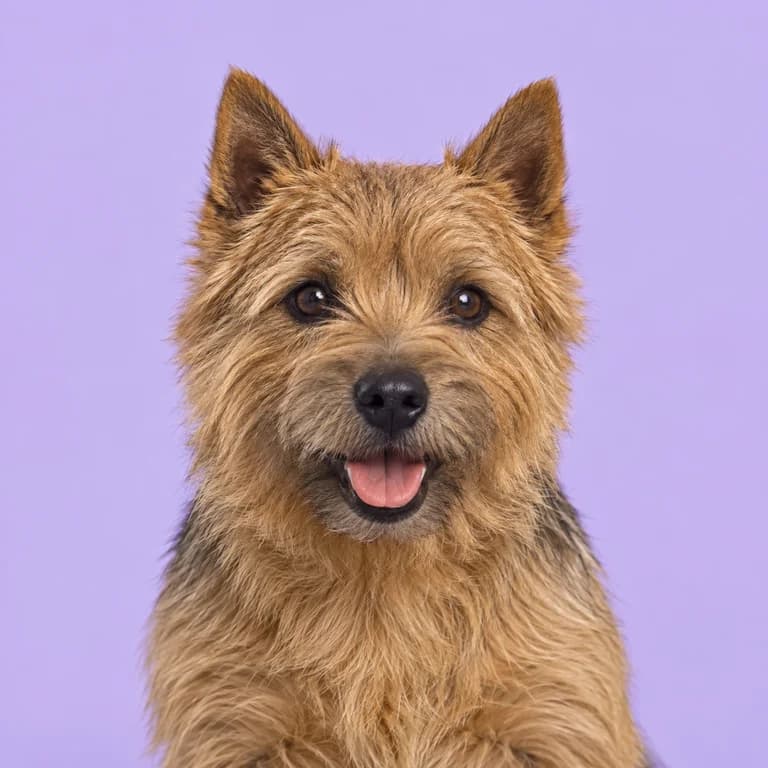
Norwich Terrier
5 to 6 kg · 12 to 15 years
One of the smallest working terriers, a big-dog attitude packed into about 5 kg of solid muscle.
Terrier group
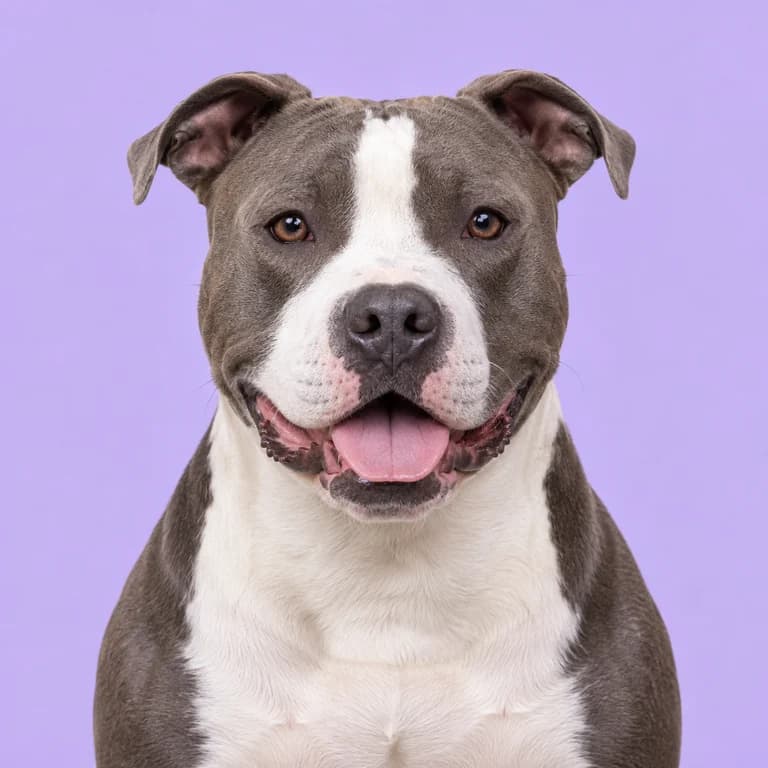
American Staffordshire Terrier
18 to 32 kg · 12 to 15 years
A muscular clown with a soft spot for people, happiest leaning on you or chewing something built to survive it.
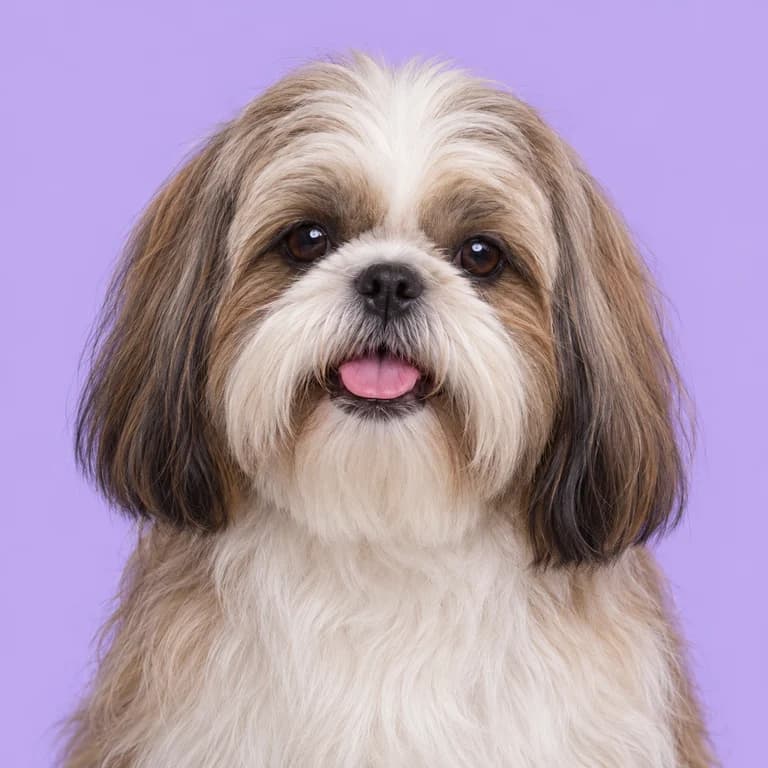
Toy group
Shih Tzu
4 to 7 kg · 10 to 16 years
A palace lapdog with a lion's name, a topknot and a coat that grows much like human hair.
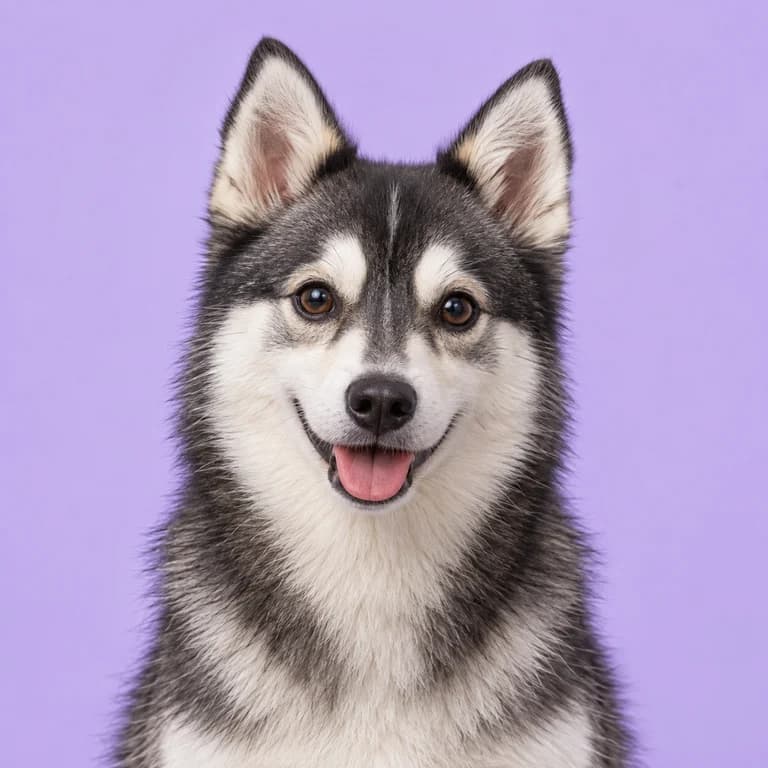
Working group
Alaskan Klee Kai
4 to 10 kg · 13 to 16 years
All the husky looks at a fraction of the size, with a far more cautious personality than most people expect.
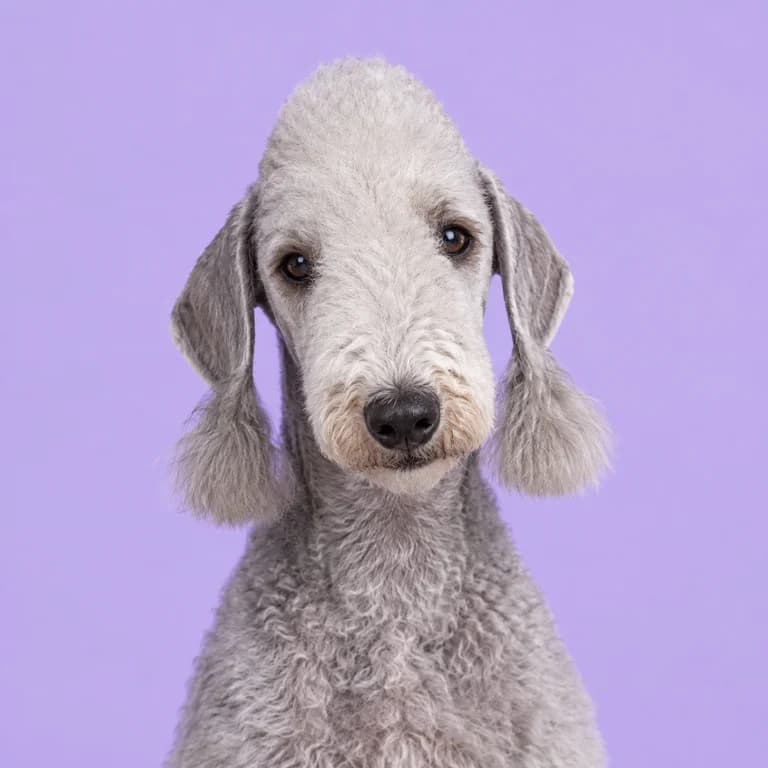
Terrier group
Bedlington Terrier
8 to 10 kg · 12 to 16 years
A terrier that looks like a lamb, runs like a whippet and needs a scissor-shaped trim every few weeks.