Sources for this article
Hound group · France
Basset Hound
Also called Basset
A scent hound nearly as heavy as a Labrador, built on legs barely 35 cm tall.
Basset Hounds are heavy-boned, low-slung scent hounds from France, bred to follow rabbits and hares at a pace hunters on foot could match. At home they are mellow, sociable and famously food-driven. Their build is the thing to plan around: a 25 kg dog on very short legs needs care with weight, stairs and lifting.
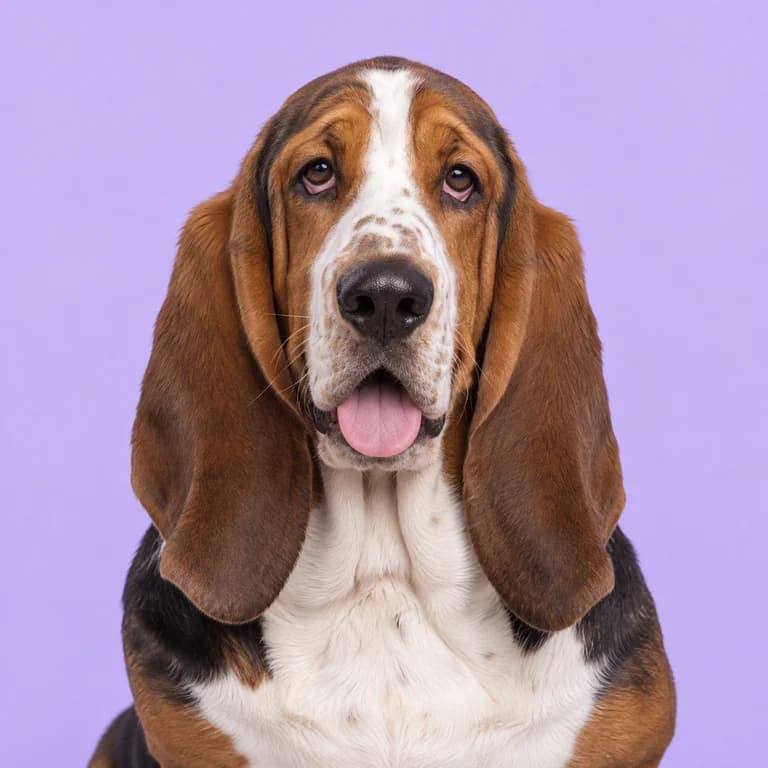
Original AI-generated breed illustration
Weight
20 to 29 kg
44 to 64 lb
Height
30 to 38 cm
at the shoulder
Life expectancy
10 to 12 yrs
Activity estimate
30 to 60 min
editorial daily planning range
Adult-size estimate
20 months
approximate model input
Life with a Basset Hound
Here is the number that surprises most people: a healthy adult Basset can weigh 29 kg (64 lb) while standing no taller than a coffee table. That makes it one of the heaviest dogs for its height, with bone closer to a large breed than a medium one. Almost everything about daily care, from portion sizes to getting into the car, follows from that build.
The short legs were deliberate. Huntsmen in France who followed hares and rabbits on foot wanted hounds slow enough to keep in sight, and short-legged hounds appear in French hunting writing from the late 1500s, according to most breed histories. The type reached Britain in the 1860s and 1870s, where breeders added Bloodhound blood and shaped the heavier, more wrinkled dog most people picture today.
Temperament is gentle, patient and sociable. Bassets were pack animals, so they usually welcome other dogs and are known for being tolerant with children. They are also stubborn in a quiet, cheerful way: when a smell is more interesting than you, the dog simply keeps walking. Expect a deep, musical bay rather than a yap.
Life with one means plenty of napping, a keen interest in the kitchen, and a dog that fits under the table but not on your lap. Bassets cope well in smaller homes, though long flights of stairs are hard on their backs.
What stands out
Puppy growth
Basset puppies grow in bone and length faster than in height, and they are endearingly clumsy while they do it. Most reach full height by around 12 months but keep adding weight and depth of chest until 18 to 24 months. It is common for a 10-week-old pup to already weigh 4 to 7 kg.
Read the full puppy growth guideIllustrative model, not observed breed data or a healthy-weight standard. Use actual measurements and veterinary advice to assess growth.
A great match for
- families with children who want a calm, tolerant dog
- homes that already have a dog
- owners who enjoy slow, sniffy walks
- people who like big dogs but want a lower-energy one
- ground-floor homes or homes with few stairs
Think twice if
- gains weight very easily
- follows its nose and forgets recall
- a loud, carrying bay
- ears that trail through food, water and mud
- heavy and awkward to lift in an emergency
Personality and needs at a glance
Living together
Good with children
Good with other dogs
Open with strangers
Apartment friendly
Copes with alone time
Energy and character
Energy level
Playfulness
Easy to train
Barking
5 means very vocal
Care and climate
Grooming needs
Shedding
Drooling
Handles cold
Handles heat
How much a Basset Hound eats
Illustrative calculations for neutered adults at midpoint breed weights, with food at 370 kcal per 100 g and 100 g per cup. These are not measured breed requirements. Use actual weight, the food label and veterinary body-condition advice.
| Dog | Weight | Calories | Dry food |
|---|---|---|---|
| Female, relaxed lifestyle | 24 kg | 1050 kcal | 285 g (2.8 cups) |
| Female, typical pet | 24 kg | 1200 kcal | 325 g (3.3 cups) |
| Male, typical pet | 26 kg | 1290 kcal | 350 g (3.5 cups) |
| Male, very active | 26 kg | 1610 kcal | 435 g (4.3 cups) |
Care guides for the Basset Hound
Things owners are often surprised by
- 1The name comes from the French word bas, meaning low
- 2Adults stand only 33 to 38 cm (13 to 15 in) but often weigh 20 to 29 kg (44 to 64 lb)
- 3The long ears and loose skin are often said to sweep scent up toward the nose
- 4Its nose is usually ranked among the best of all breeds, often placed just behind the Bloodhound
- 5Bred to hunt in packs, so most get along easily with other dogs
Basset Hound questions
Why do Basset Hounds have such long ears?
Breed histories often say the long ears and loose skin help stir up scent and hold it close to the nose as the dog works along the ground. Whether or not that is the whole story, the ears certainly sweep the ground and pick up dirt, water and food. Check them weekly and dry them after walks through wet grass to keep them healthy.
Can a Basset Hound live in an apartment?
Yes, as long as there is a lift or only a short flight of stairs, since repeated climbing is hard on their backs and they are heavy to carry. Their calm indoor manner helps, but the loud bay can bother neighbors. Teach the dog to be alone for gradually longer periods and keep walks regular, which reduces boredom baying.
How do I stop my Basset Hound from stealing food?
Prevention works far better than scolding with this breed. Keep counters clear, use a bin with a locking lid, and close the kitchen door or fit a baby gate during cooking. Feed measured meals at set times so the dog is not scavenging out of hunger. A 'leave it' cue trained with good treats helps on walks, but never rely on it beside an unattended plate.
Do Basset Hounds smell?
They do have a noticeable hound odor, stronger than many breeds. It comes from skin oils, the folds around the mouth and those long ears. Weekly ear checks, drying the lip folds after meals, washing bedding every week or two and a bath every 4 to 8 weeks keep it reasonable. A sudden sour or yeasty smell from the ears or skin is worth a vet visit.
Can Basset Hounds swim?
Some enjoy paddling in the shallows, but most are poor swimmers. Much of their weight sits in the heavy chest and head, and short legs give little push, so they tire quickly and can struggle to keep their nose up. If your dog will be near deep water, fit a well-sized dog life jacket with a grab handle and stay within arm's reach.
Popular answers for owners
- Grooming and coatCan I groom my dog myself instead of using a groomer?
- Exercise and playWhat is dock diving and is my dog suited for it?
- Puppy feeding and growthHow much should a 7 week old puppy eat?
- Grooming and coatHow do I introduce my dog to a grooming table at home?
- Bowls and feeding gearWhat is the biofilm in a dog's water bowl?
- Bowls and feeding gearWhat is a slow feeder bowl?
Breeds you might compare
Hound group
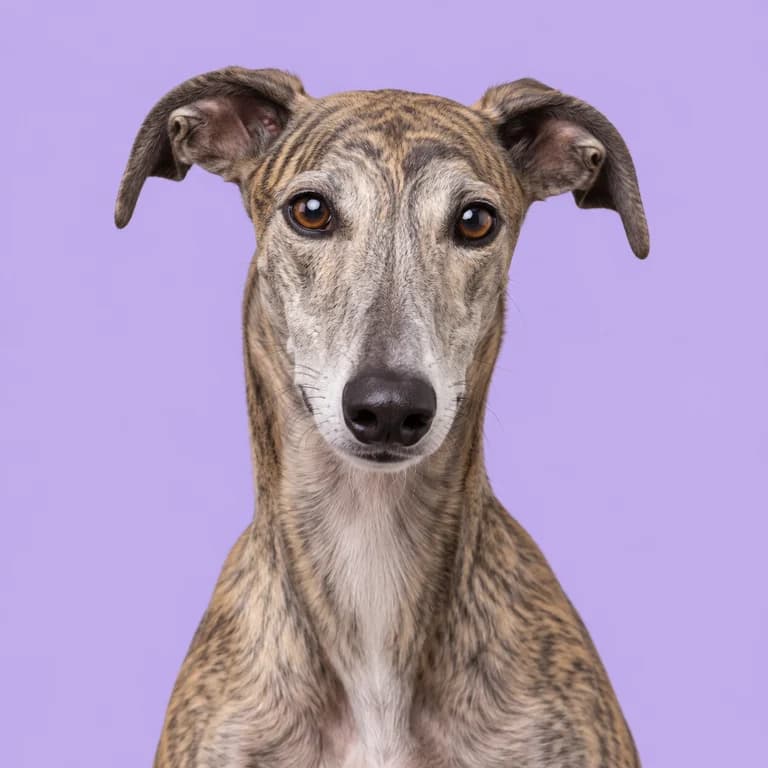
Greyhound
25 to 34 kg · 10 to 14 years
A sprinter capable of about 70 km/h (43 mph) that spends most of its day asleep upside down.
Hound group
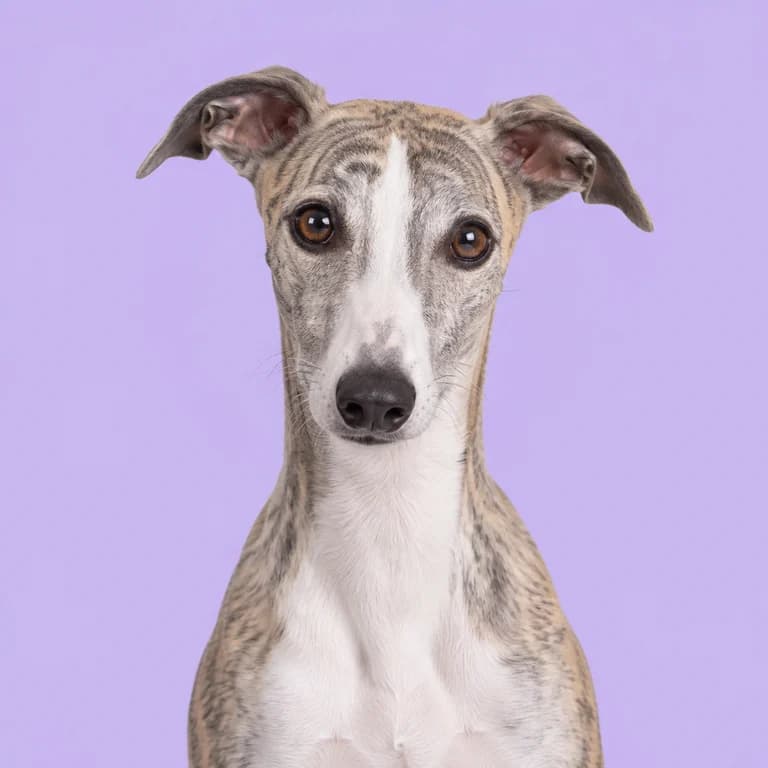
Whippet
9 to 16 kg · 12 to 15 years
Built for 55 km/h sprints, yet happiest curled under a blanket for most of the day.
Hound group
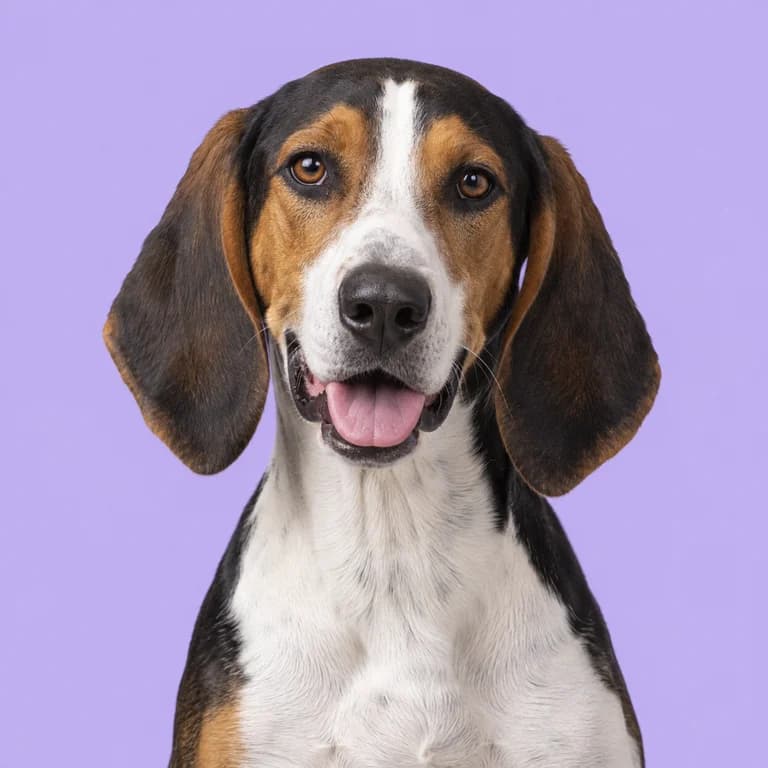
Treeing Walker Coonhound
22 to 32 kg · 12 to 13 years
An American night-hunting hound with huge stamina, a voice that carries for miles and a friendly nature.
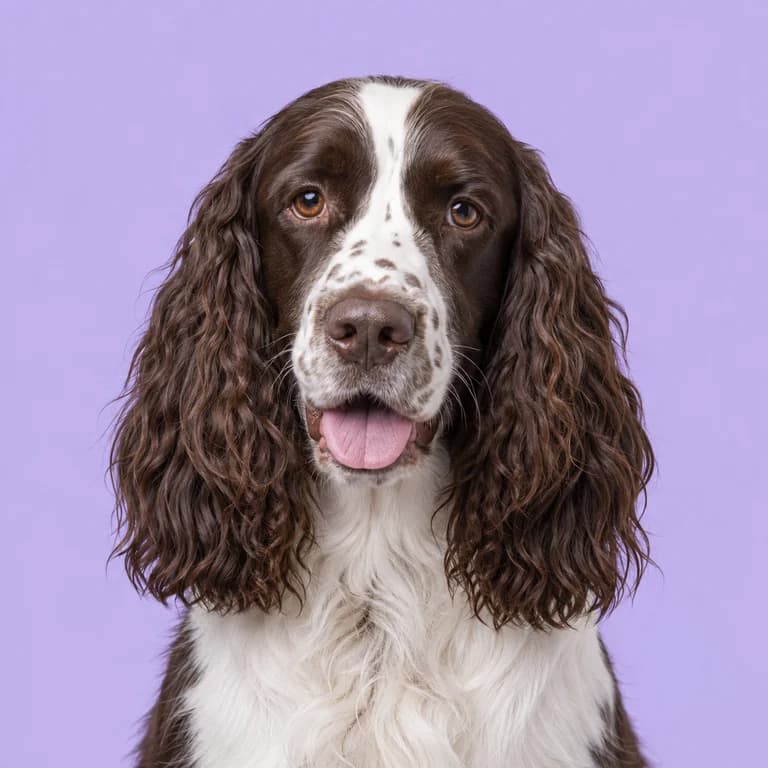
Sporting group
English Springer Spaniel
18 to 25 kg · 12 to 14 years
A tireless flushing spaniel that treats every hedge as a job and every walk as a hunt.
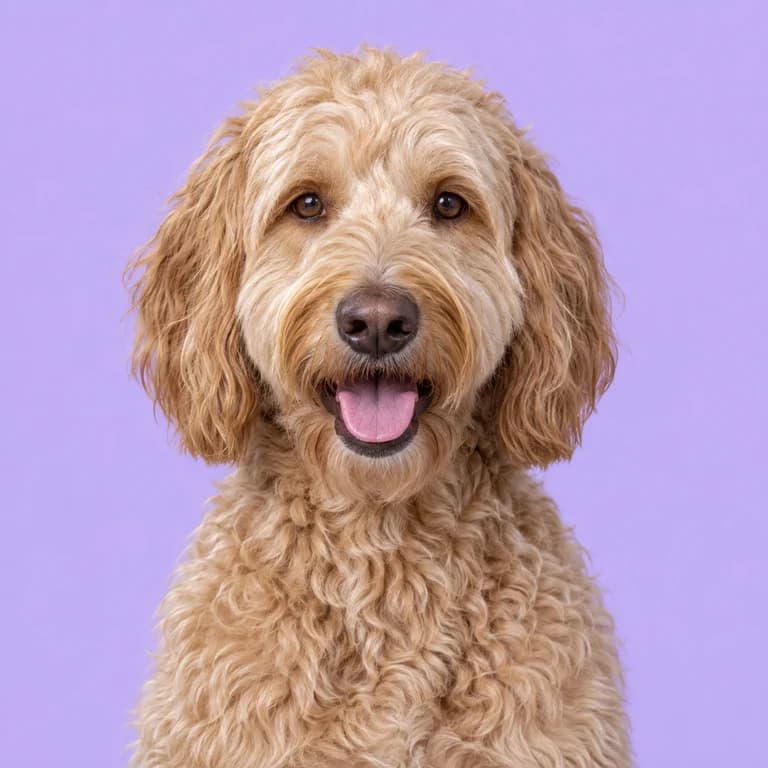
Crossbreed
Labradoodle
17 to 32 kg · 12 to 15 years
A cross first bred for an Australian guide-dog program, now among the world's most popular family dogs.
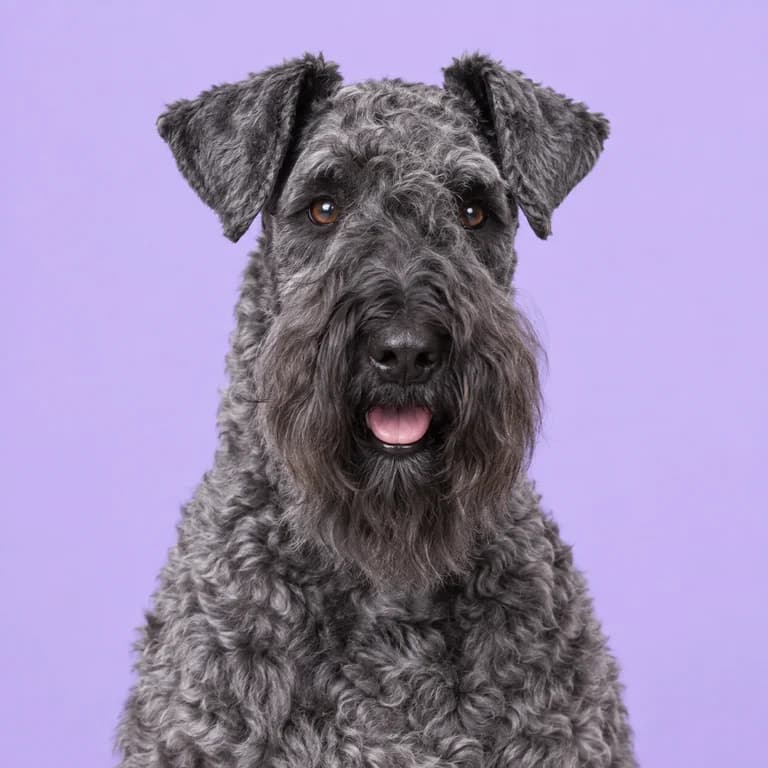
Terrier group
Kerry Blue Terrier
14 to 18 kg · 12 to 15 years
Born black, turning blue by adolescence, this Irish farm terrier trades shedding for a standing appointment with scissors.