Sources for this article
Toy group · Belgium
Brussels Griffon
Also called Griffon Bruxellois, Griffon Belge, Petit Brabancon, Griff
A small bearded Belgian with an almost human stare and a big opinion about who belongs to it.
Brussels Griffons began as tough little stable dogs in Belgium and became favorites of the Belgian royal household in the late 1800s. Today they are intensely attached companions with bold, sensitive personalities. They suit adults who want a devoted shadow, but they can be touchy with young children and hate being left alone.
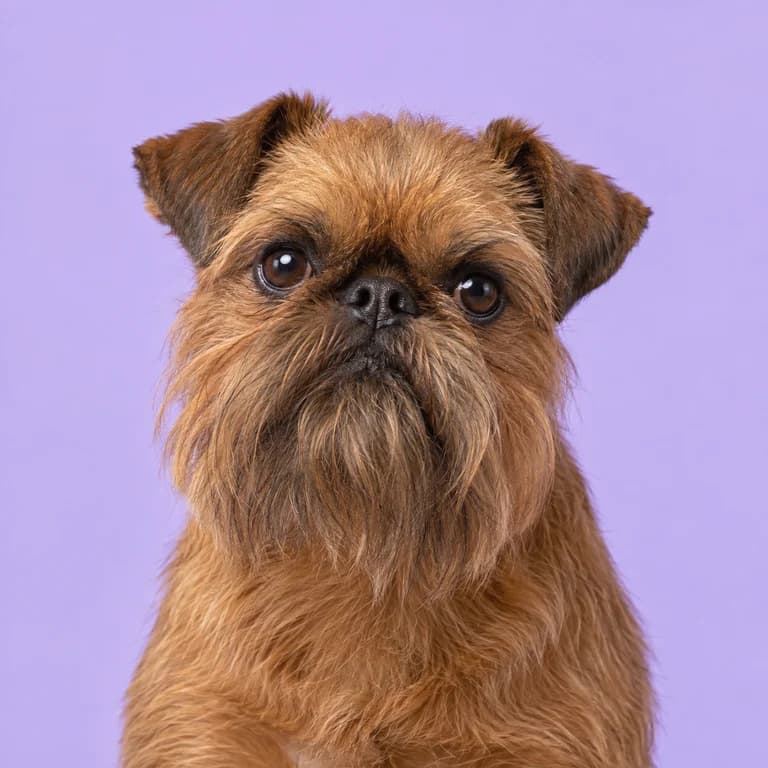
Original AI-generated breed illustration
Weight
3 to 6 kg
7 to 13 lb
Height
23 to 28 cm
at the shoulder
Life expectancy
12 to 15 yrs
Activity estimate
60 to 90 min
editorial daily planning range
Adult-size estimate
12 months
approximate model input
Life with a Brussels Griffon
Not many royal favorites started life in a horse stable, but the Brussels Griffon did. In 19th century Brussels, small rough-coated terrier-type dogs, often called Griffons d'Ecurie, earned their keep catching rats in cab stables and riding up front with the drivers. Crosses with Pugs and toy spaniels are said to have shortened the face and softened the temperament, and when Queen Marie Henriette took an interest, the dog moved from the stable to the salon.
Personality is what defines this breed. A Griffon usually chooses one or two people and follows them constantly, sitting on laps, watching every move and complaining loudly if shut out of a room. They are brave, funny and quick to read moods. They can also be touchy: loud noises, rough handling or unfamiliar visitors sometimes bring out a nervous, defensive streak.
In practice, a Griffon works best with adults or families with older children who understand a small dog needs gentle hands. Give one plenty of company, early and varied socialization, and patient training, and you get a confident little character with the self-assurance of a much bigger dog. Leave one alone for long hours in a hectic home and it may become anxious and vocal.
What stands out
Training
Griffons are clever and quick to link actions with results, which cuts both ways. They learn tricks eagerly for small food rewards and praise, but they also learn that barking gets attention. Keep training short, cheerful and consistent, and ignore demands you do not want repeated.
Read the full training guideEasy to train
Open with strangers
Good with other dogs
A great match for
- adults and couples who are home a lot
- apartment and city living
- households with older, calm children
- people who want a close, affectionate companion
Think twice if
- strong separation distress
- can snap if handled roughly by children
- slow house training
- short muzzle means heat sensitivity
- rough coat needs stripping or regular grooming
Personality and needs at a glance
Living together
Good with children
Good with other dogs
Open with strangers
Apartment friendly
Copes with alone time
Energy and character
Energy level
Playfulness
Easy to train
Barking
5 means very vocal
Care and climate
Grooming needs
Shedding
Drooling
Handles cold
Handles heat
How much a Brussels Griffon eats
Illustrative calculations for neutered adults at midpoint breed weights, with food at 370 kcal per 100 g and 100 g per cup. These are not measured breed requirements. Use actual weight, the food label and veterinary body-condition advice.
| Dog | Weight | Calories | Dry food |
|---|---|---|---|
| Female, relaxed lifestyle | 5 kg | 300 kcal | 80 g (0.8 cups) |
| Female, typical pet | 5 kg | 350 kcal | 95 g (1 cups) |
| Male, typical pet | 5 kg | 350 kcal | 95 g (1 cups) |
| Male, very active | 5 kg | 430 kcal | 115 g (1.3 cups) |
Care guides for the Brussels Griffon
Things owners are often surprised by
- 1Griffons were used by Brussels cab drivers to keep stables free of rats
- 2Queen Marie Henriette of Belgium kept and promoted the breed in the late 19th century
- 3Some kennel clubs split the dog into three breeds: the red Griffon Bruxellois, the darker Griffon Belge and the smooth Petit Brabancon
- 4Pugs and English toy spaniels are often credited with giving the breed its short face
- 5The rough coat is traditionally kept in shape by hand-stripping rather than clipping
- 6Griffons have a famously expressive face that owners often compare to a bearded old man or a monkey
Brussels Griffon questions
What is the difference between a rough and smooth Brussels Griffon?
Only the coat. Rough Griffons have wiry, dense hair and a beard and eyebrows, while smooth Griffons have a short, flat coat with no beard. Both types can appear in the same litter. In some countries the smooth dog is registered separately as the Petit Brabancon. Rough dogs need more grooming but shed less; smooth dogs are low maintenance but drop more hair.
Are Brussels Griffons good with children?
They are better with older children than toddlers. A Griffon weighs only a few kilograms and can be hurt or frightened by grabbing, squeezing or being dropped. When that happens, some respond by snapping. In a home with calm children over about 8 who understand how to handle a small dog, many Griffons become affectionate playmates. Always supervise early interactions.
Why does my Griffon follow me everywhere?
The breed has been a close companion for well over a century, and most Griffons bond intensely with one or two people. Following you from room to room is typical. It becomes a problem only if the dog panics when separated. Teach short, calm absences early, reward relaxed behavior on a bed or mat, and avoid making departures and returns dramatic.
How often does a Brussels Griffon need hand-stripping?
Most rough Griffons are stripped two or three times a year, with some tidying between sessions. The process removes dead hair and lets a new wiry coat grow in with its rich color. Show dogs are often rolled, meaning stripped a little every few weeks. If you do not show, clipping every eight to ten weeks is an acceptable, easier option.
Do Brussels Griffons bark a lot?
They are moderate barkers who notice everything. A Griffon will usually announce the postman, a knock or a dog passing the window. With little to do, that can become frequent. Plenty of company, short daily walks and teaching a quiet cue, rewarding silence after a bark or two, keep it manageable. They are rarely the nonstop yappers some toy breeds are known to be.
Popular answers for owners
- How much to feedHow often should I check my dog's weight?
- Bowls and feeding gearAre slow feeder bowls good for puppies?
- How much to feedWhat is a realistic timeline to help a small dog lose 1kg?
- Exercise and playWhat is a good substitute for fetch in a small yard?
- Bowls and feeding gearAre painted or glazed ceramic bowls safe?
- Grooming and coatWhy does my dog's coat feel greasy between baths?
Breeds you might compare
Toy group
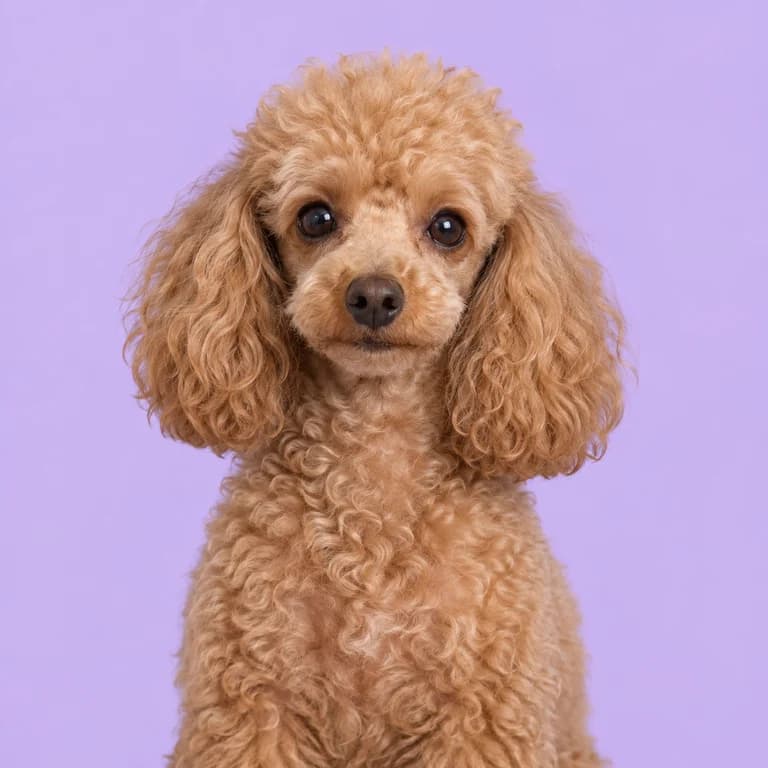
Toy Poodle
2 to 4 kg · 14 to 17 years
A full Poodle brain packed into a body under 4 kg, quick to learn and quicker to notice your habits.
Toy group
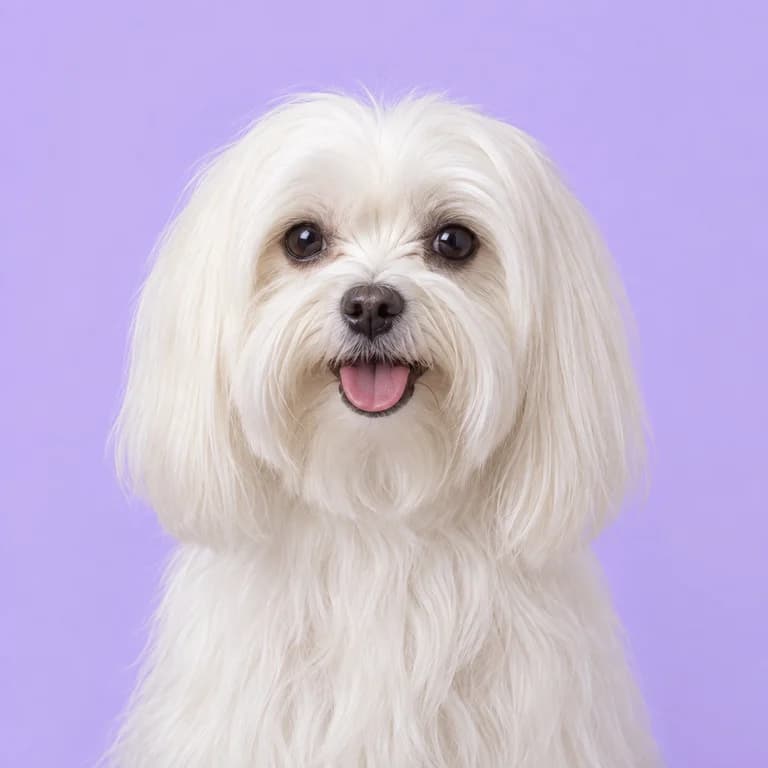
Maltese
2 to 4 kg · 12 to 15 years
A tiny white companion with a bold, cheerful personality and a silky coat that asks for daily attention.
Toy group
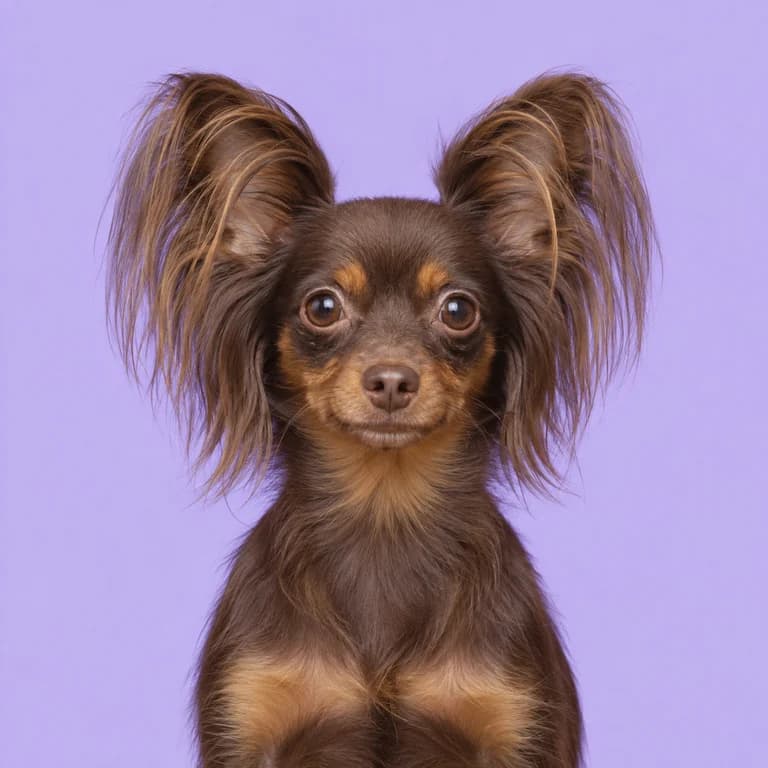
Russian Toy
1 to 3 kg · 12 to 14 years
One of the smallest dogs in the world, with long legs, huge ears and a terrier's alertness.
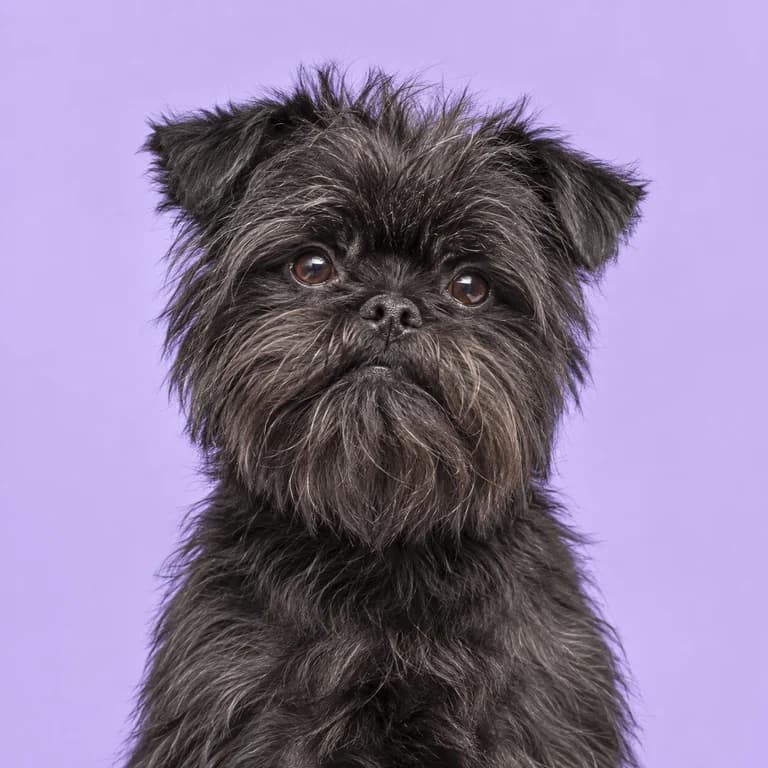
Toy group
Affenpinscher
3 to 6 kg · 12 to 15 years
Barely 4 kg of confidence, a monkey-faced stable ratter that behaves as if nobody told it how small it is.
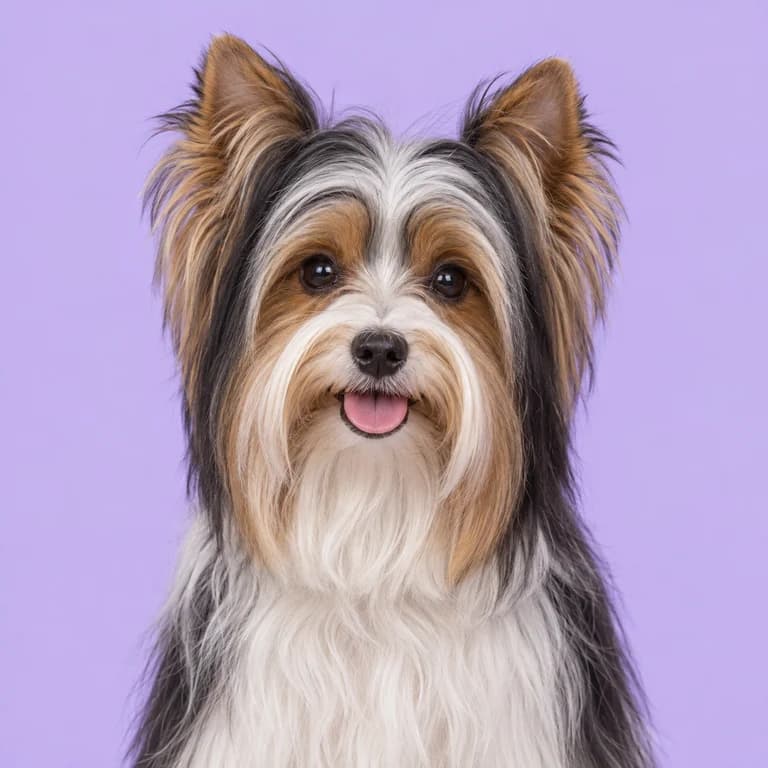
Toy group
Biewer Terrier
2 to 4 kg · 12 to 16 years
A pocket-sized German toy with a tricolor silk coat and a big dog's view of itself.
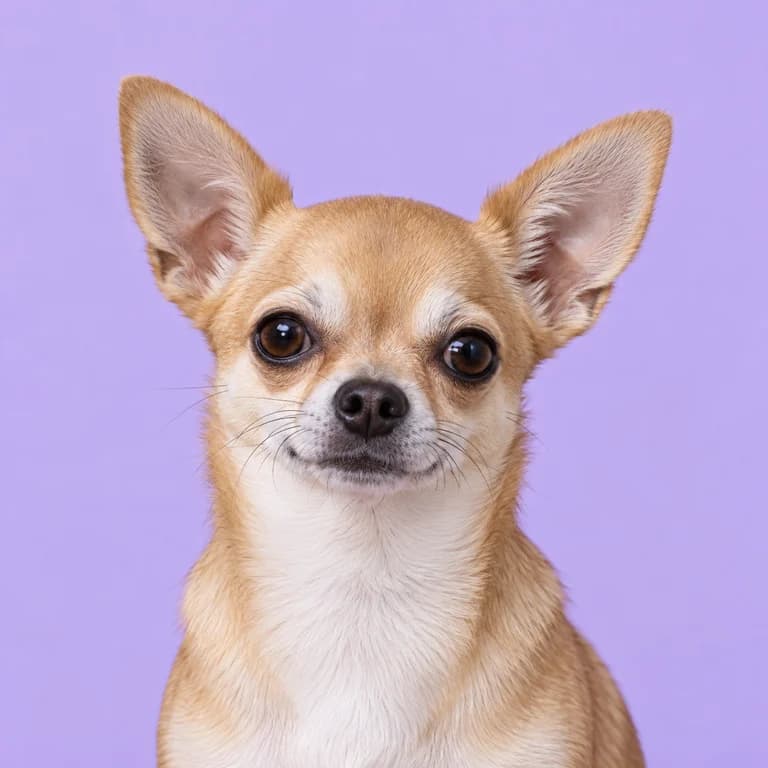
Toy group
Chihuahua
2 to 3 kg · 14 to 17 years
The smallest recognized breed in the world, carrying the confidence and opinions of a much larger dog.