Crossbreed · United States
Cockapoo
Also called Spoodle, Cockerpoo
Part spaniel, part poodle, the Cockapoo is a sociable, playful companion with a coat that never lets you skip grooming.
The Cockapoo is a cross between a Cocker Spaniel and a Poodle, usually a Miniature or Toy. It is typically affectionate, playful and easy to train, but size, coat and temperament vary more than in a purebred dog, and almost every Cockapoo coat needs regular brushing and professional grooming.

Original AI-generated breed illustration
Weight
5 to 11 kg
11 to 24 lb
Height
26 to 40 cm
at the shoulder
Life expectancy
12 to 15 yrs
Activity estimate
90 to 120 min
editorial daily planning range
Adult-size estimate
12 months
approximate model input
Life with a Cockapoo
Every Cockapoo owner eventually learns the same lesson: that soft, teddy-bear coat is a commitment. Most Cockapoos have hair that sheds little but grows continuously and tangles easily, especially behind the ears, under the collar and in the armpits. Brushing several times a week and a trip to the groomer every six to eight weeks are simply part of life with this dog.
The cross itself dates to at least the 1950s in the United States, where breeders began pairing Cocker Spaniels with Poodles to produce a friendly, low-shedding companion. Popularity took off in the UK and Australia (where it is often called a Spoodle) in the 2000s and 2010s. Because it is a crossbreed, there is no single standard. A Cockapoo with a Toy Poodle parent might weigh 4 or 5 kg, while one from a Standard Poodle can pass 15 kg; the common Miniature cross weighs about 6 to 9 kg.
Generation matters too. An F1 Cockapoo is a first cross between a Cocker and a Poodle, an F1b is an F1 bred back to a Poodle (usually curlier and lower shedding), and multigenerational dogs come from two Cockapoo parents. The English Cocker is the usual parent in the UK and the American Cocker in North America, which affects head shape, coat and size.
Temperament is the big draw. Most Cockapoos are affectionate, playful and sociable, keen to be involved in family life and quick to learn. They inherit a spaniel's nose and energy and a poodle's brains, so they need more exercise and mental work than their cuddly looks suggest.
What stands out
Grooming
Brush the whole coat three or four times a week, working in sections with a slicker brush, then comb down to the skin with a metal comb. Mats start behind the ears, under the collar or harness, in the armpits and on the legs. If the comb snags, tease the tangle apart with your fingers and a detangling spray rather than pulling it.
Read the full grooming guideIllustrative grooming schedule based on our editorial coat-care score. Adjust it to the individual coat and professional advice.
Brushing
4 to 5 times a week
Bathing
Every 3 to 6 weeks
Shedding
Light
Nail trim
Every 3 to 4 weeks
A great match for
- families with children
- first-time owners willing to learn training basics
- people who prefer lower shedding (not guaranteed)
- homes where someone is around much of the day
Think twice if
- grooming costs every 6 to 8 weeks
- matting during the adolescent coat change
- ear infections in hairy, floppy ears
- distress if left alone for long
- wide variation in size and coat
Personality and needs at a glance
Living together
Good with children
Good with other dogs
Open with strangers
Apartment friendly
Copes with alone time
Energy and character
Energy level
Playfulness
Easy to train
Barking
5 means very vocal
Care and climate
Grooming needs
Shedding
Drooling
Handles cold
Handles heat
How much a Cockapoo eats
Illustrative calculations for neutered adults at midpoint breed weights, with food at 370 kcal per 100 g and 100 g per cup. These are not measured breed requirements. Use actual weight, the food label and veterinary body-condition advice.
| Dog | Weight | Calories | Dry food |
|---|---|---|---|
| Female, relaxed lifestyle | 8 kg | 440 kcal | 120 g (1.3 cups) |
| Female, typical pet | 8 kg | 510 kcal | 135 g (1.3 cups) |
| Male, typical pet | 9 kg | 560 kcal | 150 g (1.5 cups) |
| Male, very active | 9 kg | 700 kcal | 190 g (2 cups) |
Care guides for the Cockapoo
Things owners are often surprised by
- 1Deliberate crosses between Cocker Spaniels and Poodles were being bred in the United States by the 1950s
- 2In the UK the Cocker parent is usually an English Cocker; in North America it is usually an American Cocker
- 3Size depends on the Poodle parent, from toy crosses under 5 kg to larger crosses over 11 kg
- 4The change from puppy to adult coat, between about 7 and 12 months, often brings a wave of matting
- 5An F1b is a first-generation Cockapoo bred back to a Poodle, which usually gives a curlier coat
- 6Both parent breeds can be DNA tested for progressive retinal atrophy (prcd-PRA)
Cockapoo questions
Are Cockapoos hypoallergenic?
Not in the strict sense, since every dog produces some allergens. Many Cockapoos shed little, especially curly-coated F1b or multigenerational dogs, and some people with mild allergies cope better with them. But allergens are also in saliva and skin, and coat type can vary within a single litter. Spend time with the breeder's adult dogs before committing if allergies are a concern.
What is the difference between F1, F1b and multigen Cockapoos?
An F1 is the first cross between a Cocker and a Poodle, usually with a wavy coat and moderate shedding. An F1b is an F1 bred back to a Poodle, usually curlier and lower shedding. Multigenerational Cockapoos are bred from Cockapoo parents, and when breeders select carefully they tend to give more predictable coats and sizes.
How big will my Cockapoo get?
Size depends mostly on the Poodle parent. Toy crosses often stay under 5 kg, miniature crosses usually weigh 6 to 9 kg, and larger crosses with a Standard Poodle can exceed 11 kg. The best guide is the size of both parents. Most reach adult height by about 10 months and full weight by around a year.
Why is my Cockapoo matting so much?
Mats often appear between 7 and 12 months, when the puppy coat changes to the adult coat. Friction points such as the collar, harness, armpits and ears are worst. Brush and comb down to the skin several times a week, dry the coat thoroughly after wet walks, and consider a shorter trim. A groomer can safely remove tight mats you cannot comb out.
Do Cockapoos bark a lot?
Most are moderate barkers. They may bark at visitors, noises, or when bored or left alone. Enough exercise, mental stimulation and a trained quiet cue all help. A Cockapoo that barks for long periods when left alone may be struggling with separation, which is worth addressing with gradual alone-time training rather than simply waiting for it to pass.
Popular answers for owners
- Exercise and playIs thirty minutes of exercise enough for a dog?
- How much to feedHow much should I feed a 100 lb dog?
- Exercise and playHow do I exercise two dogs with very different energy levels together?
- How much to feedHow many calories does my dog need per day?
- Bowls and feeding gearIs there a formula for choosing bowl stand height?
- How much to feedWhat is a simple rule of thumb for calories per kilogram of body weight?
Breeds you might compare

Crossbreed
Maltipoo
3 to 7 kg · 12 to 15 years
A cuddly Maltese and Poodle cross with a big personality, bred as a close companion rather than a worker.

Crossbreed
Cavapoo
5 to 11 kg · 12 to 15 years
Cavalier softness meets Poodle brains in a people-focused cross sized for almost any home.

Crossbreed
Labradoodle
17 to 32 kg · 12 to 15 years
A cross first bred for an Australian guide-dog program, now among the world's most popular family dogs.

Terrier group
Rat Terrier
4 to 11 kg · 12 to 18 years
A compact American farm terrier that comes in two sizes and handles barn work and sofa duty equally well.

Terrier group
Miniature Schnauzer
5 to 9 kg · 12 to 15 years
A bearded farmyard ratter whose wiry coat needs a plan and whose opinions come out loud.
Terrier group
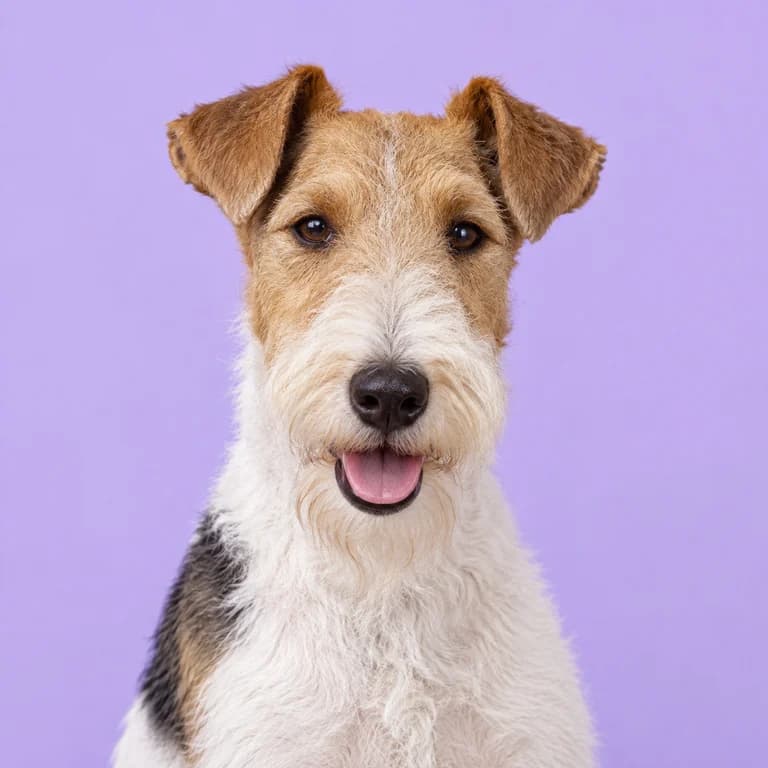
Wire Fox Terrier
6 to 9 kg · 12 to 15 years
A spring-loaded English terrier that treats every day as a hunting trip and every squirrel as unfinished business.