Sources for this article
Non-sporting group · Croatia
Dalmatian
Also called Carriage Dog, Spotted Coach Dog, Firehouse Dog
Bred to trot beside horse-drawn carriages for hours, the Dalmatian still has the stamina to prove it.
The Dalmatian is the only breed defined by its spots, but its real story is endurance: for generations it ran alongside coaches and fire wagons, guarding horses and clearing the road. That history shows up today as a dog with huge stamina, a close bond with its people and a coat that sheds all year.
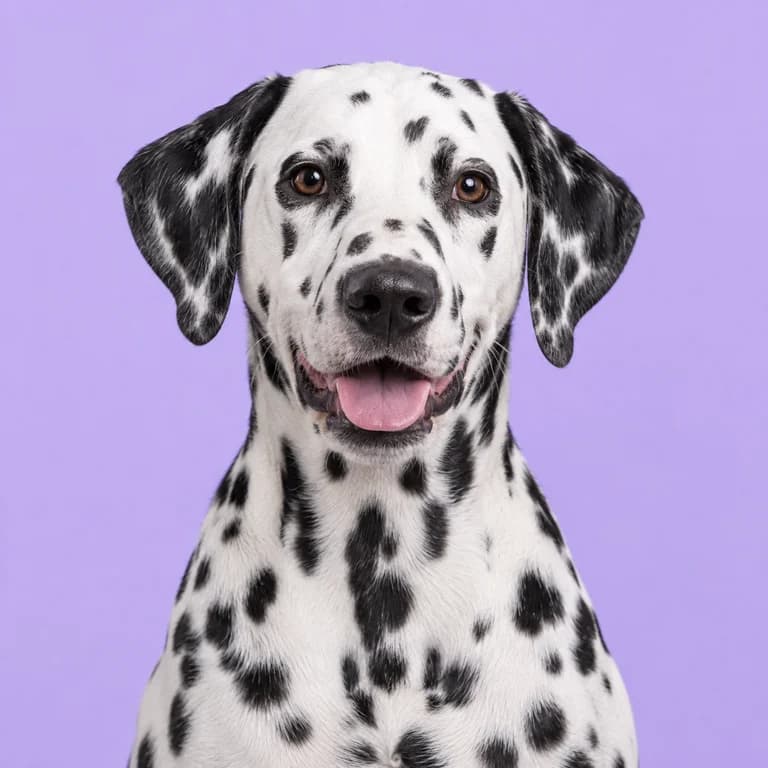
Original AI-generated breed illustration
Weight
20 to 32 kg
44 to 70 lb
Height
54 to 61 cm
at the shoulder
Life expectancy
11 to 13 yrs
Activity estimate
120 to 150 min
editorial daily planning range
Adult-size estimate
18 months
approximate model input
Life with a Dalmatian
Long before the cartoons, the Dalmatian had a job title: coach dog. In 18th and 19th century England, these spotted dogs trotted beside or beneath horse-drawn carriages, often for hours at a stretch. They cleared stray dogs from the road ahead, kept the horses company, and guarded the coach and stable at night while the driver slept.
Where the breed came from before that is honestly unclear. Spotted dogs appear in old paintings from several parts of Europe, and the name ties the breed to Dalmatia on the Adriatic coast, which is why Croatia is recognized as its country of origin. Most of the breed's development into the dog we know, though, happened in Britain.
In the United States, Dalmatians moved from private carriages to fire wagons, running ahead to clear the street and steadying the horses near the flames. Many fire stations still keep one as a mascot. The mix of guarding and running produced a dog that is loyal to its household, reserved with strangers until introduced, and able to keep going long after most dogs have flopped down.
Day to day, a Dalmatian is affectionate, clownish and physically demanding. It wants to be where you are, dislikes long hours alone, and needs serious daily exercise. Owners who expected a calm, low-effort pet because of a film are often caught out.
A great match for
- runners, hikers and very active households
- owners who want a dog that bonds closely
- homes with a secure garden
- people who enjoy training and dog sports
Think twice if
- sheds heavily all year despite the short coat
- needs 1.5 to 2 hours of exercise daily
- can turn wary or sensitive without early socializing
- diet and water intake matter because of urinary stones
- some puppies are born partly or fully deaf
Personality and needs at a glance
Living together
Good with children
Good with other dogs
Open with strangers
Apartment friendly
Copes with alone time
Energy and character
Energy level
Playfulness
Easy to train
Barking
5 means very vocal
Care and climate
Grooming needs
Shedding
Drooling
Handles cold
Handles heat
How much a Dalmatian eats
Illustrative calculations for neutered adults at midpoint breed weights, with food at 370 kcal per 100 g and 100 g per cup. These are not measured breed requirements. Use actual weight, the food label and veterinary body-condition advice.
| Dog | Weight | Calories | Dry food |
|---|---|---|---|
| Female, relaxed lifestyle | 24 kg | 1050 kcal | 285 g (2.8 cups) |
| Female, typical pet | 24 kg | 1200 kcal | 325 g (3.3 cups) |
| Male, typical pet | 29 kg | 1380 kcal | 375 g (3.8 cups) |
| Male, very active | 29 kg | 1730 kcal | 465 g (4.8 cups) |
Care guides for the Dalmatian
Things owners are often surprised by
- 1Puppies are born pure white, and spots start to show at around 10 to 14 days old
- 2The name points to Dalmatia on the Croatian coast, though the breed's deeper roots are unclear
- 3Hearing studies suggest that roughly a quarter to a third of Dalmatians have some hearing loss
- 4Almost all Dalmatians pass high levels of uric acid in their urine, which raises the risk of stones
- 5A familiar firehouse mascot in the US because the breed once ran ahead of horse-drawn engines
Dalmatian questions
Are all Dalmatian puppies born with spots?
No. Dalmatian puppies are born pure white, and spots start to appear at around 10 to 14 days, with more emerging over the first few months. The exception is a patch, a solid dark area present from birth, usually on the head or an ear. Patches are genetically different from spots and count as a fault in the show ring, but they make no difference to a pet.
What is a low uric acid (LUA) Dalmatian?
LUA Dalmatians come from a project started in 1973, when a Pointer was bred into the line to bring back the normal gene for processing uric acid. After many generations of breeding back to Dalmatians, these dogs look and behave like any other Dalmatian but have normal uric acid levels, which lowers the risk of urate stones. Several kennel clubs now register them.
Do Dalmatians come in colors other than black and liver?
Yes, although most show standards accept only black or liver spots on white. Lemon, orange, brindle, blue and tricolor Dalmatians turn up from time to time. They are just as healthy and make fine pets, so a lemon puppy in a litter is not a warning sign by itself. Be cautious, though, of any seller who charges extra for a so-called rare color.
Is a deaf Dalmatian a good pet?
A deaf Dalmatian can live a full, happy life with an owner willing to adapt. Train with hand signals from day one, keep the dog on a lead or in a secure area outdoors, and wake it by touching the same spot each time, or by tapping the floor so it feels the vibration. Dogs deaf in only one ear usually need very little adjustment at all.
Are Dalmatians good with children?
Many are playful, loyal and devoted to the children in their own home. Because they are big, fast and bouncy, they can bowl over toddlers during play, so they often suit families whose children are school age. They also dislike being startled, which matters even more if the dog has hearing loss. Teach children to let a sleeping dog lie and supervise all rough play.
Popular answers for owners
- How much to feedHow many calories should I cut to help my dog lose weight?
- Exercise and playIs it safe to bike with my dog running alongside me?
- Puppy feeding and growthHow much should a 5 month old puppy eat?
- How much to feedMy dog eats the recommended amount but is still gaining weight, why?
- Grooming and coatHow do I care for the facial wrinkles on a flat faced breed?
- Exercise and playWhat games build a puppy's confidence?
Breeds you might compare

Non-sporting group
Bichon Frise
5 to 8 kg · 14 to 16 years
The white powder puff hides a sturdy, sociable dog, and keeping that coat right is a weekly commitment.

Non-sporting group
Boston Terrier
5 to 11 kg · 11 to 13 years
Tuxedo markings, a clown's timing and a genuine fondness for almost every person it meets.
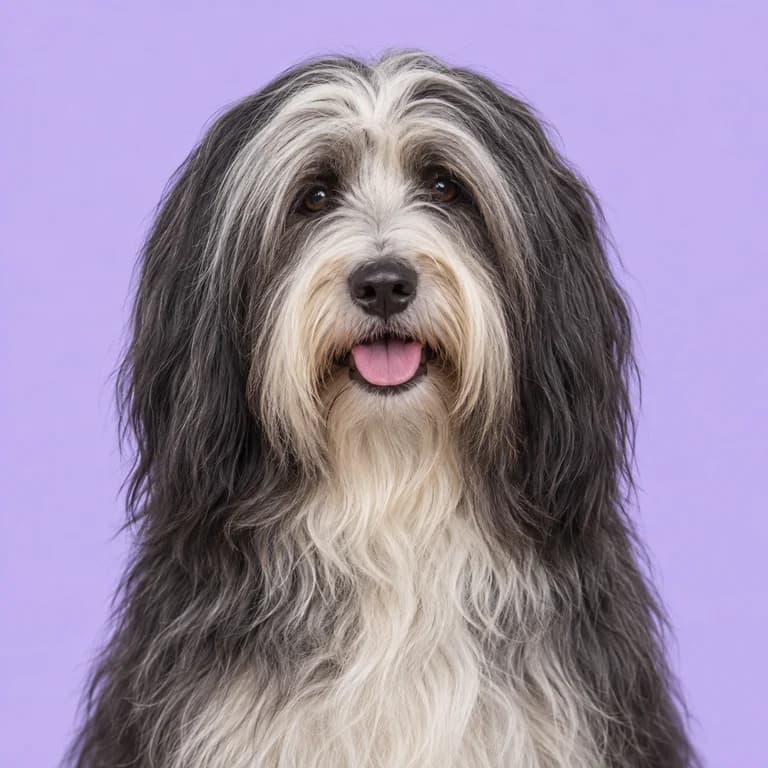
Non-sporting group
Tibetan Terrier
8 to 14 kg · 12 to 15 years
Not a terrier at all, but a shaggy mountain companion once given away as a living good-luck charm.
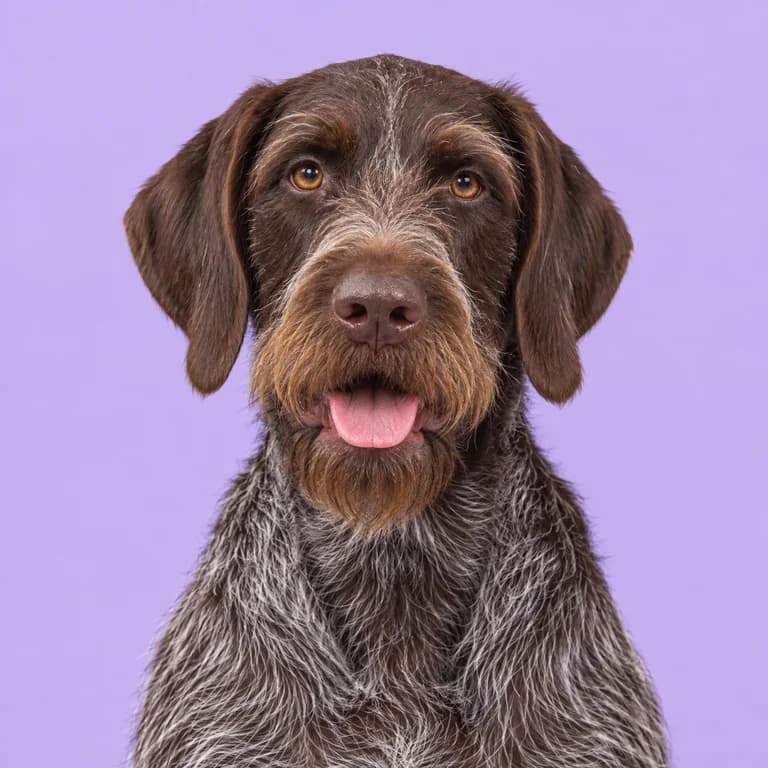
Sporting group
German Wirehaired Pointer
23 to 32 kg · 12 to 14 years
A bearded, weatherproof German hunting dog that thrives with a firm, fair trainer and a real job to do.
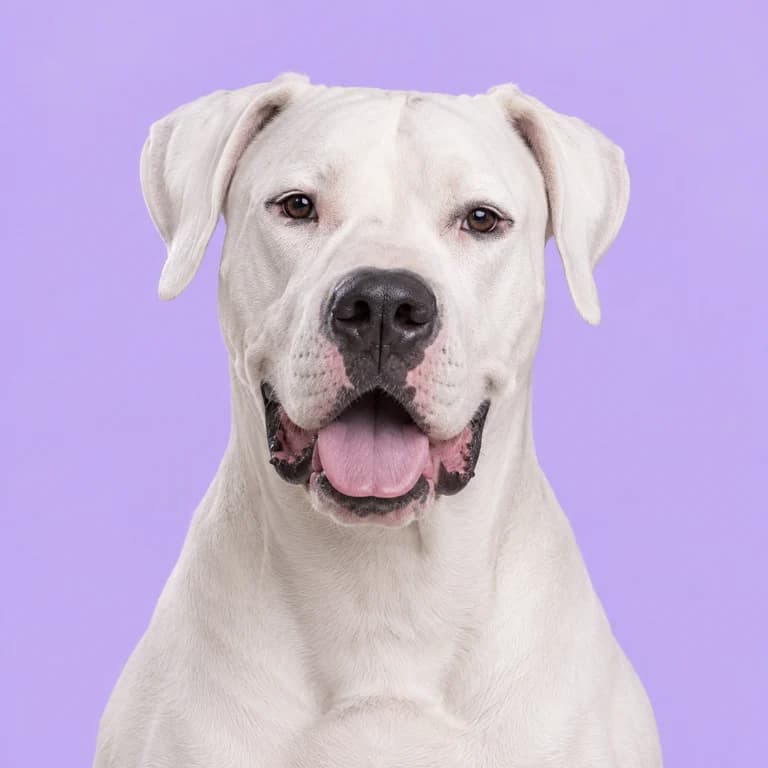
Working group
Dogo Argentino
35 to 45 kg · 10 to 12 years
A white Argentine hunting dog designed by two brothers to face boar and puma, now a devoted but demanding companion.
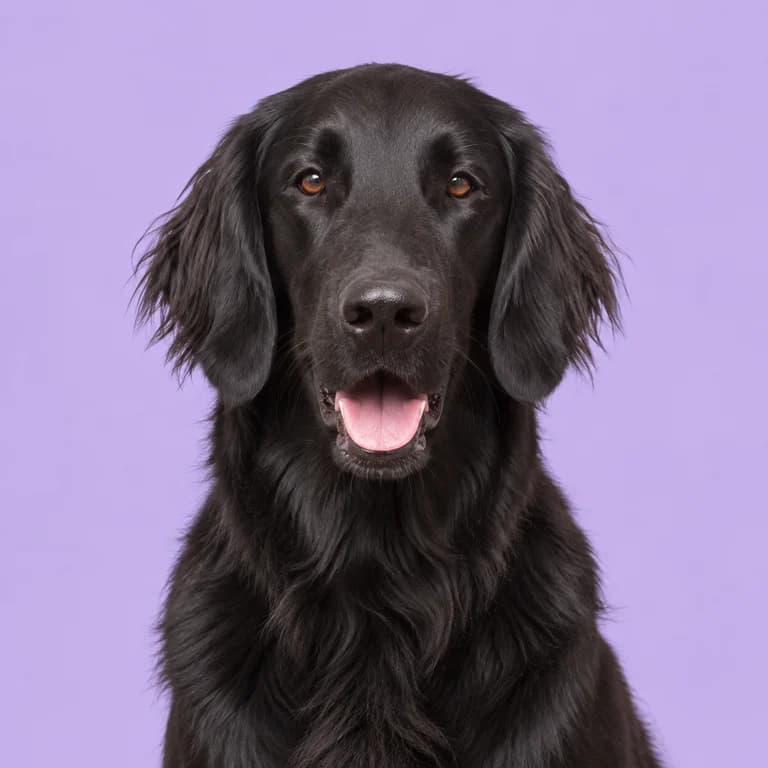
Sporting group
Flat-Coated Retriever
25 to 36 kg · 8 to 10 years
A glossy black gundog with a permanently wagging tail and a boyish enthusiasm that rarely fades.