Sources for this article
Herding group · Belgium
Belgian Tervuren
Also called Tervuren, Tervueren, Belgian Shepherd (Tervueren)
A long-coated Belgian herder with a sprinter's reflexes and a working mind that wants a daily assignment.
The Belgian Tervuren is one of four Belgian shepherd varieties, the one with the long coat in rich fawn or mahogany tipped with black. Beneath that glamorous coat is a fast, tireless working dog that needs around two hours of activity and real mental work every day. With an active, committed owner it is a brilliant partner, but in a quiet household it turns restless and anxious.
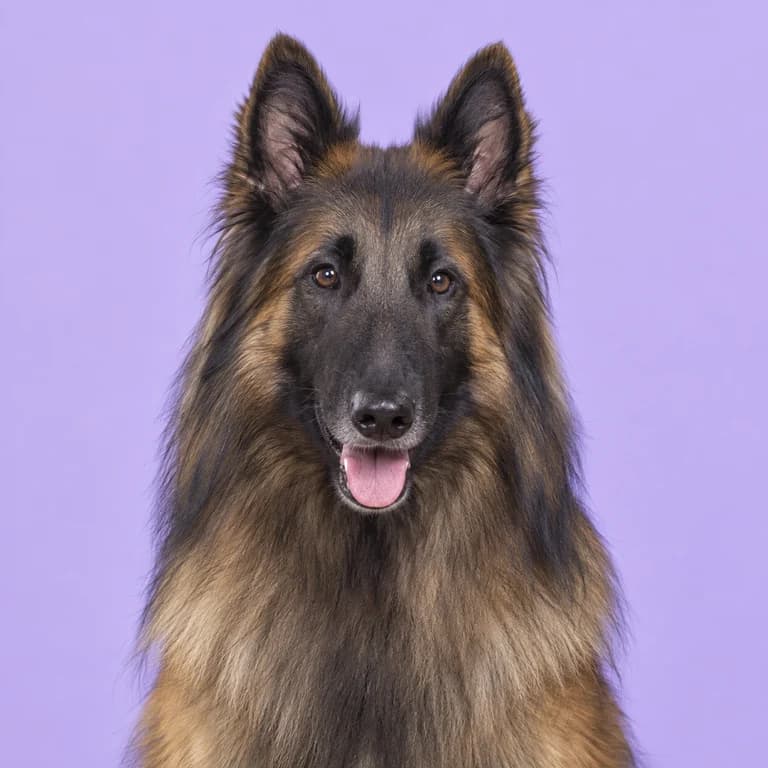
Original AI-generated breed illustration
Weight
20 to 30 kg
44 to 66 lb
Height
56 to 66 cm
at the shoulder
Life expectancy
12 to 14 yrs
Activity estimate
120 to 150 min
editorial daily planning range
Adult-size estimate
20 months
approximate model input
Life with a Belgian Tervuren
If a Tervuren came with a job description, it would read: keep moving, keep watching, keep thinking. The breed was shaped in Belgium in the 1890s as a sheepdog, and today it excels at herding, obedience, agility, tracking and search work. Everything about it, from the springy, ground-covering trot to the constant scanning of its surroundings, is built for work that lasts all day.
In 1891, Belgian dog enthusiasts led by Professor Adolphe Reul set out to turn the country's varied working sheepdogs into a recognized breed. They found dogs of similar build in several coat types and eventually sorted them into four varieties. The long-haired fawn dogs with black tips took the name Tervuren, after the village near Brussels where one of the early breeders kept his dogs.
At home, a Tervuren is affectionate and tightly bonded, often shadowing one person from room to room. It is sensitive enough to pick up on tension in the household, and it can be reserved or watchful with strangers. Many lines are a little softer than the Malinois, but the Tervuren is still far more driven than a typical family dog.
The honest picture: this breed is a joy for people who want to train several times a week and spend hours outdoors, and a struggle for anyone hoping for a relaxed dog that fits around a busy office schedule.
What stands out
Exercise
Plan on roughly 2 hours of activity a day for an adult: a long walk or run, plus a focused training or sport session. Tervurens are made for agility, herding, obedience, tracking, flyball and canicross, and most will happily try the lot. Brain work counts as much as legwork, and 15 minutes of shaping a new behavior can tire one as much as a 40-minute walk.
Read the full exercise guideActivity planning estimate
120 to 150 min
editorial estimate, not a prescription
Energy
5 / 5
Playfulness 4 / 5
A great match for
- experienced, very active owners
- people who train for dog sports
- runners and hikers
- homes with a secure garden and someone around most of the day
Think twice if
- needs about 2 hours of exercise and training daily
- sheds heavily, with big seasonal coat drops
- can be sensitive to noise and wary of strangers
- may try to herd children, cyclists and cars
- copes badly with long hours alone
Personality and needs at a glance
Living together
Good with children
Good with other dogs
Open with strangers
Apartment friendly
Copes with alone time
Energy and character
Energy level
Playfulness
Easy to train
Barking
5 means very vocal
Care and climate
Grooming needs
Shedding
Drooling
Handles cold
Handles heat
How much a Belgian Tervuren eats
Illustrative calculations for neutered adults at midpoint breed weights, with food at 370 kcal per 100 g and 100 g per cup. These are not measured breed requirements. Use actual weight, the food label and veterinary body-condition advice.
| Dog | Weight | Calories | Dry food |
|---|---|---|---|
| Female, relaxed lifestyle | 23 kg | 1010 kcal | 275 g (2.8 cups) |
| Female, typical pet | 23 kg | 1160 kcal | 315 g (3.3 cups) |
| Male, typical pet | 28 kg | 1340 kcal | 365 g (3.8 cups) |
| Male, very active | 28 kg | 1680 kcal | 455 g (4.5 cups) |
Care guides for the Belgian Tervuren
Things owners are often surprised by
- 1Named after the village of Tervuren near Brussels, home of an early breeder often credited with founding the type
- 2One of four Belgian shepherd types: Groenendael, Tervuren, Malinois and Laekenois
- 3Many kennel clubs treat all four as one breed with different coats, while the AKC lists them separately
- 4The black tips on the coat usually deepen as the dog matures, often until 2 years or later
- 5Stands 56 to 66 cm (22 to 26 in) and weighs 20 to 30 kg (44 to 66 lb)
Belgian Tervuren questions
What is the difference between a Tervuren and a Malinois?
Both are Belgian shepherds built on the same frame, but the Malinois has a short fawn coat and the Tervuren a long, full one. Many Malinois lines are bred for police and protection work and are more intense, while Tervurens are often a little softer and more sociable. Both still need far more exercise and training than an average family dog.
Is a Belgian Tervuren a good family dog?
It can be for the right family: active, organized and willing to train regularly. Tervurens are often affectionate with children they know, but they may try to herd running kids or nip at heels. They also dislike being left alone for long. Families with busy schedules or very young children usually find a calmer breed easier to live with.
Do Belgian Tervurens shed a lot?
Yes. They shed moderately all year and heavily once or twice a year, when the undercoat comes out in clumps over 2 to 3 weeks. Weekly brushing keeps things manageable, stepped up to daily during a shed. A bath followed by a strong blow dryer helps loosen dead undercoat. Expect some hair on floors and clothes whatever you do.
Can a Belgian Tervuren live in an apartment?
Only if you can meet its needs outside the home: around 2 hours of daily exercise and training, plus regular access to space where it can run safely. Even then, noise from neighbors, stairwells and passing people can keep a watchful Tervuren on edge. A house with a secure garden near open country suits most of these dogs far better.
When does a Tervuren's coat reach its full color?
Puppies are often lighter with less black, and the dark tips on the hairs usually deepen through adolescence. Most reach adult color and coat length somewhere between 18 months and 3 years, and males often grow their full ruff later than females. Judge a puppy's likely adult color by looking at its parents rather than at the pup itself.
Popular answers for owners
- Bowls and feeding gearAre silicone feeding mats easy to clean?
- Exercise and playWhat breeds are not strong swimmers?
- How much to feedMy dog's weight loss has stalled, what should I change?
- Exercise and playHow do I exercise a dog with only three legs?
- Puppy feeding and growthHow much wet food should I give my puppy?
- Grooming and coatHow do I get burrs and grass seeds out of my dog's fur?
Breeds you might compare
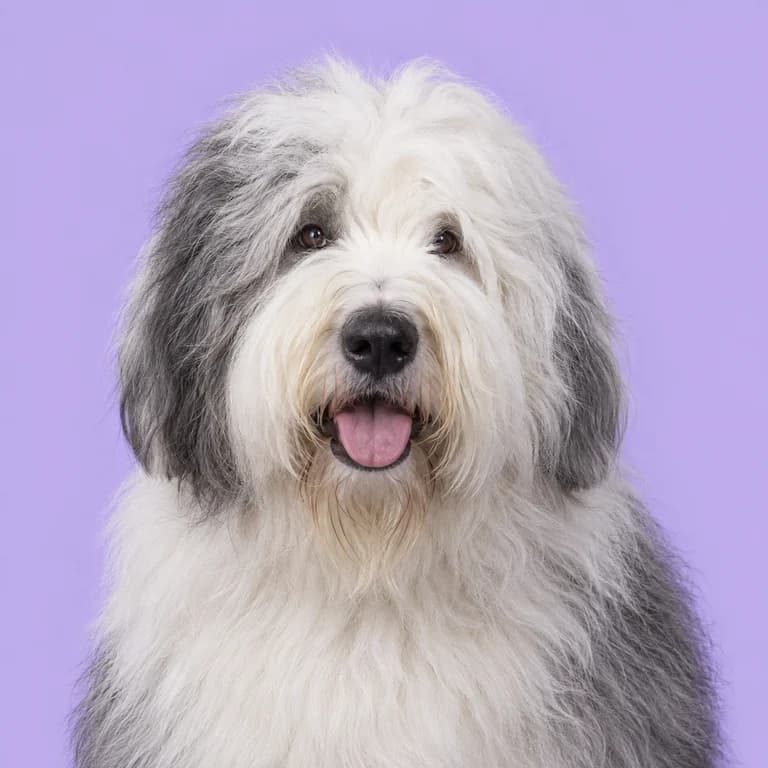
Herding group
Old English Sheepdog
27 to 45 kg · 10 to 12 years
A shaggy English drover with a rolling bear-like walk and a coat that asks for hours of your week.
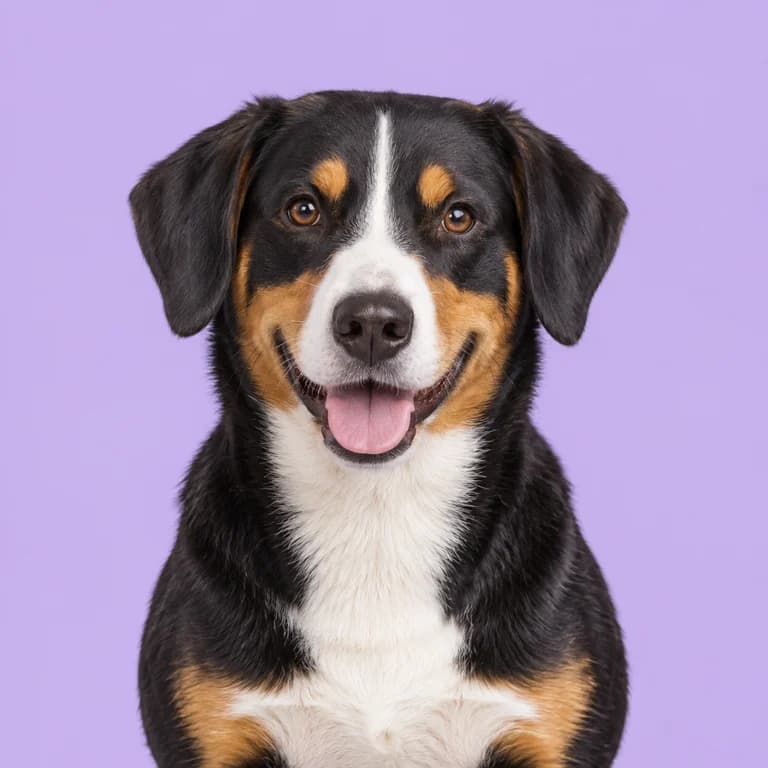
Herding group
Entlebucher Mountain Dog
20 to 30 kg · 11 to 13 years
The smallest Swiss mountain dog packs a cattle drover's stamina into a compact, tricolored body that rarely switches off.
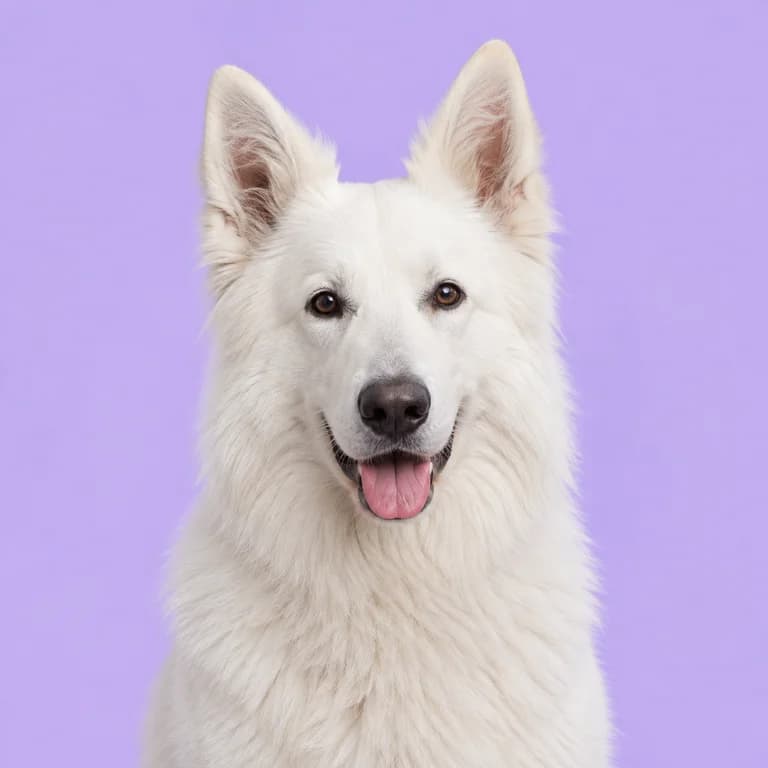
Herding group
White Swiss Shepherd
25 to 40 kg · 12 to 14 years
A snow-white shepherd with the brains of a working dog and a gentler, softer edge.
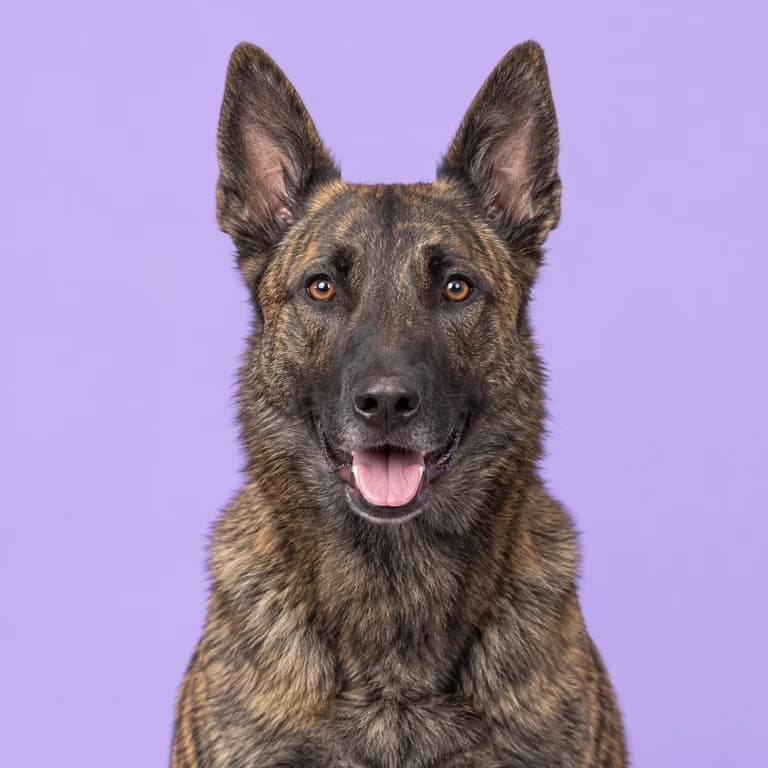
Herding group
Dutch Shepherd
23 to 34 kg · 11 to 14 years
A brindle Dutch farm dog turned police partner that learns fast and needs a real job every day.
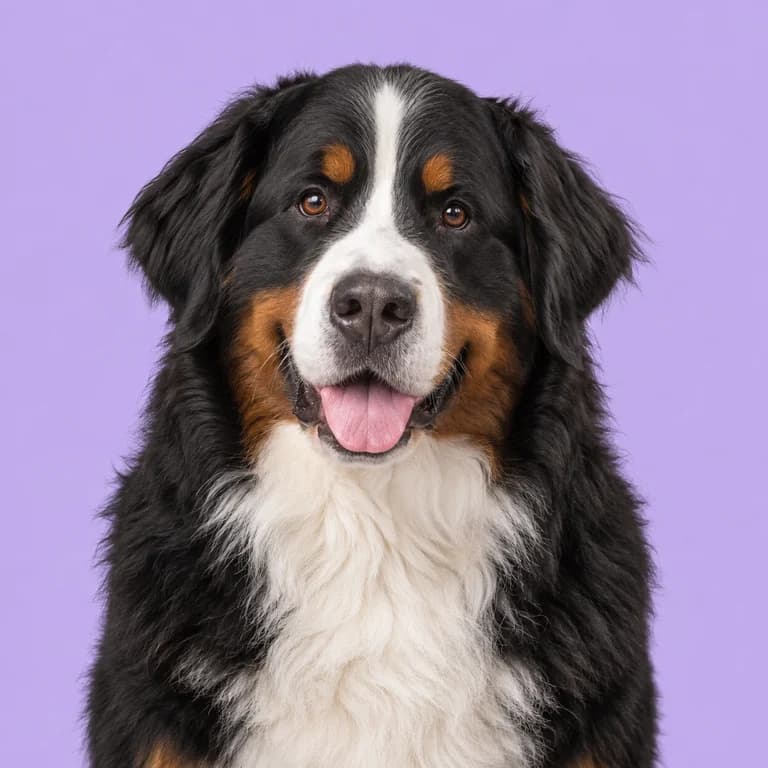
Working group
Bernese Mountain Dog
34 to 50 kg · 7 to 10 years
A gentle Swiss farm dog with a huge heart and a short average life that owners should understand before they fall in love.
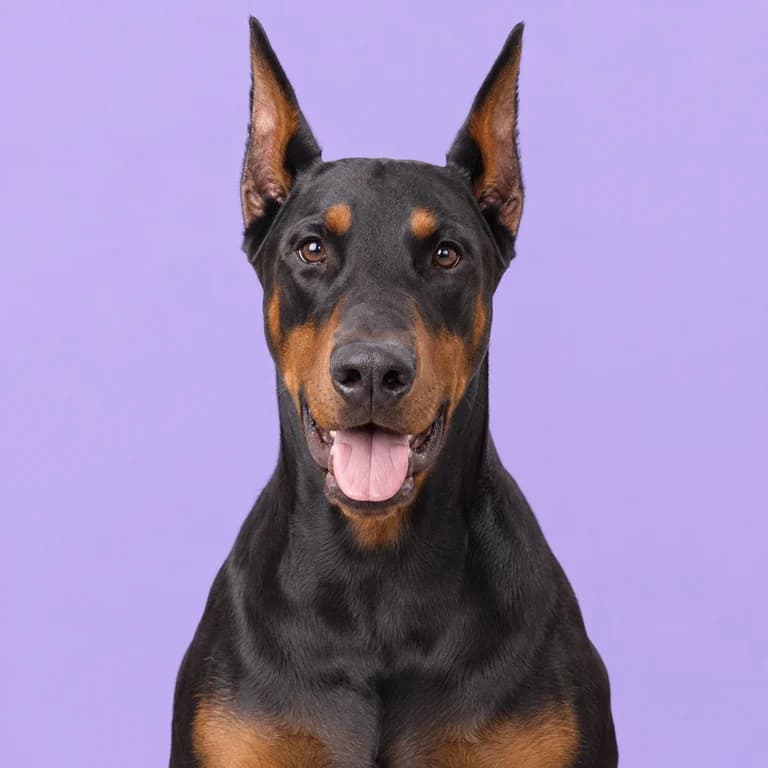
Working group
Doberman Pinscher
32 to 45 kg · 10 to 12 years
A sleek guardian with a watchful mind that becomes surprisingly soft and clingy with its own people.